


Page 86 - JCBP-2-4
P. 86
Journal of Clinical and
            Basic Psychosomatics                                                    Adverse life events and body image


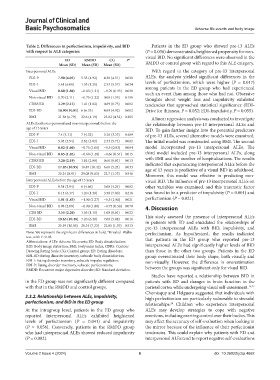
            Table 2. Differences in perfectionism, impulsivity, and BID   Patients in the ED group who showed pre-13 ALEs
            with respect to ALE categories                     (P = 0.038) demonstrated a heightened propensity for non-
                                                               visual BID. No significant differences were observed in the
                             ED      RMDD       CG     P*
                          Mean (SD)  Mean (SD)  Mean (SD)      RMDD or control group with regard to this ALE category.
            Interpersonal ALEs                                   With regard to the category of pre-13 interpersonal
             EDI-P        7.90 (4.02)  5.33 (4.92)  4.30 (4.31)  0.028  ALEs, the analysis yielded significant differences in the
             EDI-I        5.61 (6.00)  1.33 (1.21)  2.53 (5.57)  0.034  levels  of perfectionism,  which  were higher  (P  = 0.017)
                                                               among patients in the ED group who had experienced
             Visual BID   0.80 (1.80)  −0.83 (1.21)  −0.70 (0.95) 0.038  such an event than among those who had not. Obsessive
             Non-visual BID  0.70 (2.11)  −0.75 (1.22)  0.00 (1.35)  0.158
                                                               thoughts about weight loss and impulsivity exhibited
             CDRS BD      3.29 (2.12)  1.41 (1.02)  0.69 (0.75)  0.002  tendencies  that  approached  statistical  significance  (EDI-
             EDI-BD       18.90 (10.81) 6 (6.35)  4.69 (4.92)  0.002  Drive for thinness, P = 0.052; EDI-Impulsivity, P = 0.055).
             BMI          21.58 (6.79)  22.6 (4.19)  23.82 (4.52) 0.385  A linear regression analysis was conducted to investigate
            ALEs (both interpersonal and non-interpersonal) before the    the relationship between pre-13 interpersonal ALEs and
            age of 13 years                                    BID. To gain further insight into the potential predictors
             EDI-P        7.4 (4.11)  7 (4.32)  3.16 (3.33)  0.489  of pre-13 ALEs, several alternative models were examined.
             EDI-I        5.05 (5.94)  2.62 (3.02)  2.33 (5.71)  0.082  The initial model was constructed using BMI. The second
             Visual BID   0.82 (1.60)  −0.75 (1.06)  −0.5 (0.83)  0.004  model incorporated pre-13 interpersonal ALEs. The
             Non-visual BID  0.85 (1.85)  −0.68 (1.48)  −0.66 (0.51) 0.015  third model included pre-13 interpersonal ALEs, along
             CDRS BD      3.20 (2.19)  1.62 (2.08)  0.66 (0.81)  0.013  with BMI and the number of hospitalizations. The results
                                                               indicated that experiencing interpersonal ALEs before the
             EDI-BD       17.85 (10.95) 10.87 (10.42) 6.66 (5.24)  0.033  age of 13 years is predictive of a visual BID in adulthood.
             BMI          25.24 (8.91)  29.08 (9.03)  22.7 (1.33)  0.546  Moreover, this model was effective in predicting non-
            Interpersonal ALEs before the age of 13 years      visual BID. The influence of pre-13 interpersonal ALEs on
             EDI-P        8.34 (3.94)  6 (4.66)  3.00 (4.24)  0.082  other  variables  was  examined,  and  this  traumatic  factor
             EDI-I        6.15 (6.37)  1.20 (1.30)  3.50 (7.00)  0.218  was found to be a predictor of impulsivity (P = 0.001) and
             Visual BID   1.01 (1.83)  −1.00 (1.27)  −0.5 (1.00)  0.021  perfectionism (P = 0.021).
             Non-visual BID  0.98 (2.09)  −0.90 (1.88)  −0.75 (0.50) 0.070  4. Discussion
             CDS BD       3.55 (2.20)  1.55 (1.11)  1.00 (0.81)  0.022
             EDI-BD       19.65 (10.48) 7.20 (6.30)  7.00 (5.88)  0.016  This study assessed the presence of interpersonal ALEs
                                                               in patients with ED and elucidated the relationships of
             BMI          25.59 (10.36) 28.34 (7.23)  22.85 (1.70) 0.513  pre-13 interpersonal ALEs with BID, impulsivity, and
            Note: We represent the significant differences in bold. *Kruskal–Wallis   perfectionism. As hypothesized, the results indicated
            test, with P<0.05.                                 that patients in the ED group who reported pre-13
            Abbreviations: ALEs: Adverse life events; BD: Body dissatisfaction;
            BID: Body image distortion; BMI: body mass index; CDRS: Contour   interpersonal ALEs had significantly higher levels of BID
            Drawing Rating Scale; CG: Control group; ED: Eating disorders;   than those in the other two groups. Patients in the ED
            EDI-BD: Eating disorder inventory, subscale body dissatisfaction;   group overestimated their body shape, both visually and
            EDI-I: Eating disorder inventory, subscale impulse regulation;    non-visually.  However,  the  difference  in  overestimation
            EDI-P: Eating disorder inventory, subscale perfectionism;    between the groups was significant only for visual BID.
            RMDD: Recurrent major depressive disorder; SD: Standard deviation.
                                                                 Studies have reported a relationship between BID in
            in the ED group was not significantly different compared   patients with ED and changes in brain function in the
            with that in the RMDD and control groups.          parietal cortex while undergoing visual self-assessment. 15,27
                                                               Chemisquy and Helguera suggested that individuals with
            3.3.2. Relationship between ALEs, impulsivity,     high perfectionism are particularly vulnerable to stressful
            perfectionism, and BID in the ED group             relationships.  Children who experience interpersonal
                                                                          28
            At the intragroup level, patients  in the ED group who   ALEs may develop strategies to cope with negative
            reported interpersonal ALEs exhibited heightened   emotions, including exerting control over their bodies. This
            levels of perfectionism (P = 0.041) and impulsivity   may affect the accuracy of self-evaluation when looking in
            (P  = 0.056).  Conversely,  patients  in  the  RMDD  group   the mirror because of the influence of their perfectionist
            who had interpersonal ALEs showed reduced impulsivity   tendencies. This could explain why patients with ED and
            (P = 0.002).                                       interpersonal ALEs tend to report negative self-evaluations


            Volume 2 Issue 4 (2024)                         6                               doi: 10.36922/jcbp.4662

