


Page 25 - JCTR-10-1
P. 25
Jyothi et al. | Journal of Clinical and Translational Research 2024; 10(1): 18-24   21


                                                       Adults (18–65 years) screened
                                                          for diabetes mellitus
                                                              (n=335)


                                  Excluded after screening for the following
                                  reasons:
                                  - HbA1c between 5.7% and 6.5% (n=57)
                                  - Abnormal thyroid function (n=46)
                                  - Comorbid conditions like hypertension,
                                  fever and localized pain (n= 84)
                                  22 subjects had more than one exclusion
                                  criteria


                                                         Treatment-naïve,         Heathy controls,
                             Total excluded; n=165       diabetes mellitus,       HbA1c <5.7%; n=85
                                                        HbA1c ≥6.5%; n=85
                                         Figure 1. CONSORT flow diagram for patient enrolment.

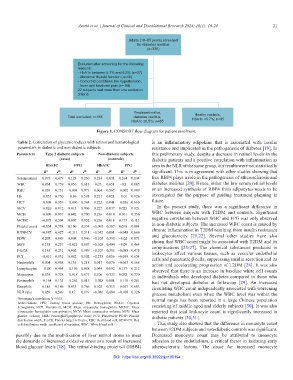
        Table 2. Correlation of glycemic indices with retinol and hematological   is  an  inflammatory  adipokine  that  is  associated  with  insulin
        parameters in diabetic and non-diabetic subjects        resistance and implicated in the pathogenesis of diabetes [19]. In
        Parameters  Type 2 diabetic subjects   Non‑diabetic subjects   this preliminary study, despite a decrease in retinol levels in the
                          (cases)             (controls)        diabetic patients and a positive correlation with inflammation as
                    HbA1C       FPG       HbA1C      FPG        seen in the NLR of the same group, our results were not statistically
                   R a   P b  R a   P b  R a  P b  R a   P b    significant. This is in agreement with other studies showing that
        Serum retinol  0.078  0.479  0.123  0.260  0.234  0.031  0.164  0.134  free RBP4 plays a role in the pathogenesis of atherosclerosis and
        WBC        0.034  0.759  0.056  0.613  0.05  0.651  −0.3  0.005  diabetes mellitus [20]. Hence, either the low serum retinol levels
        RBC        0.038  0.731 −0.004 0.971  0.064  0.563 −0.002 0.989  or an increased synthesis of RBP4 from adipocytes needs to be
        Hb        −0.035 0.750  −0.06  0.588  0.251  0.021  −0.01  0.926  investigated  for the purpose of guiding treatment  planning  in
        HCT       −0.008 0.939 −0.096 0.384  0.222  0.041 −0.056 0.610  future.
        MCV       −0.026 0.812  0.013  0.906  0.227  0.037  0.025  0.821  In  the  present  study,  there  was  a  significant  difference  in
        MCH       −0.009 0.937  0.042  0.700  0.256  0.018  0.101  0.356  WBC  between  subjects  with  T2DM  and  controls.  Significant
        MCHC      −0.073 0.504  0.007  0.952  0.256  0.018  0.173  0.113  negative correlation between WBC and FPG was only observed
        Platelet count  −0.034 0.758  0.106  0.334 −0.095 0.387  0.016  0.884  in non-diabetic subjects. The increased WBC count is caused by
        RDW-CV    −0.087 0.427  −0.111  0.311 −0.342 0.001 −0.048 0.666  chronic inflammation in T2DM resulting from insulin resistance
        PDW        0.205  0.089  0.008  0.946 −0.105 0.395  −0.02  0.871  and glucotoxicity  [21,22]. Several other studies have also
        MPV        0.138  0.257 −0.021 0.867 −0.103 0.404  −0.09  0.464  shown that WBC count might be associated with T2DM and its
                                                                complications  [23-27].  The chemical substances  produced  in
        P-LCR      0.145  0.231  0.002  0.989 −0.107 0.385 −0.088 0.475  leukocytes  affect  various  tissues,  such  as  vascular  endothelial
        PCT       −0.011  0.931  0.082  0.502 −0.233 0.056 −0.059 0.634  cells and pancreatic β cells, suppressing insulin secretion and its
        Neutrophils   0.004  0.968  0.135  0.218  0.017  0.876 −0.063 0.568  action and accelerating progression of T2DM [28]. It was also
        Lymphocytes   −0.08  0.464 −0.186 0.088  0.044  0.692  0.137  0.212  observed that there is an increase in baseline white cell counts
        Monocytes   0.038  0.728 −0.018 0.871  0.106  0.333  0.032  0.770  in individuals who developed diabetes compared to those who
        Eosinophils  −0.164 0.135 −0.262 0.015 −0.028 0.801 −0.118 0.281  had  not  developed  diabetes  at  follow-up  [29].  An  increased
        Basophils  0.145  0.186  0.033  0.766  0.102  0.353 −0.057 0.603  circulating WBC count independently associated with worsening
        NLR ratio  0.059  0.589  0.17  0.119 −0.016 0.884 −0.108 0.326  glucose metabolism even when the WBC level was within the
        a Spearman’s correlation.  P<0.05.                      normal range has been reported in a large Chinese population
                      b
        Abbreviations:  FPG:  Fasting  blood  glucose;  Hb:  Hemoglobin;  HbA1c:  Glycated
        hemoglobin;  HCT:  Hematocrit;  MCH:  Mean  corpuscular  hemoglobin;  MCHC:  Mean   consisting of middle-aged and elderly subjects [30]. It was also
        corpuscular  hemoglobin  concentration;  MCV:  Mean  corpuscular  volume;  MPV:  Mean   reported that total leukocyte count is significantly increased in
        platelet  volume;  NLR:  Neutrophil/lymphocyte  ratio;  PCT:  Plateletcrit;  PDW:  Platelet   diabetic patients [30,31].
        distribution width; P-LCR: Platelet larger cell ratio; RBC: Red blood cell; RDW-CV: Red
        cell distribution width–coefficient of variation; WBC: White blood cell  This study also showed that the difference in monocyte count
                                                                between T2DM subjects and non-diabetic controls was significant.
        possibly due to the  mobilization  of liver  retinol  stores to meet   Decreased  monocyte  count  may be  attributed  to  monocyte
        the demands of increased oxidative stress as a result of increased   adhesion to the endothelium, a critical factor in initiating early
        blood glucose levels [18]. The retinol-binding protein-4 (RBP4)   atherosclerotic  lesions.  The cause for increased  monocyte
                                                 DOI: https://doi.org/10.36922/jctr.00194

