


Page 69 - JCTR-11-3
P. 69
Journal of Clinical and
            Translational Research                                              N-NOSE: Early cervical cancer screening


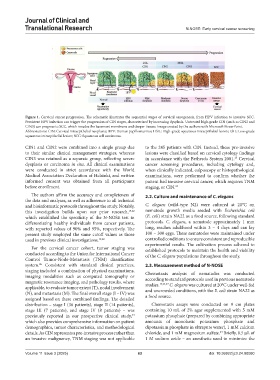
            Figure 1. Cervical cancer progression. The schematic illustrates the sequential stages of cervical oncogenesis, from HPV infection to invasive SCC.
            Persistent HPV infection can trigger the progression of CIN stages, characterized by increasing dysplasia. Untreated high-grade CIN (such as CIN2 and
            CIN3) can progress to SCC, which invades the basement membrane and deeper tissues. Image created by the authors with Microsoft PowerPoint.
            Abbreviations: CIN: Cervical intraepithelial neoplasia; HPV: Human papillomavirus; HSIL: High-grade squamous intraepithelial lesion; LSIL: Low-grade
            squamous intraepithelial lesion; SCC: Squamous cell carcinoma.

            CIN1 and CIN2 were combined into a single group due   to the 245 patients with CIN. Instead, these pre-invasive
            to their similar clinical management strategies, whereas   lesions were classified based on cervical cytology findings
            CIN3 was retained as a separate group, reflecting severe   in accordance with the Bethesda System 2001.  Cervical
                                                                                                     25
            dysplasia or carcinoma  in situ. All clinical examinations   cancer  screening  procedures,  including  cytology  and,
            were conducted in strict accordance with the World   when clinically indicated, colposcopy or histopathological
            Medical Association Declaration of Helsinki, and written   examinations, were  performed to  confirm whether  the
            informed consent was obtained from all participants   patient had invasive cervical cancer, which requires TNM
            before enrollment.                                 staging, or CIN. 24
              The authors affirm the accuracy and completeness of   2.2. Culture and maintenance of C. elegans
            the data and analyses, as well as adherence to all technical
            and bioinformatic protocols throughout the study. Notably,   C. elegans  (wild-type  N2)  were  cultured  at  20°C  on
            this investigation builds upon our prior research, 19,22    nematode growth media seeded with  Escherichia coli
            which established the specificity of the N-NOSE test in   (E. coli) strain NA22 as a food source, following standard
            differentiating healthy individuals from cancer patients,   protocols.  C.  elegans, a nematode  approximately 1  mm
            with reported values of 90% and 95%, respectively. The   long, reaches adulthood within 3 – 4  days and can lay
            present study employed the same cutoff values as those   100 – 300 eggs. These nematodes were maintained under
            used in previous clinical investigations. 19,22    controlled conditions to ensure consistent and reproducible
                                                               experimental results. The cultivation process adhered to
              For the cervical cancer cohort, tumor staging was   established protocols to maintain the health and viability
            conducted according to the Union for International Cancer   of the C. elegans populations throughout the study.
            Control Tumor-Node-Metastasis (TNM) classification
                  26
            system.   Consistent  with  standard  clinical  practices,   2.3. Measurement method of N-NOSE
            staging included a combination of physical examinations,   Chemotaxis analysis of nematodes was conducted
            imaging modalities such as computed tomography or   according to standard protocols used in previous nematode
            magnetic resonance imaging, and pathology results, where   studies. 19,24,27  C. elegans was cultured at 20°C under well-fed
            applicable, to evaluate tumor extent (T), nodal involvement   and uncrowded conditions, with the E. coli strain NA22 as
            (N), and metastasis (M). The final overall stage (I – IV) was   a food source.
            assigned based on these combined findings. The detailed
            distribution – stage I (36 patients), stage II (14 patients),   Chemotaxis assays were conducted on 9  cm plates
            stage III (7  patients), and stage IV (8  patients) – was   containing 10 mL of 2% agar supplemented with 5 mM
            previously reported in our prospective clinical study,    potassium phosphate (prepared by combining appropriate
                                                         24
            which also provides comprehensive information on patient   amounts of monobasic potassium phosphate and
            demographics, tumor characteristics, and methodological   dipotassium phosphate in ultrapure water), 1 mM calcium
            details. As CIN represents a pre-invasive process rather than   chloride, and 1 mM magnesium sulfate.  Briefly, 0.5 μL of
                                                                                               24
            an invasive malignancy, TNM staging was not applicable   1 M sodium azide – an anesthetic used to minimize the

            Volume 11 Issue 3 (2025)                        63                            doi: 10.36922/jctr.24.00080

