


Page 71 - JCTR-11-3
P. 71
Journal of Clinical and
            Translational Research                                              N-NOSE: Early cervical cancer screening


                         A                                   B


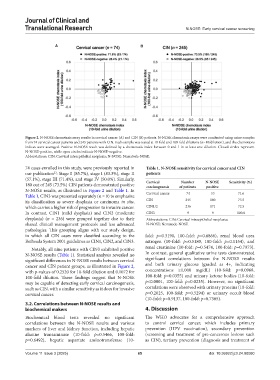
            Figure 2. N-NOSE chemotaxis assay results in cervical cancer (A) and CIN (B) patients. N-NOSE chemotaxis assays were conducted using urine samples
            from 74 cervical cancer patients and 245 patients with CIN. Each sample was tested at 10-fold and 100-fold dilutions (n=10/dilution), and the chemotaxis
            indices were averaged. Positive N-NOSE result was defined by a chemotaxis index between 0 and 1 in at least one dilution. Closed circles represent
            N-NOSE-positive, while open circles indicate N-NOSE-negative.
            Abbreviations: CIN: Cervical intraepithelial neoplasia; N-NOSE: Nematode-NOSE.

            74 cases enrolled in this study, were previously reported in   Table 1. N-NOSE sensitivity for cervical cancer and CIN
            our publication : Stage 0 (85.7%), stage I (83.3%), stage II   patients
                        23
            (57.1%), stage III (71.4%), and stage IV (50.0%). Similarly,   Cervical   Number   N-NOSE   Sensitivity (%)
            180 out of 245 (73.5%) CIN patients demonstrated positive   carcinogenesis  of patients  positive
            N-NOSE results, as illustrated in Figure 2 and Table 1. In   Cervical cancer  74  53      71.6
            Table 1, CIN3 was presented separately (n = 9) to emphasize
            its classification as severe dysplasia or carcinoma  in situ,   CIN  245      180         73.5
            which carries a higher risk of progression to invasive cancer.   CIN1/2  236  171         72.5
            In contrast, CIN1 (mild dysplasia) and CIN2 (moderate   CIN3         9         9          100.0
            dysplasia) (n  = 236) were grouped together due to their   Abbreviations: CIN: Cervical intraepithelial neoplasia;
            shared  clinical  management  protocols  and  less  advanced   N-NOSE: Nematode-NOSE.
            pathologies. This grouping aligns with our study design,
            in which all CIN cases were classified according to the   fold:  p=0.3190, 100-fold:  p=0.6866),  renal  blood  urea
            Bethesda System 2001 guidelines as CIN1, CIN2, and CIN3.  nitrogen (10-fold:  p=0.5180, 100-fold:  p=0.1154), and
              Notably, all nine patients with CIN3 exhibited positive   renal creatinine (10-fold: p=0.5474, 100-fold: p=0.7973).
            N-NOSE results (Table 1). Statistical analysis revealed no   In contrast, general qualitative urine tests demonstrated
            significant differences in N-NOSE results between cervical   significant  correlations  between  the  N-NOSE  results
            cancer and CIN patient groups, as illustrated in Figure 2,   and both urinary glucose (graded as 4+, indicating
            with p-values of 0.2520 for 10-fold dilution and 0.1072 for   concentrations ≥1,000  mg/dL) (10-fold:  p=0.0968,
            100-fold dilution. These findings suggest that N-NOSE   100-fold: p=0.0355) and urinary ketone bodies (10-fold:
            may be capable of detecting early cervical carcinogenesis,   p<0.0001,  100-fold:  p=0.0235).  However,  no  significant
            such as CIN, with a similar sensitivity as it does for invasive   correlations were observed with urinary proteins (10-fold:
            cervical cancer.                                   p=0.2025, 100-fold:  p=0.5294) or urinary occult  blood
                                                               (10-fold: p=0.9137, 100-fold: p=0.7385).
            3.2. Correlations between N-NOSE results and
            biochemical makers                                 4. Discussion

            Biochemical blood tests revealed no significant    The WHO advocates for a comprehensive approach
            correlations between the N-NOSE results and various   to  control cervical  cancer,  which  includes  primary
            markers of liver and kidney function, including hepatic   prevention (HPV vaccination), secondary prevention
            alanine transaminase (10-fold:  p=0.5466, 100-fold:   (screening and treatment of pre-cancerous lesions such
            p=0.6492), hepatic aspartate aminotransferase (10-  as CIN), tertiary prevention (diagnosis and treatment of

            Volume 11 Issue 3 (2025)                        65                            doi: 10.36922/jctr.24.00080

