


Page 110 - JCTR-11-4
P. 110
Journal of Clinical and
            Translational Research                                                      COVID-19 impact on SBDSPs


            Table 4. Re‑implementation patterns of school‑based dental sealant programs
            Re‑implementation pattern                                 Definition
            Partial re-implementation  Indicates a reduction in the delivery of the SBDSP core component  and whether delivery of these partial
                                                                                 8
                                      components was provided to fewer schools than before the pandemic. Sealant application was the most
                                      common core component to be removed due to a high risk of aerosols and spatter velocity, leading to an
                                      increased risk of COVID-19 transmission. However, other core components were provided (e.g., education,
                                      dental screenings, diagnostic dental exams, or dental referrals). These partial services may or may not
                                      have been provided on the school premises and, at times, provided more limited reach than school-based
                                      programming.
            Intermediate re-implementation   Indicates that SBDSPs provided all program core components to fewer schools than before the pandemic.
                                      Programs are defined as intermediate if they did not provide services to at least one school they served
                                      pre-COVID, and all program services were provided within the school premises in the served schools.
            Full re-implementation    Indicates that all SBDSP core components were provided to the same number of (or more) schools compared
                                      to before de-implementation, and all program services were provided on the school premises.
            Note: The re-implementation patterns were key findings of the study and were categorized using two pieces of information: The program core
            components provided and the number of schools being served relative to the number of schools served before the COVID-19 crisis. SBDSP core
            components include oral health education, dental screenings, diagnostic dental exams, clinical dental caries prevention treatments (e.g., dental sealants,
            fluoride varnish, silver diamine fluoride, and dental cleaning), personal oral/dental hygiene instructions, and dental referrals. 8
            Abbreviation: SBDSP: School-based dental sealant program.


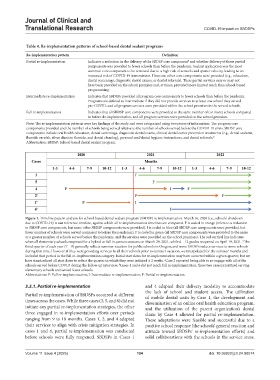
            Figure 1. Timeline pattern analysis for school-based dental sealant program (SBDSP) re-implementation. March 16, 2020 (i.e., schools’ shutdown
            due to COVID-19) is our reference timeline, against which all re-implementation timelines are compared. P is coded in orange (refers to a reduction
            in SBDSP core components, but some other SBDSP components were provided). I is coded in blue (all SBDSP core components were provided, but
            fewer number of schools were served compared to before the pandemic). F is coded in green (all SBDSP core components were provided to the same
            or a greater number of schools served before the pandemic, and the services were provided on the school premises). The red vertical line indicates
            when all elementary schools reopened for a hybrid or full in-person sessions on March 29, 2021, while 6 – 12 grades reopened on April 19, 2021. *The
            third quarter of each year (7 – 9) generally reflects summer vacation for public schools in Oregon, and some SBDSPs reduce services to some schools
            during this time. However, if they were providing services to all their schools prior to summer vacation, we interpolated for the summer months and
            included that period in the full re-implementation category. Initial start dates for re-implementation may have occurred within a given quarter, but we
            have standardized all start dates to reflect the quarter in which they were initiated ± 2 weeks.  Case 2 reported being able to re-engage with all of the
                                                                       a
            schools served before COVID during the follow-up interview.  Cases 1 and 6 did not reach full re-implementation; these two cases prioritized serving
                                                    b
            elementary schools and served fewer schools.
            Abbreviations: F: Full re-implementation; I: Intermediate re-implementation; P: Partial re-implementation.
            3.3.1. Partial re-implementation                   and 4 adapted their delivery modality to accommodate
                                                               the lack of school and student access. The utilization
            Partial re-implementation of SBDSPs occurred at different   of mobile dental units by Case 1, the development and
            times across the cases. While three cases (3, 5, and 6) did not   dissemination of an online oral health education program,
            initiate any partial re-implementation strategies, the other   and the utilization of the parent organization’s dental
            three engaged in re-implementation efforts over periods   clinic by Case 4 allowed for partial re-implementation.
            ranging from 9 to 18 months. Cases 1, 2, and 4 adapted   These adaptations were feasible and successful due to a
            their services to align with crisis mitigation strategies. In   positive school response (the schools’ general reaction and
            cases 1 and 4, partial re-implementation was conducted   attitude toward SBDSPs’ re-implementation efforts) and
            before schools were fully reopened. SBDSPs in Cases 1   solid collaborations with the schools in the service areas.


            Volume 11 Issue 4 (2025)                       104                            doi: 10.36922/jctr.24.00074

