


Page 49 - JCTR-11-5
P. 49
Journal of Clinical and
            Translational Research                                           Vaginal microbiota in menopause pathologies


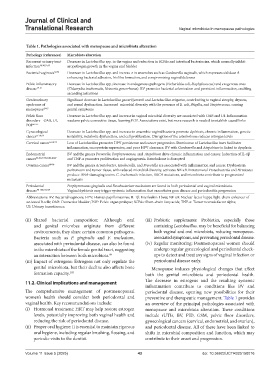
            Table 1. Pathologies associated with menopause and microbiota alteration
            Pathology (references)  Microbiota alteration
            Recurrent urinary tract   Decrease in Lactobacillus spp. in the vagina and reduction in SCFAs and intestinal bacteriocins, which normally inhibit
            infection 28-30,32,33  uropathogen growth in the vagina and bladder
            Bacterial vaginosis 37,38  Decrease in Lactobacillus spp. and increas  e in anaerobes such as Gardnerella vaginalis, which expresses sialidase A—
                              enhancing bacterial adhesion, biofilm formation, and compromising vaginal defenses
            Pelvic inflammatory   Decrease in Lactobacillus spp.; increase in endogenous pathogens (Escherichia coli, Staphylococcus) and exogenous ones
            disease 39-41     (Chlamydia trachomatis, Neisseria gonorrhoeae). BV promotes bacterial colonization and persistent inflammation, enabling
                              ascending infections
            Genitourinary     Significant decrease in Lactobacillus gasseri/jensenii and Lactobacillus crispatus, contributing to vaginal atrophy, dryness,
            syndrome of       and sexual dysfunction. Increased  microbial diversity with the presence of E. coli, Shigella, and Streptococcus, causing
            menopause 43-45   genital symptoms
            Pelvic floor      Decrease in Lactobacillus spp. and increase in vaginal microbial diversity are associated with OAB and UI. Inflammation
            disorders—OAB, UI,   weakens pelvic connective tissue, favoring POP. Associations exist, but more research is needed to establish causal links
            POP 49-55
            Gynecological     Decrease in Lactobacillus spp. and increase in anaerobic vaginal bacteria promote dysbiosis, chronic inflammation, genetic
            cáncer 56-58,64   instability, metabolic dysfunction, and cell proliferation. Disruption of the estrobolome reduces estrogen levels
            Cervical cancer 56,68-74  Loss of Lactobacillus promotes HPV persistence and cancer progression. Dominance of Lactobacillus iners facilitates
                              inflammation, oncoprotein expression, and poor HPV clearance. BV with Gardnerella and Atopobium is linked to dysplasia
            Endometrial       BV and the genera Prevotella, Porphyromonas, and  Atopobium drive chronic inflammation and cancer. Induction of IL-1β
            cancer 56,76,77,79,83,84,86,87  and TNF-α promotes proliferation and angiogenesis. Estrobolome is disrupted
            Ovarian cancer 88-96  BV and the genera Acinetobacter, Gardnerella, and Prevotella are associated with inflammation and cancer. Dysbiosis in
                              peritoneum and tumor tissue, with reduced microbial diversity, activates NF-κB. Intratumoral Proteobacteria and Firmicutes
                              produce DNA-damaging toxins. C. trachomatis infection, BRCA mutations, and microbiota contribute to progression/
                              metastasis
            Periodontal       Porphyromonas gingivalis and Fusobacterium nucleatum are found in both periodontal and vaginal microbiota.
            disease 98-100,103,104  Vaginal dysbiosis may trigger systemic inflammation that exacerbates gum disease and periodontitis progression
            Abbreviations: BV: Bacterial vaginosis; HPV: Human papillomavirus; IL-1β: Interleukin 1 beta; NF-κB: Nuclear factor kappa-light-chain-enhancer of
            activated B cells; OAB: Overactive bladder; POP: Pelvic organ prolapse; SCFAs: Short-chain fatty acids; TNF-α: Tumor necrosis factor alpha;
            UI: Urinary incontinence.


            (ii)  Shared bacterial composition: Although oral   (iii)  Probiotic supplements:  Probiotics, especially those
               and genital microbes originate from different      containing Lactobacillus, may be beneficial for balancing
               environments, they share certain common pathogens.   both vaginal and oral microbiota, reducing menopause-
               Bacteria such as  P.  gingivalis and  F.  nucleatum,   associated symptoms, and preventing periodontal disease.
               associated with periodontal disease, can also be found   (iv)  Regular monitoring: Postmenopausal women should
               in the microbiota of the female genital tract, suggesting   undergo regular gynecological and periodontal check-
               an interaction between both microbiota. 99         ups to detect and treat any signs of vaginal infection or
            (iii) Impact of estrogens: Estrogens not only regulate the   periodontal disease early.
               genital microbiota, but their decline also affects bone   Menopause induces physiological changes that affect
               formation capacity. 102                         both  the genital microbiota and periodontal  health.
                                                               The decrease in estrogens and the resulting systemic
            11.2. Clinical implications and management
                                                               inflammation contribute to conditions like BV and
            The  comprehensive  management of  postmenopausal   periodontal disease, opening new possibilities for their
            women’s health should consider both periodontal and   preventive and therapeutic management. Table 1 provides
            vaginal health. Key recommendations include:       an overview of the principal pathologies associated with
            (i)  Hormonal treatment: HRT may help restore estrogen   menopause and microbiota alteration. These conditions
               levels, potentially improving both vaginal health and   include rUTIs, BV, PID, GSM, pelvic floor disorders,
               reducing the risk of periodontal disease.       gynecological cancers (cervical, endometrial, and ovarian),
            (ii)  Proper oral hygiene: It is essential to maintain rigorous   and periodontal disease. All of these have been linked to
               oral hygiene, including regular brushing, flossing, and   shifts in microbial composition and function, which may
               periodic visits to the dentist.                 contribute to their onset and progression.


            Volume 11 Issue 5 (2025)                        43                         doi: 10.36922/JCTR025150016

