


Page 8 - JCTR-9-4
P. 8
224                       AboEl-Azm et al. | Journal of Clinical and Translational Research 2023; 9(4): 222-235


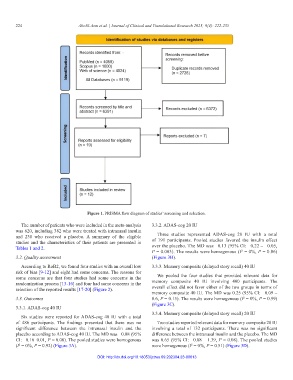
                                     Figure 1. PRISMA flow diagram of studies’ screening and selection.

          The number of patients who were included in the meta-analysis   3.3.2. ADAS-cog 20 IU
        was 620, including 382 who were treated with intranasal insulin
        and  238  who  received  a  placebo.  A  summary  of  the  eligible   Three  studies  represented  ADAS-cog  20  IU  with  a  total
        studies and the characteristics of their patients are presented in   of  191  participants.  Pooled  studies  favored  the  insulin  effect
        Tables 1 and 2.                                         over the placebo. The MD was −0.13 (95% CI: −0.22 – −0.05,
                                                                P = 0.003). The results were homogenous (I  = 0%, P = 0.86)
                                                                                                      2
        3.2. Quality assessment                                 (Figure 3B).
          According to RoB2, we found four studies with an overall low   3.3.3. Memory composite (delayed story recall) 40 IU
        risk of bias [9-12] and eight had some concerns. The reasons for
        some  concerns  are  that  four  studies  had  some  concerns  in  the   We pooled the four studies that provided relevant  data  for
        randomization process [13-16] and four had some concerns in the   memory  composite  40  IU  involving  400  participants.  The
        selection of the reported results [17-20] (Figure 2).   overall effect did not favor either of the two groups in terms of
                                                                memory composite 40 IU. The MD was 0.25 (95% CI: −0.09 –
        3.3. Outcomes                                           0.6, P = 0.15). The results were homogenous (I  = 0%, P = 0.99)
                                                                                                       2
                                                                (Figure 3C).
        3.3.1. ADAS-cog 40 IU
                                                                3.3.4. Memory composite (delayed story recall) 20 IU
          Six  studies  were  reported  for ADAS-cog  40  IU  with  a  total
        of  486  participants.  The  findings  presented  that  there  was  no   Two studies reported relevant data for memory composite 20 IU
        significant  difference  between  the  intranasal  insulin  and  the   involving  a  total  of  132  participants.  There  was  no  significant
        placebo according to ADAS-cog 40 IU. The MD was −0.08 (95%   difference between the intranasal insulin and the placebo. The MD
        CI: −0.16–0.01, P = 0.08). The pooled studies were homogenous   was 0.65 (95% CI: −0.08 – 1.39, P = 0.08). The pooled studies
        (I  = 0%, P = 0.92) (Figure 3A).                        were homogenous (I  = 0%, P = 0.51) (Figure 3D).
         2
                                                                                 2
                                          DOI: http://dx.doi.org/10.18053/jctres.09.202304.23-00013

