


Page 39 - MI-2-1
P. 39
Microbes & Immunity                                                    iPSC-derived NK cell immunotherapy


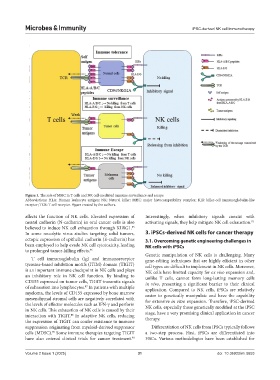
            Figure 1. The role of MHC in T cells and NK cell-mediated immune surveillance and escape
            Abbreviations: HLA: Human leukocyte antigen; NK: Natural killer; MHC: major histocompatibility complex; KIR: killer-cell immunoglobulin-like
            receptor; TCR: T cell receptor. Figure created by the authors.

            affects the function of NK cells. Elevated expression of   Interestingly, when inhibitory signals coexist with
            neural cadherin (N-cadherin) in oral cancer cells is also   activating signals, they help mitigate NK cell exhaustion. 91
                                                         85
            believed to induce NK cell exhaustion through KLRG1.
            In some oncolytic virus studies targeting solid tumors,   3. iPSCs-derived NK cells for cancer therapy
            ectopic expression of epithelial cadherin (E-cadherin) has   3.1. Overcoming genetic engineering challenges in
            been employed to help evade NK cell cytotoxicity, leading   NK cells with iPSCs
            to prolonged tumor-killing effects. 86
                                                               Genetic manipulation of NK cells is challenging. Many
              T  cell  immunoglobulin  (Ig)  and  immunoreceptor   gene-editing techniques that are highly efficient in other
            tyrosine-based inhibition motifs (ITIM) domain (TIGIT)   cell types are difficult to implement in NK cells. Moreover,
            is an important immune checkpoint in NK cells and plays   NK cells have limited capacity for ex vivo expansion and,
            an  inhibitory  role  in  NK  cell  function.  By  binding  to   unlike T cells, cannot form long-lasting memory cells
            CD155 expressed on tumor cells, TIGIT transmits signals   in vivo, presenting a significant  barrier  to their  clinical
            of exhaustion into lymphocytes.  In patients with multiple   application. Compared to NK cells, iPSCs are relatively
                                     87
            myeloma, the levels of CD155 expressed by bone marrow   easier  to  genetically  manipulate  and  have  the  capability
            mesenchymal stromal cells are negatively correlated with   for extensive in vitro expansion. Therefore, iPSC-derived
            the levels of effector molecules such as IFN-γ and perforin   NK cells, especially those genetically modified at the iPSC
            in NK cells. This exhaustion of NK cells is caused by their   stage, have a very promising clinical application in cancer
            interaction with TIGIT.  In adaptive NK cells, reducing
                               88
            the expression of TIGIT can confer resistance to immune   therapy.
            suppression originating from myeloid-derived suppressor   Differentiation of NK cells from iPSCs typically follows
            cells (MDSC).  Some immune therapies targeting TIGIT   a two-step process. First, iPSCs are differentiated into
                       89
            have also entered clinical trials for cancer treatment.    HSCs. Various methodologies have been established for
                                                         90
            Volume 2 Issue 1 (2025)                         31                               doi: 10.36922/mi.5653

