


Page 82 - MI-2-1
P. 82
Microbes & Immunity                                                    Childhood brucellosis in Saudi Arabia


            Brucella serology and culture at baseline; therefore,   be noted that SAT has a reported high sensitivity rate
            clinicians must base their diagnosis on the clinical picture   of 93% – 100%, indicating a low likelihood of reporting
            of  the  disease  and  use  the  culture  and/or  the  serology   false-negative results.  However, false-positive results
                                                                                 22
            as a guide to confirm  the diagnosis.  In our study,   can occur as a result of cross-reactions with antibodies to
                                            20
            leukopenia and thrombocytopenia were the hematological   other Gram-negative bacteria, such as Salmonella spp. and
            abnormalities that our patient cohort experienced during   Yersinia spp.  In our hospital, the speciation of Brucella
                                                                         22
            the active course of brucellosis. Moreover, only 10 of   is  done  using  serological  tests,  where  all  the  patients  in
            the  20  patients  had  elevated  liver  transaminases.  These   our current cohort had SAT done for them. Interestingly,
            findings are consistent with earlier studies.  It should   however, 18 (90%) of the patients tested positive for both
                                                21
                                                               B. melitensis and B. abortus antibodies compared with two
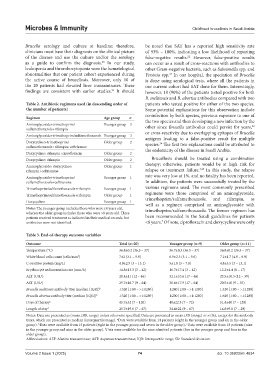
            Table 2. Antibiotic regimens used (in descending order of   patients who tested positive for either of the two species.
            the number of patients)                            Some potential explanations for this observation include
                                                               co-infection by both species, previous exposure to one of
            Regimen                          Age group  n      the two species and then developing a new infection by the
            Aminoglycoside+trimethoprim/     Younger group  3  other since  Brucella  antibodies could persist for years,
                                                                                                            23
            sulfamethoxazole+rifampin
            Aminoglycoside+trimethoprim/sulfamethoxazole Younger group  3  or cross-reactivity due to overlapping epitopes of Brucella
                                                               antigens leading to a false-positive result for multiple
            Doxycycline+trimethoprim/        Older group  2    species.  The first two explanations could be attributed to
                                                                     24
            sulfamethoxazole+rifampin+ceftriaxone
            Doxycycline+rifampin+ciprofloxacin  Older group  2  the endemicity of the disease in Saudi Arabia.
            Doxycycline+rifampin             Older group  2      Brucellosis  should be treated using a  combination
            Aminoglycoside+doxycycline+      Older group  1    therapy; otherwise, patients would be at high risk for
                                                                                      7,25
            rifampin+ceftriaxone                               relapse or treatment failure.  In this study, the relapse
            Aminoglycoside+trimethoprim/     Younger group  1  rate was very low at 1%, and no fatality has been reported.
            sulfamethoxazole+ceftriaxone                       In addition, the patients were successfully treated by the
            Trimethoprim/sulfamethoxazole+rifampin  Younger group  1  various regimens used. The most commonly prescribed
            Trimethoprim/sulfamethoxazole+rifampin  Older group  1  regimens were those comprised of an aminoglycoside,
            Doxycycline                      Younger group  1  trimethoprim/sulfamethoxazole,  and  rifampin,  as
                                                               well as a regimen comprised an aminoglycoside with
            Notes: The younger group includes those who were ≤8 years old,   trimethoprim/sulfamethoxazole. The former regimen has
            whereas the older group includes those who were >8 years old. Three
            patients received treatment as indicated in their medical records, but   been recommended in the Saudi guidelines for patients
                                                                      7
            antibiotics were not identified.                   <8 years.  Of note, ciprofloxacin and doxycycline were only

            Table 3. End‑of‑therapy outcome variables
            Outcome                                 Total (n=20)         Younger group (n=9)   Older group (n=11)
            Temperature (°C)                        36.8±0.2 (36.5 – 37)  36.7±0.3 (36.5 – 37)  36.8±0.2 (36.5 – 37)
            White blood cells count (cells/mm )     7±2 (3.1 – 9.9)      6.9±2.3 (3.1 – 9.6)   7.1±1.7 (4.9 – 9.9)
                                  3
            C-reactive protein (mg/L)               4.9±2.9 (3 – 13.1)   5±1.8 (3 – 7.8)       4.8±3.5 (3 – 13.1)
            Erythrocyte sedimentation rate (mm/h)   14.8±13.3 (3 – 42)   16.7±17.4 (3 – 42)    12.2±4.4 (8 – 17)
                   a
            ALT (U/L )                              28.4±11 (12 – 46)    32.1±10.6 (17 – 46)   23.5±10.3 (12 – 39)
                   a
            AST (U/L )                              29.7±16.7 (9 – 64)   36.6±17.9 (17 – 64)   20.5±10 (9 – 35)
            Brucella melitensis antibody titer (median [IQR]) b  1:320 [1:80 – >1:1280]  1:240 [1:80 – >1:1280]  1:320 [1:80 – >1:1280]
            Brucella abortus antibody titer (median [IQR]) b  1:320 [1:80 – >1:1280]  1:200 [1:80 – >1:1280]  1:640 [1:80 – >1:1280]
            Days of therapy c                       45.7±32 (7 – 120)    40±22.3 (7 – 72)      51.4±40 (7 – 120)
            Length of stay d                        25.7±19.6 (7 – 67)   34.4±22 (9 – 67)      14.8±9.8 (7 – 29)
            Notes: Data are presented as (mean±SD, range) unless otherwise specified. Data are presented as mean±SD (range) or n (%), except for the antibody
            titers, which are presented as median (interquartile range).  Data were available from 14 patients (eight in the younger group and six in the older
                                                   a
            group).  Data were available from 15 patients (eight in the younger group and seven in the older group).  Data were available from 18 patients (nine
                                                                                c
                 b
            in the younger group and nine in the older group).  Data were available for the nine admitted patients (five in the younger group and four in the
                                              d
            older group).
            Abbreviations: ALT: Alanine transaminase; AST: Aspartate transaminase; IQR: Interquartile range; SD: Standard deviation.
            Volume 2 Issue 1 (2025)                         74                               doi: 10.36922/mi.4634

