


Page 140 - MI-2-2
P. 140
Microbes & Immunity                                Establishment of a novel anti-human CCR8 monoclonal antibody


            A                                                   A


             B
                                                                B


             C
                                                                C


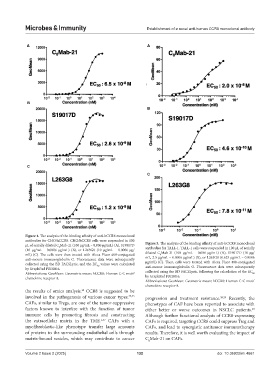
            Figure 4. The analysis of the binding affinity of anti-hCCR8 monoclonal
            antibodies for CHO/hCCR8. CHO/hCCR8 cells were suspended in 100
            µL of serially diluted C Mab-21 (100 µg/mL – 0.006 µg/mL) (A), S19017D   Figure 5. The analysis of the binding affinity of anti-hCCR8 monoclonal
                          8
            (10 µg/mL – 0.0006 µg/mL) (B), or L263G8 (10 µg/mL – 0.0006 µg/  antibodies for TALL-1. TALL-1 cells were suspended in 100 µL of serially
            mL) (C). The cells were then treated with Alexa Fluor 488-conjugated   diluted C Mab-21 (100 µg/mL – 0.006 µg/mL) (A), S19017D (10 µg/
                                                                     8
            anti-mouse immunoglobulin G. Fluorescence data were subsequently   mL, 2.5 µg/mL – 0.0006 µg/mL) (B), or L263G8 (0.625 µg/mL – 0.0006
            collected using the BD FACSLyric, and the EC  values were calculated   µg/mL) (C). Then, cells were treated with Alexa Fluor 488-conjugated
                                          50
            by GraphPad PRISM 6.                               anti-mouse immunoglobulin G. Fluorescence data were subsequently
            Abbreviations: GeoMean: Geometric mean; hCCR8: Human C-C motif   collected using the BD FACSLyric, following the calculation of the EC 50
            chemokine receptor-8.                              by GraphPad PRISM 6.
                                                               Abbreviations: GeoMean: Geometric mean; hCCR8: Human C-C motif
                                                               chemokine receptor-8.
            the results of omics analysis.  CCR8 is suggested to be
                                    29
            involved in the pathogenesis of various cancer types. 24,25    progression and treatment resistance. 58,59  Recently, the
            CAFs, similar to Tregs, are one of the tumor-suppressive   phenotypes of CAF have been reported to associate with
            factors known to interfere with the function of tumor   either better or worse outcomes in NSCLC patients.
                                                                                                            60
            immune cells by promoting fibrosis and constructing   Although further functional analysis of CCR8-expressing
            the  extracellular  matrix  in  the  TME.   CAFs  with  a   CAFs is required, targeting CCR8 could suppress Treg and
                                            1,57
            myofibroblastic-like phenotype transfer large amounts   CAFs, and lead to synergistic antitumor immunotherapy
            of proteins to the surrounding endothelial cells through   results. Therefore, it is well worth evaluating the impact of
            matrix-bound vesicles, which may contribute to cancer   C Mab-21 on CAFs.
                                                                8

            Volume 2 Issue 2 (2025)                        132                               doi: 10.36922/mi.4661

