


Page 97 - MI-2-2
P. 97
Microbes & Immunity Big data and DNN-based DTI model in CHP
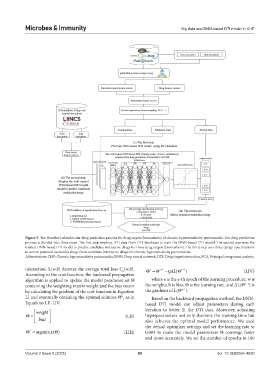
Figure 5. The flowchart of molecular drug prediction process for drug targets (biomarkers) of chronic hypersensitivity pneumonitis. The drug prediction
process is divided into three steps. The first step employs DTI data from DTI databases to train the DNN-based DTI model. The second step uses the
trained DNN-based DTI model to predict candidate interactive drugs for these drug targets (biomarkers). The third step uses three design specifications
to screen potential molecular drugs from candidate interactive drugs for chronic hypersensitivity pneumonitis.
Abbreviations: CHP: Chronic hypersensitivity pneumonitis; DNN: Deep neural network; DTI: Drug-target interaction; PCA: Principal component analysis.
interaction. L(w,b) denotes the average total loss C (w,b). Θ = Θ e−1 −η ∆ΘL( e−1 ) (LIV)
e
n
According to the cost function, the backward propagation
algorithm is applied to update the model parameter set Θ where e is the e-th epoch of the learning procedure, w is
e−1
containing the weighting matrix weight and the bias vector the weights, b is bias, Θ is the learning rate, and ∆L(Θ ) is
e−1
by calculating the gradient of the cost function in Equation the gradient of L(Θ ).
LI and eventually obtaining the optimal solution Θ*, as in Based on the backward propagation method, the DNN-
Equations LII-LIV: based DTI model can adjust parameters during each
weight iteration to better fit the DTI data. Moreover, adjusting
Θ= (LII) hyperparameters not only shortens the training time but
bias also achieves the optimal model performance. We used
the default optimizer settings and set the learning rate to
*
Θ = argmin ()L Θ (LIII) 0.003 to make the model parameters Θ converge faster
and more accurately. We set the number of epochs to 100
Volume 2 Issue 2 (2025) 89 doi: 10.36922/mi.4620

