


Page 111 - AC-1-2
P. 111
Arts & Communication                                            Music therapy and elderly people in home care


            Table 2. Comparison of scores between the initial and final SEMPA assessments in the control and intervention groups
            Development area                Control group (n=8)                  Intervention group (n=10)
                                Initial assessment   Final assessment   P‑value  Initial assessment   Final assessment   P‑value
                                 (Average [% SD])  (average % [SD])     (Average % [SD])  (average % [SD])
            Psychomotor           64.71 (35.29)   59.81 (35.78)  0.225    82.50 (20.53)  87.40 (13.58)  0.139
            Perceptive-cognitive  62.79 (27.81)   61.86 (30.96)  0.208    74.60 (27.36)  80.42 (21.35)  0.114
            Communication-language  59.85 (27.95)  62.47 (30.32)  0.042*  76.46 (25.02)  81.20 (22.88)  0.044*
            Social-emotional      62.11 (24.01)   61.83 (30.41)  0.362    71.76 (25.23)  82.20 (18.43)  0.011*
            Total                 62.53 (27.95)   61.44 (31.27)  0.017*   76.32 (24.14)  82.50 (18.70)  0.037*
            Notes: N: Number of research subjects; SD: Standard deviation; *P≤0.05.


             A                               B                              C


             D                               E                              F


                            G                                H


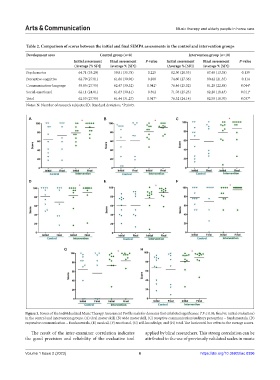
            Figure 1. Scores of the Individualized Music Therapy Assessment Profile scale for domains that exhibited significance (*P ≤ 0.05, final vs. initial evaluation)
            in the control and intervention groups. (A) Oral motor skill, (B) wide motor skill, (C) receptive communication/auditory perception – fundamentals, (D)
            expressive communication – fundamentals, (E) musical, (F) emotional, (G) self-knowledge, and (H) total. The horizontal bar refers to the average scores.

              The result of the inter-examiner correlation indicates   applied by blind researchers. This strong correlation can be
            the good precision and reliability of the evaluative tool   attributed to the use of previously validated scales in music


            Volume 1 Issue 2 (2023)                         6                         https://doi.org/10.36922/ac.0396

