


Page 85 - AC-1-2
P. 85
Arts & Communication                                                    Digital restoration with generative AI


                                                               3.4. Stable diffusion terminology and technique

                                                               Within the Stable Diffusion framework, several
                                                               terminologies define the nuanced processes integral to
                                                               restoration. The term “inference steps” pertains to the
                                                               methodical enhancement of the image, with each step
                                                               leading to further refinement. The stabilization of this
                                                               enhancement is embodied in the “diffusion” process. The
                                                               use of “guidance” signifies the deployment of reference
                                                               imagery  to bolster  accuracy,  while  “prompt  strength”
                                                               dictates the degree of initial input into the system. The
                                                               resultant image’s clarity and authenticity are encompassed
                                                               under “image quality.” Of paramount significance to
                                                               this  research,  the  “inpainting”  procedure  encompasses
                                                               the act of designating specific regions of the image for
                                                               modification or the infusion of new details, as articulated
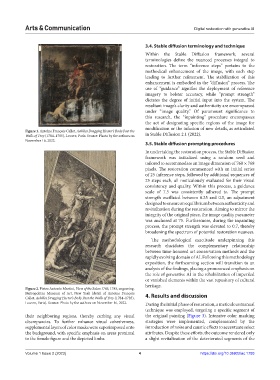
            Figure 1. Antoine François Callet, Achilles Dragging Hector’s Body Past the
            Walls of Troy (1784–1785), Louvre, Paris. Source: Photo by the authors on   in Stable Diffusion 2.1 (2022).
            November 16, 2022.
                                                               3.5. Stable diffusion prompting procedures
                                                               In undertaking the restoration process, the Stable Diffusion
                                                               framework was initialized using a random seed and
                                                               tailored to accommodate an image dimension of 768 × 768
                                                               pixels. The restoration commenced with an initial series
                                                               of 25 inference steps, followed by additional sequences of
                                                               25 steps each, all meticulously evaluated for their visual
                                                               consistency and quality. Within this process, a guidance
                                                               scale of 7.5 was consistently adhered to. The prompt
                                                               strength oscillated between 0.25 and 0.5, an adjustment
                                                               designed to ensure an equilibrium between authenticity and
                                                               revitalization during the restoration. Aiming to mirror the
                                                               integrity of the original piece, the image quality parameter
                                                               was anchored at 75. Furthermore, during the inpainting
                                                               process, the prompt strength was elevated to 0.7, thereby
                                                               broadening the spectrum of potential restoration nuances.
                                                                 The methodological exactitude underpinning this
                                                               research elucidates the complementary relationship
                                                               between time-honored art conservation methods and the
                                                               rapidly evolving domain of AI. Following this methodology
                                                               exposition, the forthcoming section will transition to an
                                                               analysis of the findings, placing a pronounced emphasis on
                                                               the role of generative AI in the rehabilitation of imperiled
                                                               or vanished elements within the vast repository of cultural
                                                               heritage.
            Figure 2. Pietro Antonio Martini, View of the Salon 1785, 1785, engraving.
            Metropolitan Museum of Art, New  York (detail of Antoine François   4. Results and discussion
            Callet, Achilles Dragging Hector’s Body Past the Walls of Troy (1784–1785),
            Louvre, Paris). Source: Photo by the authors on November 16, 2022.  During the initial phase of restoration, a meticulous manual
                                                               technique was employed, targeting a specific segment of
            their neighboring regions, thereby curbing any visual   the original painting (Figure 3). Intensive color masking
            discrepancies. To further enhance visual cohesiveness,   strategies  were  implemented,  complemented  by  the
            supplemental layers of color masks were superimposed onto   introduction of noise and caustic effects to accentuate select
            the background, with specific emphasis on areas proximal   attributes. Despite these efforts, the outcome rendered only
            to the female figure and the depicted limbs.       a slight revitalization of the deteriorated segments of the


            Volume 1 Issue 2 (2023)                         4                         https://doi.org/10.36922/ac.1793

