


Page 87 - AC-1-2
P. 87
Arts & Communication                                                    Digital restoration with generative AI


                                                               to encompass the domain of subjective aesthetic
                                                               interpretations, a realm where human conservators excel.
                                                                 In summation, the findings elucidate the profound
                                                               potential inherent in the symbiotic fusion of time-honored
                                                               artistic methodologies with contemporary machine-
                                                               learning paradigms. These outcomes resonate emphatically
                                                               with the prevailing academic discourse, advocating for an
                                                               equilibrated modus operandi in restoration endeavors.
                                                               Such an approach positions conservators and machine
                                                               learning aficionados to adeptly traverse the intricate nexus
                                                               binding the realms of art and technology. The results
                                                               further affirm the arguments presented by Yu et al. (2021),
                                                               emphasizing the imperative of an integrated framework
                                                               that harmoniously aligns the precision of technology with
                                                               the subjectivity and nuance of traditional conservation. The
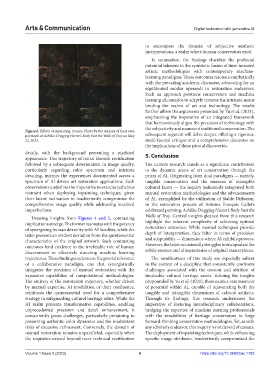
            Figure 6. Effects of inpainting. Source: Photo by the authors of their own
            portrayal of Achilles Dragging Hector’s Body Past the Walls of Troy on May   subsequent segment will delve deeper, offering a rigorous,
            22, 2023.                                          multi-faceted critique and a comprehensive discourse on
                                                               the implications of these pivotal discoveries.
            details,  with  the background  presenting  a  pixelated   5. Conclusion
            appearance. This trajectory of initial blemish rectification
            followed by a subsequent deterioration in image quality,   The current research stands as a significant contribution
            particularly regarding color spectrum and intricate   to the dynamic arena of art conservation through the
            detailing, mirrors the experiences documented across a   prism of AI. Originating from dual paradigms — namely,
            spectrum of AI-driven art restoration applications. Such   tangible conservation and the nuances of intangible
            observations underline the imperative to exercise judicious   cultural facets — the inquiry judiciously integrated both
            restraint when deploying inpainting techniques, given   manual restoration methodologies and the advancements
            their  latent  inclination to  inadvertently  compromise  the   of AI, exemplified by the utilization of Stable Diffusion,
            comprehensive image quality while addressing localized   in the restoration process of Antoine  François Callet’s
            imperfections.                                     celebrated painting, Achilles Dragging Hector’s Body Past the
              Drawing insights from  Figures  4 and  5, contrasting   Walls of Troy. Central insights gleaned from this research
            implications emerge. The former resonates with the potency   highlight the inherent complexity of achieving optimal
            of synergizing human dexterity with AI faculties, while the   restoration  outcomes.  While  manual  techniques  provide
            latter presents an evident deviation from the quintessential   depth of interpretation, they falter in terms of precision
            characteristics  of the  original  artwork.  Such contrasting   and adaptability — dimensions where AI exhibits prowess.
            outcomes lend credence to the irrefutable role of human   However, the latter occasionally struggles to encapsulate the
            discernment in effectively directing machine learning   subtle essence and idiosyncrasies of original masterpieces.
            trajectories. These findings underscore the pivotal relevance   The ramifications of this study are especially salient
            of a collaborative paradigm, one that synergistically   in the context of a discipline that consistently confronts
            integrates the precision of manual restoration with the   challenges associated with the erosion and attrition of
            expansive capabilities of computational methodologies.   invaluable cultural heritage assets. Echoing the insights
            The entirety of the restoration trajectory, whether driven   propounded by Yu et al. (2021), there exists a vast reservoir
            by manual expertise, AI modalities, or their confluence,   of potential within AI, capable of rejuvenating both the
            reinforces the quintessential need for a comprehensive   tangible and intangible dimensions of cultural artifacts.
            strategy in safeguarding cultural heritage relics. While the   Through its findings, this research underscores the
            AI realm presents transformative capabilities, enabling   imperative of fostering interdisciplinary collaborations,
            unprecedented precision and detail enhancement, it   bridging the expertise of machine learning professionals
            concurrently poses challenges, particularly pertaining to   with the sensibilities of heritage conservators to forge
            preserving authentic color dynamics and the inadvertent   forward-thinking conservation methodologies. Yet, as with
            risks of excessive refinement. Conversely, the domain of   any scholarly endeavor, this inquiry is not devoid of caveats.
            manual restoration remains unparalleled, especially when   The deployment of inpainting techniques, while enhancing
            the requisites extend beyond mere technical rectification   specific image attributes, inadvertently compromised the


            Volume 1 Issue 2 (2023)                         6                         https://doi.org/10.36922/ac.1793

