


Page 15 - AC-2-2
P. 15
Arts & Communication                                            1980s: A turning point in the Chinese art market


                                                               million yuan. Rongbaozhai expanded internationally,
                                                               with  sales  offices  in  the  United  States,  Japan,  Singapore,
                                                               and a branch in Hong Kong. A  Beijing-based import-
                                                               export  company  specializing  in  handicrafts  experienced
                                                               significant revenue growth, with revenues surpassing USD
                                                               300,000 after 1985 and an overall profit of USD 1.6 million.
                                                               The calligraphy and painting industries have been boosted
                                                               by the enormous revenues made by these businesses.
                                                               Individuals and corporate collectives in calligraphy and
                                                               painting collaborated similarly to other popular sectors.
                                                               Although only eight art stores in Beijing were allowed to
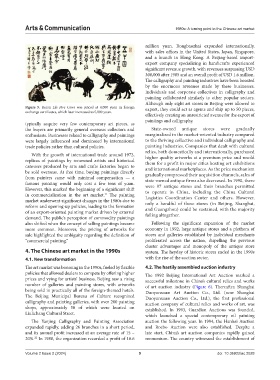
            Figure  5. Keran Li’s  Five Cows was priced at 4,000 yuan in foreign   export, they could act as agents and ship up to 50 pieces,
            exchange certificates, which later increased to 5,000 yuan.
                                                               effectively creating an unrestricted avenue for the export of
                                                               paintings and calligraphy.
            typically acquire very few contemporary art pieces, as
            the buyers are primarily general overseas collectors and   State-owned  antique  stores  were  gradually
            enthusiasts. Businesses related to calligraphy and paintings   marginalized in the market-oriented industry compared
            were largely influenced and dominated by international   to the thriving collective and individual calligraphy and
            trade policies rather than cultural policies.      painting industries. Companies that dealt with cultural
                                                               relics, both domestically and internationally, purchased
              With the growth of international trade around 1972,
            replicas  of  paintings  by  renowned  artists  and  historical   higher quality artworks at a premium price and resold
                                                               them for a profit in major cities hosting art exhibitions
            canvases produced by arts and crafts factories began to   and international marketplaces. As the price mechanism
            be sold overseas. At that time, buying paintings directly   gradually compressed their acquisition channels, sales of
            from painters came with minimal compensation — a   state-owned antique firms also decreased. In 1990, there
            famous painting would  only cost a few tens of yuan.   were 97 antique stores and their branches permitted
            However, this marked the beginning of a significant shift   to operate in China, including the China Cultural
                                              21
            in commercialization in the art market.  The painting
            market underwent significant changes in the 1980s due to   Logistics  Coordination  Center  and  others.  However,
                                                               only  a  handful  of  these  stores  (in  Beijing,  Shanghai,
            reform and opening-up policies, leading to the formation   and Guangzhou) could be sustained, with the majority
            of an export-oriented painting market driven by external   failing altogether.
            demand. The public’s perception of commodity paintings
            also shifted when the concept of selling paintings became   Following  the  significant expansion  of the  market
            more common. Moreover, the pricing of artworks for   economy in 1992, large antique stores and a plethora of
            sale highlighted the ambiguity regarding the definition of   stores and galleries established by individual merchants
            “commercial painting.”                             proliferated across the nation, dispelling the previous
                                                               cluster advantages and monopoly of the antique store
            4. The Chinese art market in the 1990s             system. The heyday of historic stores ended in the 1990s
            4.1. New transformation                            with the rise of the auction sector.
            The art market was booming in the 1990s, fueled by flexible   4.2. The hastily assembled auction industry
            policies that allowed dealers to compete by offering higher   The 1992 Beijing International Art Auction marked a
            prices and vying for artists’ business. Beijing saw a rising   successful milestone in China’s cultural relics and works
            number of galleries and painting stores, with artworks   of art auction industry (Figure  6). Thereafter, Shanghai
            being sold in practically all of the foreign-themed hotels.   Duoyunxuan Art Auction Co., Ltd. (now Shanghai
            The Beijing Municipal Bureau of Culture recognized   Duoyunxuan Auction Co., Ltd.), the first professional
            calligraphy and painting galleries, with over 200 painting   auction company of cultural relics and works of art, was
            shops, approximately 50 of which were located on   established. In 1993, Guardian Auctions was founded,
            Liulichang Cultural Street.                        which launched a special contemporary oil painting
              The Yanjing Calligraphy and Painting Association   auction the following year. In 1994, the Hanhai Auction
            expanded rapidly, adding 26 branches in a short period,   and Roebo Auction were also established. Despite a
            and its annual profit increased at an average rate of 15 –   late start, China’s art auction companies rapidly gained
            20%.  In 1988, the organization recorded a profit of 10.6   momentum. The country witnessed the establishment of
                22

            Volume 2 Issue 2 (2024)                         9                                doi: 10.36922/ac.2028

