


Page 49 - AIH-1-2
P. 49
Artificial Intelligence in Health                                        Blockchain for health-care security


            Table 6. Challenges facing blockchain and guidelines to tackle them
            Challenges      Causes                                  Guidelines
            Security and privacy   •  Blockchain technology is still in its early stages of   • Th  e type of data shared with and among participants must be
            of data          development and refinement.              determined since the beginning.
                            •  There is much ambiguity when it comes to designing the   • Prediction models that protect data privacy should be used.
                             blockchain.                            •  It is necessary to choose a blockchain protocol – the framework
                            •  When old corporate systems and record systems are   that guides the structure of the blockchain and the development of
                             involved, integration issues arise.     applications – and use the appropriate authorization structures.
            Managing storage   • Storage capacity for a large amount of data is limited.  • A scalable and resilient blockchain solution is required.
            capacity        • Limitations in throughput capacity and storage exist.  • Data storage requirements should be kept to a minimum.
            Interoperability issues  •  Creating blockchains from a variety of communication   •  Evaluability should be maintained while reducing integration
                             services is a challenge.                complicatedness.
                            •  It is technically challenging to afford an effective   •  The ease of integration should be taken into consideration with
                             interaction platform for users and for the operations of   security concerns.
                             medical applications.
                            •  Gaps in communication and information sharing are
                             obstacles.
            Decisions about   • Records’ ownership                  •  New cybersecurity risks must be addressed before patients
            blockchain governance • How is permission granted?       entrust a public blockchain with storing their data.
                                                                    •  The blockchain’s nodes, users, peers, and/or validators will
                                                                     need to be defined.
            Standardization   • Lack of uniformity and scalability  •  International standardization authorities are required to
            challenges      • Lack of successful blockchain-based projects for reference  formulate well-authenticated and approved standards.
                                                                    •  The standards will be treated as guidelines for inspecting the
                                                                     exchanged data and as safety precautions.
            Social challenges  •  Concerns about blockchain adoption due to cultural and   •  Organizations are encouraged to adopt technology and join a
                             trust issues                            shared network.
                            • Knowledge gap
                            • Hesitant social adoption of technology
            Inadequate universally  • No defined standards          •  Universal standards will help blockchain become more
            defined standards  •  Time- and effort-consuming implementation of standards   adaptable.
                             in the health-care sector              •  Data format, size, and type in blockchain will be readily
                                                                     determined.


                                                               be  resolved.  For  instance,  blockchain  is  still  vulnerable  to  a
                                                               compromise of mutual trust, by a degree of 51%, even though
                                                               such a trust system is built upon with consensus mechanisms.
                                                                                                            59
                                                               Data hackers can capitalize on this vulnerability to hijack the
                                                               whole system developed with blockchain. For blockchains
                                                               operating on POW mechanisms in particular, an attack with
                                                               a probability of 51% may occur if one miner’s hashing power is
                                                               more than 50% of the hashing power in total. If a user’s private
                                                               key is lost, their entire blockchain will be vulnerable to tampering
                                                               by other people. Since blockchain is decentralized and does not
                                                               rely on third-party institutions for its operations, 54,62  it would be
                                                               tough to track the whereabouts of a stolen private key and to
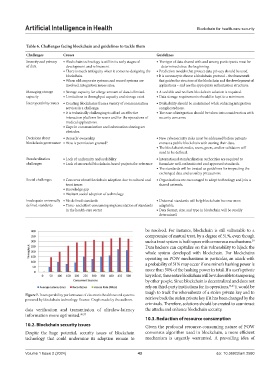
            Figure 7. Interoperability performance of electronic health record systems
            powered by blockchain technology. Source: Graph made by the authors.  retrieve back the stolen private key if it has been changed by the
                                                               criminals. Therefore, solutions should be created to counteract
            data verification and transmission of ultralow-latency   the attacks and enhance blockchain security.
            information more optimized. 48,57
                                                               10.3. Reduction of resource consumption
            10.2. Blockchain security issues                   Given the profound resource-consuming nature of POW
            Despite the huge potential, security issues of blockchain   consensus algorithm used in blockchain, a more efficient
            technology that could undermine its adoption remain to   mechanism  is urgently warranted. A  prevailing idea of


            Volume 1 Issue 2 (2024)                         43                               doi: 10.36922/aih.2580

