


Page 41 - AIH-1-3
P. 41
Artificial Intelligence in Health                                  Predicting mortality in COVID-19 using ML


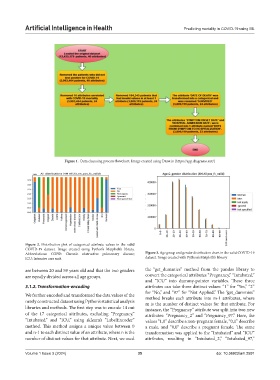
                             Figure 1.  Data cleansing process flowchart. Image created using Draw.io (https://app.diagrams.net/)


            Figure  2.  Distribution plot  of  categorical  attribute  values  in  the  valid
            COVID-19  dataset. Image created using Python’s Matplotlib library.
            Abbreviations: COPD: Chronic obstructive pulmonary disease;    Figure 3. Age group and gender distribution chart in the valid COVID-19
            ICU: Intensive care unit.                          dataset. Image created with Python’s Matplotlib library

            are between 20 and 59 years old and that the two genders   the “get_dummies” method  from the pandas library to
            are equally divided across all age groups.         convert the categorical attributes “Pregnancy,” “Intubated,”
                                                               and “ICU” into dummy-pointer variables. These three
            3.1.2. Transformation-encoding                     attributes can take three distinct values: “1” for “Yes,” “2”
                                                               for “No,” and “97” for “Not Applied.” The “get_dummies”
            We further encoded and transformed the data values of the   method breaks each attribute into m-1 attributes, where
            newly constructed dataset using Python’s statistical analysis   m is the number of distinct values for that attribute. For
            libraries and methods. The first step was to encode 14 out   instance, the “Pregnancy” attribute was split into two new
            of the 17 categorical attributes, excluding “Pregnancy,”   attributes: “Pregnancy_2” and “Pregnancy_97.” Here, the
            “Intubated,” and “ICU,” using sklearn’s “LabelEncoder”   values “1,0” describe a non-pregnant female, “0,1” describe
            method. This method assigns a unique value between 0   a male, and “0,0” describe a pregnant female. The same
            and n-1 to each distinct value of an attribute, where n is the   transformation was applied to the “Intubated” and “ICU”
            number of distinct values for that attribute. Next, we used   attributes, resulting in “Intubated_2,” “Intubated_97,”


            Volume 1 Issue 3 (2024)                         35                               doi: 10.36922/aih.2591

