


Page 43 - AIH-1-3
P. 43
Artificial Intelligence in Health                                  Predicting mortality in COVID-19 using ML


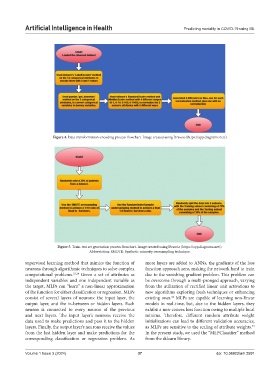
                        Figure 4. Data transformation-encoding process flowchart. Image created using Draw.io (https://app.diagrams.net/)


                         Figure 5. Train-test set generation process flowchart. Image created using Draw.io (https://app.diagrams.net/).
                                       Abbreviation: SMOTE: Synthetic minority oversampling technique.

            supervised learning method that mimics the function of   more layers are added to ANNs, the gradients of the loss
            neurons through algorithmic techniques to solve complex   function approach zero, making the network hard to train
            computational problems. 33,34  Given a set of attributes as   due to the vanishing gradient problem. This problem can
            independent variables  and  one  independent  variable  as   be overcome through a multi-pronged approach, varying
            the target, MLPs can “learn” a non-linear approximation   from the utilization of rectified linear unit activations to
            of the function for either classification or regression. MLPs   new algorithms exploring fresh techniques or enhancing
            consist of several layers of neurons: the input layer, the   existing ones.  MLPs are capable of learning non-linear
                                                                          52
            output layer, and the in-between or hidden layers. Each   models  in  real-time,  but,  due  to  the  hidden  layers,  they
            neuron is connected to every neuron of the previous   exhibit a non-convex loss function owing to multiple local
            and next layers. The input layer’s neurons receive the   minima. Therefore, different random attribute weight
            data used to make predictions and pass it to the hidden   initializations can lead to different validation accuracies,
            layers. Finally, the output layer’s neurons receive the values   as MLPs are sensitive to the scaling of attribute weights.
                                                                                                            53
            from the last hidden layer and make predictions for the   In the present study, we used the “MLPClassifier” method
            corresponding  classification  or  regression  problem.  As   from the sklearn library.


            Volume 1 Issue 3 (2024)                         37                               doi: 10.36922/aih.2591

