


Page 45 - AIH-1-3
P. 45
Artificial Intelligence in Health                                  Predicting mortality in COVID-19 using ML


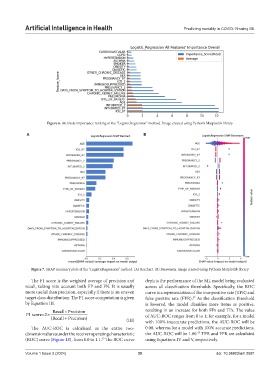
                     Figure 6. Attribute importance ranking of the “LogisticRegression” method. Image created using Python’s Matplotlib library

            A                                                 B


              Figure 7. SHAP summary plots of the “LogisticRegression” method. (A) Barchart. (B) Beeswarm. Image created using Python’s Matplotlib library

              The F1 score is the weighted average of precision and   depicts the performance of the ML model being evaluated
            recall, taking into account both FP and FN. It is usually   across all classification thresholds. Specifically, the ROC
            more useful than precision, especially if there is an uneven   curve is a representation of the true positive rate (TPR) and
            target class distribution. The F1 score computation is given   false positive rate (FPR).  As the classification threshold
                                                                                   37
            by Equation III.                                   is lowered, the model classifies more items as positive,
                       Recall Precision                       resulting in an increase for both FPs and TPs. The value
            F1 score=2                                        of AUC-ROC ranges from 0 to 1; for example, for a model

                       (RecallPrecision)               (III)   with 100% inaccurate predictions, the AUC-ROC will be
              The AUC-ROC is calculated as the entire two-     0.00, whereas for a model with 100% accurate predictions,
            dimensional area under the receiver operating characteristic   the AUC-ROC will be 1.00.  TPR and FPR are calculated
                                                                                     37
            (ROC) curve (Figure 18), from 0.0 to 1.1.  The ROC curve   using Equations IV and V, respectively.
                                            37
            Volume 1 Issue 3 (2024)                         39                               doi: 10.36922/aih.2591

