


Page 95 - AIH-1-4
P. 95
Artificial Intelligence in Health                               Transformer-based radiology report summaries


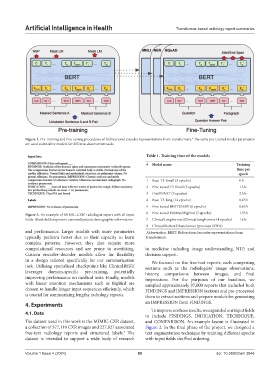
            Figure 1. Pre-training and fine-tuning procedures of bidirectional encoder representations from transformers.  The same pre-trained model parameters
                                                                                   6
            are used to initialize models for different downstream tasks

                                                               Table 1. Training time of the models
                                                               #  Model name                          Training
                                                                                                      time per
                                                                                                       epoch
                                                               1  Base-T5-Small (3 epochs)                 0 h
                                                               2  Fine-tuned T5-Small (3 epochs)           1.5 h
                                                               3  DistillBART (3 epochs)                   2.5 h
                                                               4  Base-T5-long (12 epochs)             0.63 h
                                                               5  Fine-tuned BERT2BERT (6 epochs)      0.65 h
            Figure 2. An example of MIMIC-CXR  radiologist report with all input   6  Fine-tuned PubMed BigBird (7 epochs)  1.55 h
                                     3
            fields. Blank fields represent censored patient demographic information  7  ClinicalLongFormer2ClinicalLongFormer (4 epochs)       1.6 h
                                                               8  ClinicalBioBert2Transformer (previous SOTA)        -
            and performance. Larger models with more parameters   Abbreviation: BERT: Bidirectional encoder representations from
            typically perform better due to their capacity to learn   transformers.
            complex patterns. However, they also require more
            computational resources and are prone to overfitting.   in medicine including image understanding, NLP, and
            Custom encoder–decoder models allow for flexibility   decision support.
            in a design tailored specifically for our summarization   We focused on the free-text reports, each comprising
            task. Utilizing specialized checkpoints like ClinicalBERT   sections such as the radiologists’ image  observations,
            leverages  domain-specific  pre-training,  potentially  history, comparisons between images, and final
            improving performance on medical texts. Finally, models   impressions. For the purposes of our baselines, we
            with linear attention mechanisms such as BigBird are   sampled approximately 97,000 reports that included both
            chosen to handle longer input sequences efficiently, which   FINDINGS and IMPRESSION sections and pre-processed
            is crucial for summarizing lengthy radiology reports.  them to extract sections and prepare models for generating
            4. Experiments                                     an IMPRESSION from FINDINGS.
                                                                 To improve on these results, we expanded our input fields
            4.1. Data
                                                               to  include  FINDINGS, INDICATION, TECHNIQUE,
            The dataset used in this work is the MIMIC-CXR dataset,   and COMPARISON. An example layout is illustrated in
            a collection of 377,110 CXR images and 227,827 associated   Figure 2. In the final phase of the project, we designed a
            free-text radiology reports and structured labels.  The   text augmentation technique by training different epochs
                                                      3
            dataset  is intended  to support  a wide body of research   with input fields shuffled ordering.

            Volume 1 Issue 4 (2024)                         89                               doi: 10.36922/aih.3846

