


Page 47 - AIH-2-3
P. 47
Artificial Intelligence in Health                                           Omnichain FL in healthcare AI


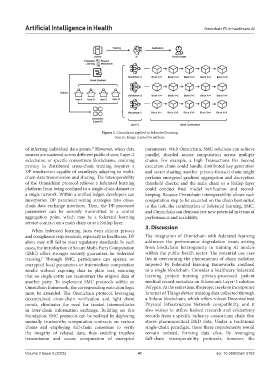
                                            Figure 1. Omnichain applied in federated learning
                                                  Source: Image created by authors.

            of inferring individual data points.  However, when data   parameters. With Omnichain, SMC solutions can achieve
                                        8
            sources are scattered across different public chains, Layer-2   parallel, sharded secure computation across multiple
            sidechains, or specific consortium blockchains, ensuring   chains. For example, a high Transactions Per Second
            privacy in distributed cross-chain training requires a   execution chain could handle distributed key generation
            DP mechanism capable of seamlessly adapting to multi-  and secret sharing; another privacy-focused chain might
            chain data transmission and sharing. The interoperability   perform encrypted gradient aggregation and decryption
            of the Omnichain protocol relieves a federated learning   threshold checks; and the main chain or a Rollup layer
            platform from being confined to a single-chain dataset or   could conduct final model verification and record-
            a single network. Within a unified ledger, developers can   keeping. Because Omnichain interoperability allows each
            incorporate DP parameter-tuning strategies into cross-  computation step to be executed on the chain best suited
            chain data exchange  interfaces.  Then, the  DP-processed   to the task, the combination of federated learning, SMC,
            parameters can be securely transmitted to a central   and Omnichain can demonstrate new potential in terms of
            aggregation point, which may be a federated learning   performance and scalability.
            service contract on a main chain or at a Rollup layer.
                                                               3. Discussion
              When federated learning faces even stricter privacy
            and compliance requirements, especially in healthcare, DP   The integration of Omnichain with federated learning
            alone may still fail to meet regulatory standards. In such   addresses  the  performance  degradation  issues  arising
            cases, the introduction of Secure Multi-Party Computation   from blockchain heterogeneity in training AI models
            (SMC) offers stronger  security  guarantees  for federated   within the public health sector. The potential use case
            training.  Through SMC, participants  can operate on   lies  in  overcoming  the  phenomenon  of  chain  isolation
                   9
            encrypted local parameters or intermediate computation   imposed by federated learning frameworks confined
            results without exposing data in plain text, ensuring   to a single blockchain. Consider a healthcare federated
            that no single entity can reconstruct the original data of   learning project training privacy-processed patient
            another party. To implement SMC protocols within an   medical record metadata on Ethereum’s Layer-2 solution
            Omnichain framework, the corresponding execution logic   Polygon. At the same time, the project seeks to incorporate
            must be extended. The Omnichain protocol, leveraging   Internet of Things device training data collected through
            decentralized cross-chain verification and light client   a Solana blockchain, which offers robust Decentralized
            proofs, eliminates the need for trusted intermediaries   Physical Infrastructure Network compatibility, and it
            in inter-chain information exchange. Building on this   also wishes to utilize hashed research and evidentiary
            foundation, SMC protocols can be realized by deploying   records from a specific industry consortium chain that
            mutually trustworthy computation contracts on various   stores pharmaceutical R&D data. Under a traditional
            chains and employing full-chain consensus to verify   single-chain paradigm, these three requirements would
            the integrity of relayed data, thus enabling trustless   remain isolated, forming data silos. By leveraging
            transmission and secure computation of encrypted   full-chain interoperability protocols, however, the


            Volume 2 Issue 3 (2025)                         41                               doi: 10.36922/aih.5753

