


Page 40 - AJWEP-22-6
P. 40
Fattorini


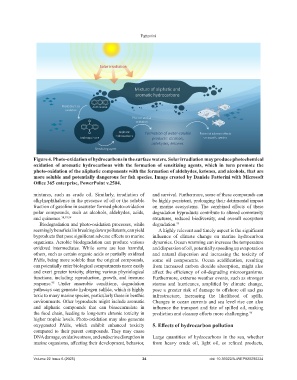
                Figure 4. Photo-oxidation of hydrocarbons in the surface waters. Solar irradiation may produce photochemical
                oxidation of aromatic hydrocarbons with the formation of sensitizing agents, which in turn promote the
                photo-oxidation of the aliphatic components with the formation of aldehydes, ketones, and alcohols, that are
                more soluble and potentially dangerous for fish species. Image created by Daniele Fattorini with Microsoft
                Office 365 enterprise, PowerPoint v.2504.

                mixtures,  such as crude  oil.  Similarly, irradiation  of   and survival. Furthermore, some of these compounds can
                alkylnaphthalenes in the presence of oil or the soluble   be highly persistent, prolonging their detrimental impact
                fraction of gasoline in seawater formed photo-oxidation   on  marine  ecosystems.  The  combined  effects  of  these
                polar compounds, such as alcohols,  aldehydes,  acids,   degradation byproducts contribute to altered community
                and quinones. 38,93,94                              structures, reduced biodiversity, and overall ecosystem
                  Biodegradation and photo-oxidation processes, while   degradation. 95
                seemingly beneficial in breaking down pollutants, can yield   A highly relevant and timely aspect is the significant
                byproducts that pose significant adverse effects on marine   influence  of  climate  change  on  marine  hydrocarbon
                organisms. Aerobic biodegradation can produce various   dynamics. Ocean warming can increase the temperature
                oxidized  intermediates.  While some are less harmful,   and dispersion of oil, potentially speeding up evaporation
                others, such as certain organic acids or partially oxidized   and natural  dispersion and increasing  the  toxicity  of
                PAHs, being more soluble than the original compounds,   some  oil  components.  Ocean  acidification,  resulting
                can potentially enter biological compartments more easily   from increased carbon dioxide absorption, might also
                and exert greater toxicity, altering various physiological   affect the efficiency of oil-degrading microorganisms.
                functions, including reproduction, growth, and immune   Furthermore, extreme weather events, such as stronger
                response.  Under anaerobic conditions, degradation   storms  and  hurricanes,  amplified  by  climate  change,
                        95
                pathways can generate hydrogen sulfide, which is highly   pose a greater risk of damage to offshore oil and gas
                toxic to many marine species, particularly those in benthic   infrastructure,  increasing  the likelihood  of spills.
                environments. Other byproducts might include aromatic   Changes in ocean currents and sea level rise can also
                and aliphatic compounds that can bioaccumulate in   influence the transport and fate of spilled oil, making
                the food chain, leading to long-term chronic toxicity in   prediction and cleanup efforts more challenging. 96
                higher trophic levels. Photo-oxidation may also generate
                oxygenated PAHs, which exhibit enhanced toxicity    5. Effects of hydrocarbon pollution
                compared to their parent compounds. They may cause
                DNA damage, oxidative stress, and endocrine disruption in   Large  quantities  of  hydrocarbons  in  the  sea,  whether
                marine organisms, affecting their development, behavior,   from  heavy  crude  oil,  light  oil,  or  refined  products,


                Volume 22 Issue 6 (2025)                        34                           doi: 10.36922/AJWEP025290224

