


Page 104 - AN-2-2
P. 104
Advanced Neurology                                                 Inflammatory myopathies during COVID-19


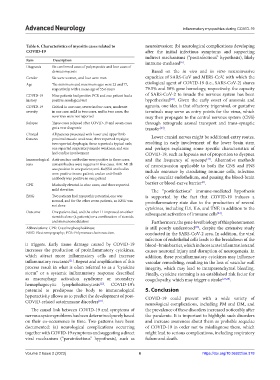
            Table 6. Characteristics of myositis cases related to   neuroinvasion; (b) neurological complications developing
            COVID‑19                                           after the initial infectious symptoms and supporting
                                                               indirect mechanisms (“postinfectious” hypothesis), likely
            Item        Description                            immune-mediated .
                                                                              [6]
            Diagnosis  Six confirmed cases of polymyositis and four cases of
                       dermatomycosis                            Based on the  in vivo and  in vitro neuroinvasive
            Gender     Six were women, and four were men       capacities of SARS-CoV and MERS-CoV, with which the
            Age        The minimum and maximum ages were 23 and 77,   etiological agent of COVID-19 (i.e., SARS-CoV-2) shares
                       respectively, with a mean age of 55.6 years  79.5% and 50% gene homology, respectively, the capacity
            COVID-19   Nine patients had positive PCR and one patient had a   of SARS-CoV-2 to invade the nervous system has been
                                                                         [23]
            history    positive serological test               hypothesized . Given the early onset of anosmia and
            COVID-19   Critical in one case, severe in four cases, moderate   ageusia, one idea is that olfactory, trigeminal, or gustative
            severity   in one case, mild in two cases, and in two cases, the   terminals may serve as entry points for the virus, which
                       severities were not reported            may then propagate to the central nervous system (CNS)
            Relapse    Three cases relapsed after COVID-19 and seven cases   through retrograde axonal transport and trans-synaptic
                       got a new diagnosis                     transfer .
                                                                     [24]
            Clinical   All patients presented with lower and upper limb   Lower cranial nerves might be additional entry routes,
            features   proximal muscle weakness; three reported myalgia;
                       two reported dysphagia; three reported a typical rash;   resulting in early involvement of the lower brain stem
                       one reported respiratory muscle weakness; and one   and perhaps explaining some specific characteristics of
                       had cardiac involvement                 COVID-19, such as hypoxia out of proportion to dyspnea
                                                                                         [25]
            Immunological  Anti-nuclear antibodies were positive in three cases,   and the frequency of syncope . Alternative methods
            tests      autoantibodies were negative in five cases. Anti-MI 2b   of neuroinvasion applicable to both the CNS and PNS
                       was positive in one patient; anti-Ro/SSA antibodies   include  entrance  by circulating  immune cells, infection
                       were positive in one patient; and an anti-Smith
                       antibody was positive in one patient    of the vascular endothelium, and passing the blood-brain
                                                                                       [6]
            CPK        Markedly elevated in nine cases, and three reported   barrier or blood-nerve barrier .
                       mild elevation                            The “postinfectious” immune-mediated hypothesis
            EMG        Two patients had myopathic potential, one was   is supported by the fact that COVID-19 induces a
                       normal, and for the other seven patients, an EMG was   proinflammatory  state  due  to  the  production  of  several
                       not done                                cytokines, including IL1, IL6, and TNF, in addition to the
            Outcome    One patient died, and the other 11 improved on either   subsequent activation of immune cells .
                                                                                             [24]
                       steroids alone (4 patients) or a combination of steroids
                       and immunomodulators                      Furthermore, the gene-level biology of this phenomenon
                                                                                    [26]
            Abbreviations: CPK: Creatine phosphokinase;        is still poorly understood , despite the extensive study
            EMG: Electromyography; PCR: Polymerase chain reaction.  conducted in the SARS-CoV-2 area. In addition, the viral
                                                               infection of endothelial cells leads to the breakdown of the
            it triggers. Early tissue damage caused by COVID-19   blood–brain barrier, which induces acute inflammation and
            increases the production of proinflammatory cytokines,   causes neuronal injury and disruption of neurogenesis. In
            which attract more inflammatory cells and increase   addition, these proinflammatory cytokines may influence
            inflammatory reactants . Repeat and amplification of this   vascular remodeling, resulting in the loss of vascular wall
                              [21]
            process result in what is often referred to as a “cytokine   integrity, which may lead to intraparenchymal bleeding.
            storm” or a systemic inflammatory response described   Finally, cytokine storming is an established risk factor for
            as macrophage activation syndrome or secondary     coagulopathy, which may trigger a stroke [27,28] .
            hemophagocytic lymphohistiocytosis . COVID-19’s
                                           [22]
            potential to predispose the body to immunological   5. Conclusion
            hyperactivity allows us to predict the development of post-  COVID-19 could present with a wide variety of
            COVID-related autoimmune disorders .
                                           [10]
                                                               neurological complications, including PM and DM, and
              The causal link between COVID-19 and symptoms of   the prevalence of these disorders increased noticeably after
            nervous system problems has been determined purely based   the pandemic. It is important to highlight such disorders
            on their co-occurrence in time. Two patterns have been   and increase awareness about them as probable sequelae
            documented: (a) neurological complications occurring   of COVID-19 in order not to misdiagnose them, which
            together with COVID‐19 symptoms and suggesting a direct   might lead to serious complications, including respiratory
            viral  mechanism  (“parainfectious”  hypothesis),  such  as   failure and death.


            Volume 2 Issue 2 (2023)                         6                          https://doi.org/10.36922/an.378

