


Page 18 - AN-2-2
P. 18
Advanced Neurology                                          A novel approach to mitigate muscle atrophy in GBS


            A                                                  degradation of myelin and axonal proteins . It is believed
                                                                                                 [47]
                                                               that the clinical recovery phase of GBS coincides with
                                                               remyelination (for AIDP) and axonal regrowth process (for
                                                               axonal variants) extending over a 4- to 6-month period ,
                                                                                                           [3]
                                                               with  the  most  significant  changes  occurring  within  the
                                                               first 10  weeks of disease onset [11,48] . However, for those
                                                               suffering from more severe GBS symptoms, recovery could
                                                               take several years . Furthermore, if the axonal damage is
                                                                             [3]
                                                               widespread and includes the entire length of a nerve, the
                                                                                               [1]
                                                               demyelination may likely be irreversible .
            B
                                                               2.3. Current management and prognosis of GBS
                                                               Since this is only a brief summary of GBS-related
                                                               management strategies, please refer to recent reviews [1,7]  for
                                                               further details. As mentioned previously, the acute treatment
                                                               of GBS consists of immunotherapy, usually either PLEX or
                                                               IVIg. Before their use, mortality and long-term disability
                                                               rates were 13% and 20%, respectively . Since their
                                                                                                [49]
                                                               introduction, both forms of immunotherapy have shown
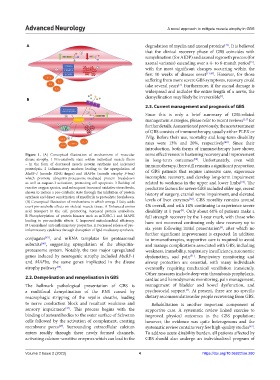
            Figure  1.  (A) Conceptual illustration of mechanisms of muscular   some effectiveness in hastening recovery and improvement
            disuse atrophy. 1 Pro-catabolic state within individual muscle fibers   in long-term outcomes . Unfortunately, even with
                                                                                   [50]
            – in the form of decreased muscle protein synthesis and increased   immunotherapy, there still remains a significant proportion
            proteolysis. 2 Inflammatory markers leading to the upregulation of   of GBS patients that require intensive care, experience
            MuRF-1 (muscle RING finger) and  MAFbx (muscle atrophy F-box)
            which promote ubiquitin-proteasome-mediated protein breakdown   incomplete recovery, and develop long-term impairment
            as well as caspase-3 activation, promoting cell apoptosis. 3 Buildup of   related to weakness in the upper and lower limbs . The
                                                                                                       [51]
            reactive oxygen species, and subsequent increased oxidative stress levels,   predictive factors for severe GBS included older age, recent
            shown to induce a pro-catabolic state through the inhibition of protein   history of surgery, cranial nerve impairment, and elevated
            synthesis and direct sensitization of myofibrils to proteolytic breakdown.   [52]
            (B) Conceptual illustration of mechanisms in which omega-3 fatty acids   levels of liver enzymes . GBS morality remains around
            exert pro-anabolic effects on skeletal muscle tissue. A Enhanced amino   4% overall, and with 14% continuing to experience severe
            acid transport in the cell, promoting increased protein anabolism.   disability at 1 year . Only about 60% of patients make a
                                                                              [9]
            B  Phosphorylation of protein kinases such as mTORC-1 and MAPK   full strength recovery by the 1-year mark, with those who
            leading to pro-anabolic effects. C  Improved mitochondrial efficiency.   have not recovered continuing only slow recovery up to
            D Generalized anti-inflammatory properties. E Decreased release of pro-           [9]
            inflammatory cytokines through disruption of lipid mediatory synthesis.  six  years  following  initial  presentation ,  after  which  no
                                                               further significant improvement is expected. In addition
            conjugates , and mRNA templates for proteasomal    to immunotherapies, supportive care is required to avoid
                    [45]
            subunits ,  suggesting  upregulation  of  the  ubiquitin-  and manage complications associated with GBS, including
                   [46]
            proteasome  system.  Notably, the two  major  upregulated   weakness, immobility, respiratory insufficiency, autonomic
            genes induced by neurogenic atrophy included  MuRF-1   dysfunction,  and  pain .  Respiratory  monitoring  and
                                                                                  [51]
            and  MAFbx, the same genes implicated in the disuse   airway protection are essential, with many individuals
            atrophy pathway .                                  eventually requiring mechanical ventilation transiently.
                         [35]
                                                               Other measures include deep vein thrombosis prophylaxis,
            2.2. Demyelination and remyelination in GBS        cardiac and hemodynamic monitoring, pain management,
            The hallmark pathological presentation of GBS is   management of bladder and bowel dysfunction, and
                                                                                [3]
            a multifocal demyelination of the PNS caused by    psychosocial support . At present, there are no specific
            macrophagic stripping of the myelin sheaths, leading   dietary recommendations for people recovering from GBS.
            to nerve conduction block and resultant weakness and   Rehabilitation is another important component of
            sensory impairment . This process begins with the   supportive  care.  A  systematic  review  linked  exercise  to
                             [47]
            binding of autoantibodies to the outer surface of Schwann   improved  physical  outcomes  in  the  GBS population;
            cells followed by the activation of complement, creating   however, the evidence was quite heterogenous and the
            membrane pores . Surrounding extracellular calcium   systematic review contains very few high-quality studies .
                          [47]
                                                                                                           [53]
            enters readily through these newly formed channels,   To address acute disability burden, all patients affected by
            activating calcium-sensitive enzymes which can lead to the   GBS  should  also  undergo  an  individualized  program  of

            Volume 2 Issue 2 (2023)                         4                          https://doi.org/10.36922/an.280

