


Page 19 - AN-2-2
P. 19
Advanced Neurology                                          A novel approach to mitigate muscle atrophy in GBS


                         A                                 B


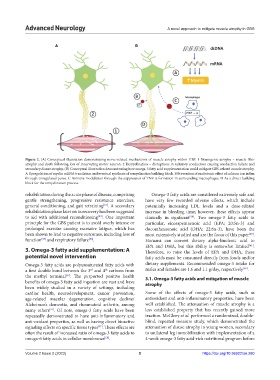
            Figure 2. (A) Conceptual illustration demonstrating nerve-related mechanisms of muscle atrophy within GBS. 1 Neurogenic atrophy – muscle fiber
            atrophy and death following loss of innervating motor neuron. 2 Demyelination – disruptions in saltatory conduction causing conduction failure and
            secondary disuse atrophy. (B) Conceptual illustration demonstrating how omega-3 fatty acid supplementation could mitigate GBS-related muscle atrophy.
            A Upregulation of myelin mRNA translation and eventual synthesis of remyelination building block. B Prevention of excitotoxic effect of calcium ion influx
            through unregulated pores. C Immune modulation through the suppression of TNF-α formation in surrounding macrophages. D As a direct building
            block for the remyelination process.

            rehabilitation during the acute phase of disease, comprising   Omega-3 fatty acids are considered extremely safe and
            gentle strengthening, progressive resistance exercises,   have very few recorded adverse effects, which include
            general conditioning, and gait retraining . A secondary   potentially increasing LDL levels and a dose-related
                                             [51]
            rehabilitation phase later on in recovery has been suggested   increase in bleeding time; however, these effects appear
            to aid with additional reconditioning . One important   clinically  in  signficant .  Two  omega-3  fatty  acids  in
                                           [54]
                                                                                  [59]
            principle for the GBS patient is to avoid overly intense or   particular, eicosapentaenoic acid (EPA; 20:5n-3) and
            prolonged  exercise  causing  excessive  fatigue, which  has   docosahexaenoic acid (DHA; 22:6n-3), have been the
            been shown to lead to negative outcomes, including loss of   most extensively studied and are the focus of this paper .
                                                                                                           [60]
            function  and respiratory failure .                Humans can convert dietary alpha-linolenic acid to
                                       [56]
                   [55]
                                                                                                           [61]
                                                               EPA and DHA, but this ability is somewhat limited .
            3. Omega-3 fatty acid supplementation: A           Therefore, to raise the levels of EPA and DHA, these
            potential novel intervention                       fatty acids must be consumed directly from foods and/or
            Omega-3 fatty acids are polyunsaturated fatty acids with   dietary supplements. Recommended omega-3 intake for
                                                                                                        [62]
            a first double bond between the 3  and 4  carbons from   males and females are 1.6 and 1.1 g/day, respectively .
                                       rd
                                              th
            the methyl terminal . The purported positive health   3.1. Omega-3 fatty acids and mitigation of muscle
                             [57]
            benefits of omega-3 fatty acid ingestion are vast and have   atrophy
            been widely studied in a variety of settings, including
            cardiac health, neurodevelopment, cancer prevention,   Some of the effects of omega-3 fatty acids, such as
            age-related macular degeneration, cognitive decline/  antioxidant and anti-inflammatory properties, have been
            Alzheimer’s dementia, and rheumatoid arthritis, among   well established. The attenuation of muscle atrophy is a
            many others . Of note, omega-3 fatty acids have been   less established property that has recently gained more
                      [57]
            repeatedly demonstrated to have anti-inflammatory and   traction. McGlory et al. performed a randomized, double-
            anti-oxidant properties, as well as having direct bioactive   blind, repeated measure study, which demonstrated the
            signaling effects on specific tissue types . These effects are   attenuation of disuse atrophy in young women, secondary
                                           [57]
            often the result of increased ratio of omega-3 fatty acids to   to unilateral leg immobilization with implementation of a
            omega-6 fatty acids in cellular membranes .        4-week omega-3 fatty acid-rich nutritional program before
                                             [58]
            Volume 2 Issue 2 (2023)                         5                          https://doi.org/10.36922/an.280

