


Page 70 - AN-2-4
P. 70
Advanced Neurology                                               A novel marker for healthy intracranial arteries


            Table 3. Univariate and multivariate analysis of the FB sign

            Variable                                    Univariate analysis                Multivariate analysis
                                           Presence of FB   Absent or abnormal   P‑value  OR (95% CI)  P‑value
                                            sign (n=381)    FB sign (n=624)
            Moderate ICA stenosis (n [%])    96 (25.1)        208 (33.4)     <0.001*   0.39 (0.28 – 0.54)  <0.001*
            Severe ICA stenosis (n [%])       24 (6.3)        221 (35.5)               0.10 (0.06 – 0.17)  <0.001*
            MCA Stenosis degree (median % [IQR])  0 (0, 23)   20 (0, 49)      0.010*   0.85 (0.80 – 0.90)  <0.001*
            Bifurcation angle, (x±SD degree [°])  96±18        102±22        <0.001*   0.86 (0.79 – 0.93)  <0.001*
            Note: *P<0.05. Abbreviations: CI: Confidence interval; FB: Fried-breadstick; ICA: Internal carotid artery; IQR: Interquartile range; MCA: Middle
            cerebral artery; OR: Odds ratio; SD: Standard deviation.

            A                                                  patients with intracranial atherosclerosis in future trials,
                                                               with no additional costs or risks.
                                                                 The underlying mechanisms of the FB sign are intricate
                                                               and remain unclear. TOF-MRA is a gradient echo sequence
                                                               based on the flow-related enhancement  theory . The
                                                                                                       [16]
                                                               signal intensity of the intracranial arteries on TOF-MRA
                                                               is associated with flow velocities in the vessel lumen.
                                                               Both  high  velocity  and  low  velocity  of  blood  flow,  or
            B                                                  in-plane blood flow, could cause signal loss [24,25] . Saloner
                                                               et al.  investigated central signal loss with computational
                                                                   [26]
                                                               fluid dynamics, phantom, and healthy volunteers. They
                                                               simulated parabolic laminar flow and demonstrated that
                                                               slow peripheral laminar flow formed a counter-rotating
                                                               secondary flow when entering a curved vessel, leading to
                                                               central intraluminal signal loss from saturation of the spin
                                                               magnetization .  The  study  supported  the  idea  that  the
                                                                          [26]
                                                               combination of parabolic laminar flow and ICA curvature
                                                               contributed to the signal loss, which matched our
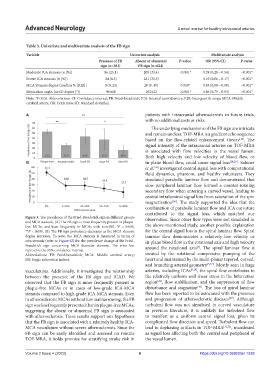
            Figure 3. The prevalence of the Fried-Breadstick sign in different groups   observation. Since other flow types were not simulated in
            and MCA stenosis. (A) The FB sign is most frequently present in plaque-
            free MCAs and least frequently in MCAs with non-SSI. *P  < 0.005,   the above-mentioned study, another possible explanation
            **P < 0.001. (B) The FB sign prevalence decreases as the MCA stenosis   for the central signal loss is the spiral laminar flow. Spiral
            degree increases. To note, the MCA stenosis is measured in terms of   laminar flow demonstrates a relatively low velocity or
            area stenosis (refer to Figure S2) for the prevalence change of the Fried-  in-plane blood flow in the rotational axis and high velocity
            Breadstick sign concerning MCA diameter stenosis. The error bar   around the rotational axis . The spiral laminar flow is
                                                                                     [5]
            represents the 95% confidence interval.
            Abbreviations: FB: Fried-breadstick; MCA: Middle cerebral artery;   created by the rotational compressive pumping of the
            SSI: Single subcortical infarct.                   heart and maintained by the multi-planar tapered, curved,
                                                               and branching arterial geometry [5,27] . Mostly seen in large
            vasculatures. Additionally, it investigated the relationship   arteries, including ICAs [6,28] , the spiral flow contributes to
            between  the  presence  of  the  FB  sign  and  ICAD.  We   the relatively uniform wall shear stress in the bifurcation
                                                                    [29]
            observed that the FB sign is more frequently present in   region , flow stabilization, and the suppression of flow
                                                                                     [30]
            plaque-free MCAs or in cases of low-grade  ICA-MCA   disturbance and stagnation . The loss of spiral laminar
            stenosis compared to high-grade ICA-MCA stenosis. Even   flow has been reported to be associated with the presence
                                                                                                  [27]
            in atherosclerotic MCAs without luminal narrowing, the FB   and progression of atherosclerotic diseases . Although
            sign was less frequently presented than in plaque-free MCAs,   turbulent flow was not simulated in curved vasculature
            suggesting the absent or abnormal FB sign is associated   in previous literature, it is unlikely for turbulent flow
            with atherosclerosis. These results support our hypothesis   to manifest as a uniform central signal loss, given its
            that the FB sign is associated with a relatively healthy ICA-  complicated flow direction and speed. Turbulent flow can
            MCA vasculature without severe atherosclerosis. Since the   lead to dephasing artifacts in TOF-MRA [31,32] , manifested
            FB sign can be easily identified and assessed on routine   as signal loss affecting both the central and peripheral of
            TOF-MRA, it holds promise for stratifying stroke risk in   the vessel lumen.


            Volume 2 Issue 4 (2023)                         6                         https://doi.org/10.36922/an.1238

