


Page 15 - AN-3-3
P. 15
Advanced Neurology                                           Alzheimer’s and Parkinson’s disease rodent models


                         A                                   B


                         C                                   D


                         E                                   F


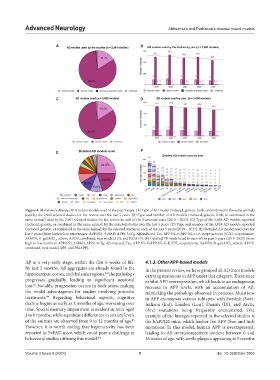
            Figure 4. Alzheimer’s disease (AD) rodent models used in the past 5 years. (A) Type of AD model (induced, genetic, both, or combined in the same animal)
            used by the 2,961 selected studies for the review over the last 5 years. (B) Type and number of AD models (induced, genetic, both, or combined in the
            same animal) used by the 2,961 selected studies for the review in each of the 5 assessed years (2019 – 2023). (C) Type of the 3,058 AD models reported
            (induced, genetic, or combined in the same animal) by the selected studies over the last 5 years. (D) Type and number of the 3,058 AD models reported
            (induced, genetic, or combined in the same animal) by the selected studies in each of the past 5 years (2019 – 2023). (E) Detailed AD model used over the
            last 5 years (from high to low percentages: APP/PS1, 5×FAD, APPs, 3×Tg, Aβ-induced, Tau, APP NL-F/APP NL-G-F, streptozotocin (STZ), scopolamine,
            SAMP8, D-gal/AlCl , others, APOE, combined, new model, LPS, and PS2APP). (F) Detailed PD model used in each of the past 5 years (2019–2023) (from
                         3
            high to low numbers: APP/PS1, 5×FAD, APPs, 3×Tg, Aβ-induced, Tau, APP NL-F/APP NL-G-F, STZ, scopolamine, SAMP8, D-gal/AlCl , others, APOE,
                                                                                                   3
            combined, new model, LPS, and PS2APP).
            Aβ at a very early stage, within the first 6 weeks of life.   4.1.3. Other APP-based models
            By just 2 months, Aβ aggregates are already found in the   In the present review, we have grouped all AD mice models
            hippocampus, cortex, and thalamic regions.  The pathology   carrying mutations in APP under this category. These mice
                                              82
            progresses  gradually,  leading  to  significant  neuronal   exhibit APP overexpression, which leads to an endogenous
               83
            loss.  Notably, progression occurs in both sexes, making   increase in APP levels, with an accumulation of Aβ,
            the model advantageous for studies involving potential   mimicking the pathology observed in patients. Mutations
                     84
            treatments.  Regarding behavioral aspects, cognitive   in APP encompass various subtypes, with Swedish (Swe),
            decline begins as early as 3 months of age, worsening over   Indiana (Ind), London (Lon), Danish (DI), and Arctic
            time. Spatial memory impairment is evident in mice aged   (Arc) mutations being frequently encountered. One
            3 to 6 months, while significant differences in anxiety levels   example of the lineages reported in the selected studies is
            of the animals are observed from 9 to 12 months of age.    the hAPPJ20 mice, which harbor the APP (Swe and Ind)
                                                         85
            However, it is worth noting that hyperactivity has been   mutations. In this model, human APP is overexpressed,
            reported in 5×FAD mice, which could pose a challenge in   leading to Aβ immunoreactivity evident between 6 and
            behavioral studies utilizing this model. 84        36 weeks of age, with senile plaques appearing at 5 months


            Volume 3 Issue 3 (2024)                         9                                doi: 10.36922/an.2903

