


Page 10 - AN-3-3
P. 10
Advanced Neurology                                           Alzheimer’s and Parkinson’s disease rodent models


                         A                                 B


                         C
                                                           D


                         E
                                                           F


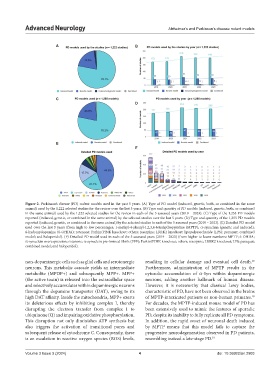
            Figure 2. Parkinson’s disease (PD) rodent models used in the past 5 years. (A) Type of PD model (induced, genetic, both, or combined in the same
            animal) used by the 1,222 selected studies for the review over the last 5 years. (B) Type and quantity of PD models (induced, genetic, both, or combined
            in the same animal) used by the 1,222 selected studies for the review in each of the 5 assessed years (2019 – 2023). (C) Type of the 1,255 PD models
            reported (induced, genetic, or combined in the same animal) by the selected studies over the last 5 years. (D) Type and quantity of the 1,255 PD models
            reported (induced, genetic, or combined in the same animal) by the selected studies in each of the 5 assessed years (2019 – 2023). (E) Detailed PD model
            used over the last 5 years (from high to low percentages: 1-methyl-4-phenyl-1,2,3,6-tetrahydropyridine (MPTP); α-synuclein (genetic and induced);
            6-hydroxydopamine (6-OHDA); rotenone; Parkin/PINK knockout; others; reserpine; LRRK2 knockout; lipopolysaccharide (LPS); paraquat; combined
            model; and haloperidol). (F) Detailed PD model used in each of the 5 assessed years (2019 – 2023) (from higher to lower numbers: MPTP; 6-OHDA;
            α-synuclein overexpression; rotenone; α-synuclein pre-formed fibrils (PFF); Parkin/PINK knockout; others; reserpine; LRRK2 knockout; LPS; paraquat;
            combined model; and haloperidol).


            non-dopaminergic cells such as glial cells and serotonergic   resulting in cellular damage and eventual cell death.
                                                                                                            16
            neurons. This metabolic cascade yields an intermediate   Furthermore, administration of MPTP results in the
            metabolite (MPDP+) and subsequently MPP+. MPP+     cytosolic accumulation of  α-Syn within dopaminergic
            (the active toxin) is released into the extracellular space   neurons, adding another hallmark of human disease.
            and selectively accumulates within dopaminergic neurons   However, it is noteworthy that classical Lewy bodies,
            through the dopamine transporter (DAT), owing to its   characteristic of PD, have not been observed in the brains
            high DAT affinity. Inside the mitochondria, MPP+ exerts   of MPTP-intoxicated patients or non-human primates.
                                                                                                            18
            its deleterious effects by inhibiting complex I, thereby   For decades, the MPTP-induced mouse model of PD has
            disrupting the electron transfer from complex I to   been extensively used to mimic the features of sporadic
            ubiquinone (Q) and impairing oxidative phosphorylation.   PD, despite its inability to fully replicate all PD symptoms.
            This disruption not only diminishes ATP synthesis but   In addition, the rapid onset of neuronal death induced
            also triggers the activation of transitional pores and   by  MPTP  means  that  this  model  fails  to  capture  the
            subsequent release of cytochrome C. Consequently, these   progressive neurodegeneration observed in PD patients,
            is an escalation in reactive oxygen species (ROS) levels,   resembling instead a late-stage PD. 19


            Volume 3 Issue 3 (2024)                         4                                doi: 10.36922/an.2903

