


Page 115 - AN-4-4
P. 115
Advanced Neurology                                                         CAA-related inflammatory case


             A                      B                          the risks of bleeding, infection, and aggravation of the
                                                               condition caused by invasive examinations, as well as the
                                                               poor acceptance of patients, the current utilization rate of
                                                               brain biopsy is only 0.5 – 1%.  In terms of genes, being a
                                                                                       6
                                                               homozygous ε4/ε4 in the ApoE-ε4 allele is considered the
                                                               only definite risk factor for CAA-ri.  The carriage rate of ε4/
                                                                                           7
                                                               ε4 in CAA-ri patients is 76.9%, whereas only 5.1% of non-
                                                               ICAA patients carry the homozygous gene.  Nevertheless,
                                                                                                  8
                                                               this patient did not undergo complete genetic testing. In
                                                               addition, high-titer anti-Aβ autoantibodies can be detected
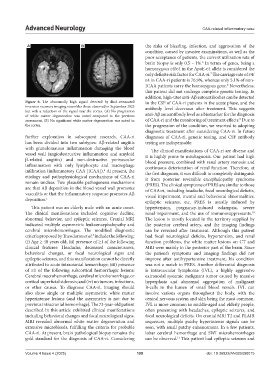
            Figure  6.  The abnormally high signal detected by fluid-attenuated   in the CSF of CAA-ri patients in the acute phase, and the
            inversion recovery imaging resembles those observed in September 2023   antibody level decreases after treatment. This suggests
            but with a reduction of the signal near the cortex. (A) No progression
            of white matter degeneration was noted compared to the previous   anti-Aβ autoantibody level as a biomarker for the diagnosis
                                                                                                       9
            assessment. (B) No significant white matter degeneration was noted in   of CAA-ri and the monitoring of treatment effects.  Due to
            the cortex.                                        the progression of the condition, we resorted to adopting
                                                               diagnostic treatment after considering CAA-ri. In future
            further exploration in subsequent research, CAA-ri   diagnoses of CAA-ri, genetic testing, and CSF antibody
            has  been  divided  into  two  subtypes:  Aβ-related  angiitis   testing are indispensable.
            with granulomatous inflammation damaging the blood   The clinical manifestations of CAA-ri are diverse and
            vessel  wall  (angiodestructive  inflammation  and  amyloid   it is highly prone to misdiagnosis. Our patient had high
            β-related angiitis) and non-destructive perivascular   blood pressure, combined with renal artery stenosis and
            inflammation with only lymphocyte and macrophage   continuous deterioration of renal function. Therefore, at
            infiltration (inflammatory CAA [ICAA]).  At present, the   the first diagnosis, it was difficult to completely distinguish
                                             4
            etiology and pathophysiological mechanisms of CAA-ri   it from posterior reversible encephalopathy syndrome
            remain unclear. Two plausible pathogenesis mechanisms   (PRES). The clinical symptoms of PRES are similar to those
            are that Aβ deposition in the blood vessel wall promotes   of CAA-ri, including headache, focal neurological deficits,
            vasculitis or that the inflammatory response promotes Aβ   visual impairment, mental and behavioral abnormalities,
            deposition. 1
                                                               epileptic seizures, etc. PRES is usually induced by
              This patient was an elderly male with an acute onset.   hypertension, pregnancy-induced eclampsia, severe
            The  clinical  manifestations  included  cognitive  decline,   renal impairment, and the use of immunosuppressants.
                                                                                                            10
            abnormal behavior, and epileptic seizures. Cranial MRI   The lesion is mostly located in the territory supplied by
            indicated multiple asymmetric leukoencephalopathy and   the posterior cerebral artery, and the imaging findings
            cerebral microhemorrhages. The modified diagnostic   can be reversed after treatment. Although this patient
            criteria proposed by Theodorou et al.  include the following:   had focal neurological deficits, hypertension, and renal
                                        5
            (i) Age ≥ 40 years old; (ii) presence of ≥1 of the following   function problems, the  white matter  lesions on  CT  and
            clinical features: Headache, decreased consciousness,   MRI were mainly in the posterior part of the brain. Since
            behavioral changes, or focal neurological signs and   the patient’s symptoms and imaging findings did not
            epileptic seizures, and this manifestation cannot be directly   improve after antihypertensive treatment, his condition
            attributed to acute intracranial hemorrhage; (iii) presence   was not a match to PRES. Another differential diagnosis
            of ≥1 of the following subcortical hemorrhagic lesions:   is intravascular lymphoma (IVL), a highly aggressive
            Cerebral macrohemorrhage, cerebral microhemorrhage, or   extranodal systemic malignant tumor caused by massive
            cortical superficial siderosis; and (iv) no tumors, infections,   hyperplasia and abnormal aggregation of malignant
            or  other  causes.  To  diagnose  CAA-ri,  imaging  should   B-cells in the lumen of small blood vessels. IVL can
            also show single or multiple asymmetric white matter   involve various organs throughout the body, with the
            hyperintense lesions (and the asymmetry is not due to   central nervous system and skin being the most common.
            previous intracranial hemorrhage). The 73-year-old patient   IVL is more common in middle-aged and elderly people,
            described in this article exhibited clinical manifestations   often presenting with headaches, epileptic seizures, and
            including behavioral changes and focal neurological signs.   focal neurological deficits. On cranial MRI T2 and FLAIR
            MRI revealed abnormal white matter degeneration and   sequences, multiple patchy hyperintense signals can be
            extensive microbleeds, fulfilling the criteria for probable   seen, with small patchy enhancement. In a few patients,
            CAA-ri. At present, brain pathological biopsy remains the   lobar  cerebral  hemorrhage  and  SWI  microhemorrhages
            gold standard for the diagnosis of CAA-ri. Considering   can be observed.  This patient had epileptic seizures and
                                                                            11

            Volume 4 Issue 4 (2025)                        109                           doi: 10.36922/AN025080015

