


Page 36 - ARNM-2-1
P. 36
Advances in Radiotherapy
            & Nuclear Medicine                                                  99m Tc-DOX in multidrug resistance studies


                         A              B                     C                  D


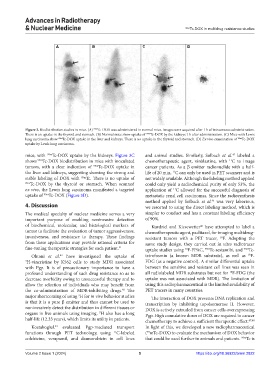
            Figure 3. Biodistribution studies in mice. (A)  Tc-DOX was administered in normal mice. Images were acquired after 1 h of intravenous administration.
                                         99m
            There is an uptake in the thyroid and stomach. (B) Normal mice show uptake of  Tc-DOX by the kidneys 1 h after administration. (C) Mice with Lewis
                                                               99m
            lung carcinoma show  99m Tc-DOX uptake in the liver and kidneys. There is no uptake in the thyroid and stomach. (D) Ex vivo examination of  99m Tc-DOX
            uptake by Lewis lung carcinoma.
                                                                                                    45
            mice, with   99m Tc-DOX uptake by the kidneys. Figure 3C   and  animal  studies.  Similarly,  Solbach  et al.   labeled  a
            shows  99m Tc-DOX biodistribution in mice with inoculated   chemotherapeutic agent, vinblastine, with  C to image
                                                                                                   11
            tumors, with a clear indication of   99m Tc-DOX uptake in   cancer patients. As a β emitter radionuclide with a half-
            the liver and kidneys, suggesting showing the strong and   life of 20 min,  C can only be used in PET scanners and is
                                                                          11
            stable labeling of DOX with  99m Tc. There is no uptake of   not widely available. Although the labeling method applied
            99m Tc-DOX by the thyroid or stomach. When scanned   could only yield a radiochemical purity of only 53%, the
            ex vivo, the Lewis lung carcinoma manifested a targeted   application of  C allowed for the successful diagnosis of
                                                                           11
            uptake of  Tc-DOX (Figure 3D).                     metastatic renal cell carcinomas. Since the radiosynthesis
                    99m
                                                               method applied by Solbach  et al.  was very laborious,
                                                                                           45
            4. Discussion                                      we resorted to using the direct labeling method, which is
            The medical specialty of nuclear medicine serves a very   simpler to conduct and has a constant labeling efficiency
            important purpose of enabling noninvasive detection   of 90%.
            of biochemical, molecular, and histological markers of   Kurdziel and Kiesewetter  have attempted to label a
                                                                                      46
            tumor to facilitate the evaluation of tumor aggressiveness,   chemotherapeutic agent, paclitaxel, for imaging multidrug-
            invasiveness, and resistance to therapy. These findings   resistant tumors with a PET tracer,  F. Adopting the
                                                                                               18
            from these applications may provide rational criteria for   same study design, they carried out  in  vitro radiotracer
            fine-tuning therapeutic strategies for each patient. 41  uptake studies using  F-FPAC,  99m Tc-sestamibi, and  99m Tc-
                                                                                18
                                                                                                          18
              Ohtani  et al.  have investigated the uptake of   tetrofosmin  (a  known  MDR  substrate),  as  well  as  F-
                           42
            3 H-vincristine by K562  cells to study MDR associated   FDG (as a negative control). A similar differential uptake
            with  Pgp.  It  is  of  precautionary  importance  to  have  a   between the sensitive and resistant cell lines was seen in
            profound understanding of such drug resistance so as to   all radiolabeled MDR substrates but not for  F-FDG (the
                                                                                                   18
            decrease morbidity owing to unsuccessful therapy and to   uptake was not associated with MDR). The limitation of
            allow the selection of individuals who may benefit from   using this radiopharmaceutical is the limited availability of
            the co-administration of MDR-inhibiting drugs.  The   PET tracers in many countries.
                                                     43
            major shortcoming of using  H for in vivo behavior studies   The interaction of DOX prevents DNA replication and
                                  3
            is that it is a pure β emitter and thus cannot be used to   transcription  by  inhibiting  topoisomerase  II.  However,
            noninvasively detect the distribution in different tissues or   DOX is actively extruded from cancer cells overexpressing
            organs in live animals using imaging.  H also has a long   Pgp. High cumulative doses of DOX are required in cancer
                                           3
            half-life (12.33 years), which limits its utility in patients.  chemotherapy to achieve a sufficient therapeutic effect. 47,48
                        44
              Kostakoglul.  evaluated Pgp-mediated transport   In light of this, we developed a new radiopharmaceutical
                                                                99
            functions through PET technology, using  C-labeled   ( mTc-DOX) to evaluate the mechanism of DOX behavior
                                                 11
            colchicine, verapamil, and daunorubicin in cell lines   that could be used further in animals and patients.  99m Tc is
            Volume 2 Issue 1 (2024)                         5                       https://doi.org/10.36922/arnm.2822

