


Page 17 - ARNM-2-2
P. 17
Advances in Radiotherapy
            & Nuclear Medicine                                                        CFR-PEEK: A systematic review


            A                      B                        C                      D


                                                                                    E


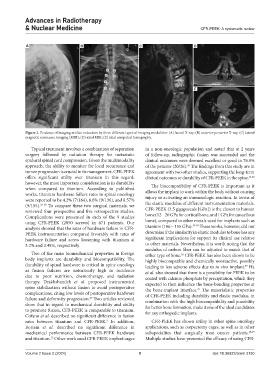
            Figure 2. Evidence of imaging artifact reduction by three different types of imaging modalities: (A) lateral X-ray; (B) anterior-posterior X-ray; (C) lateral
            magnetic resonance imaging (MRI); (D) axial MRI; (E) axial computed tomography.

              Typical treatment involves a combination of separation   in a non-oncologic population and noted that at 2  years
            surgery followed by radiation therapy for metastatic   of  follow-up,  radiographic  fusion  was  successful  and  the
            epidural spinal cord compression. Given the multimodality   clinical outcomes were deemed excellent or good in 76.9%
            approach, the ability to monitor for local recurrence and   of the patients (20/26).  The findings from this study are in
                                                                                 30
            tumor progression is crucial in its management. CFR-PEEK   agreement with two other studies, supporting the long-term
            offers  significant  utility  over  titanium  in  this  regard;   clinical outcomes or durability of CFR-PEEK in the spine. 31,32
            however, the most important consideration is its durability   The biocompatibility of CFR-PEEK is important as it
            when compared to titanium. According to published
            works, titanium hardware failure rates in spinal oncology   allows the implant to work within the body without causing
            were reported to be 4.2% (7/164), 6.6% (9/136), and 8.57%   injury or activating an immunologic reaction. In terms of
            (9/105). 26-28  To compare these two surgical materials, we   the elastic modulus of different instrumentation materials,
            reviewed four prospective and five retrospective studies.   CFR-PEEK (3.5 gigapascals [GPa]) is the closest to human
            Complications were presented in each of the 9 studies   bone (12 – 20 GPa for cortical bone, and 1 GPa for cancellous
            using CFR-PEEK (2050 screws) in 671  patients. Our   bone), compared to other metals used for implants such as
                                                                                   33-35
            analysis showed that the rates of hardware failure in CFR-  titanium (106 – 155 GPa).   These works, however, did not
            PEEK instrumentation compared favorably with rates of   determine if the similarity in elastic modulus to bone has any
            hardware failure and screw loosening with titanium at   significant implications for support its clinical use relative
            3.2% and 3.48%, respectively.                      to other materials. Nevertheless, it is worth noting that the
                                                               modulus of carbon fiber can be adjusted to match that of
              Two of the main biomechanical properties in foreign   either type of bone.  CFR-PEEK has also been shown to be
                                                                              36
            body implants are durability and biocompatibility. The   highly biocompatible and chemically nonreactive, possibly
            durability of spinal hardware is critical in spine oncology   leading to less adverse effects due to in vivo implant.  Ha
                                                                                                         37
            as fusion failures are notoriously high in incidence   et al. also showed that there is a possibility for PEEK to be
            due to poor nutrition, chemotherapy, and radiation   coated with calcium phosphate by precipitation, which they
            therapy. Drakhshandeh  et al. proposed instrumented   expected to then influence the bone-bonding properties at
            spine stabilization without fusion to avoid postoperative   the bone-implant interface.  The materialistic properties
                                                                                     37
            complications, citing low levels of postoperative hardware   of CFR-PEEK including durability and elastic modulus, in
            failure and deformity progression.  Two articles reviewed   combination with the high biocompatibility and possibility
                                       29
            show that in regard to mechanical durability and ability   for better bone formation, make it one of the ideal candidates
            to promote fusion, CFR-PEEK is comparable to titanium.
            Cofano et al. described no significant difference in fusion   for any orthopedic implants.
            rates between titanium and CFR-PEEK.  In addition,   CFR-PEEK has shown utility in other spine oncology
                                              5
            Boriani  et al. described no significant difference in   applications, such as corpectomy cages, as well as in other
            mechanical performance between CFR-PEEK hardware   subspecialties that surgically treat cancer patients. 18,19
            and titanium.  Other work used CFR-PEEK implant cages   Multiple studies have presented the efficacy of using CFR-
                       15

            Volume 2 Issue 2 (2024)                         9                              doi: 10.36922/arnm.3130

