


Page 16 - ARNM-2-2
P. 16
Advances in Radiotherapy
            & Nuclear Medicine                                                        CFR-PEEK: A systematic review


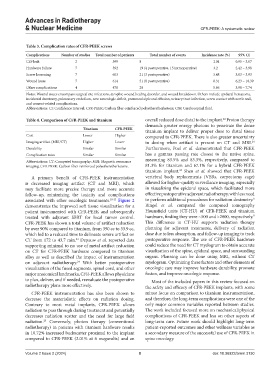
            Table 3. Complication rates of CFR‑PEEK screws
            Complications  Number of studies  Total number of patients  Total number of events  Incidence rate (%)  95% CI
            CSF leak             2               399        8                                        2.01  0.95 – 3.07
            Hardware failure     7               592        19 (4 postoperative, 15 intraoperative)                3.2  2.42 – 3.98
            Screw loosening      7               603        21 (3 postoperative)            3.48     3.03 – 3.93
            Wound issue          7               614        51 (8 postoperative)            8.31     6.23 – 10.39
            Other complications  4               478        28                              5.86     3.98 – 7.74
            Notes: Wound issues encompass surgical site infections, atrophic wound healing disorder, and wound breakdown. Others include epidural hematoma,
            incidental durotomy, pulmonary embolism, new neurologic deficit, pneumonia/pleural effusion, urinary tract infection, screw contact with aortic wall,
            and cement-related complications.
            Abbreviations: CI: Confidence interval; CFR-PEEK: Carbon fiber-reinforced polyetheretherketone; CSF: Cerebrospinal fluid.

                                                                                                24
            Table 4. Comparison of CFR‑PEEK and titanium       overall reduced dose distal to the implant.  Proton therapy
                                                               demands greater energy photons to penetrate the dense
                                    Titanium      CFR‑PEEK     titanium implant to deliver proper dose to distal tissue
            Cost                    Lower         Higher       compared to CFR-PEEK. There is also greater uncertainty
            Imaging artifact (MRI/CT)  Higher     Lower        in dosing when artifact is present on CT and MRI.
                                                                                                            24
            Durability              Similar       Similar      Furthermore, Poel  et al. demonstrated that CFR-PEEK
            Complication rates      Similar       Similar      has  a  gamma  passing  rate  closest  to  the  native  spine,
            Abbreviations: CT: Computed tomography; MRI: Magnetic resonance   measuring 83.5% and 83.3%, respectively, compared to
            imaging; CFR-PEEK: Carbon fiber-reinforced polyetheretherketone.  81.3% for titanium and 67.1% for a hybrid CFR-PEEK
                                                               titanium implant.  Shen  et al. showed that CFR-PEEK
                                                                             23
              A  primary  benefit  of  CFR-PEEK  instrumentation   vertebral body replacements (VBRs, corpectomy cage)
            is decreased imaging artifact (CT and MRI), which   allowed for higher-quality surveillance imaging, especially
            may  facilitate  more  precise  therapy  and  more  accurate   in  visualizing  the  epidural  space,  which  facilitated  more
            follow-up, minimizing the toxicity and complications   effective postoperative adjuvant radiotherapy, with less need
                                                                                                             6
            associated with other oncologic treatments. 20-22   Figure  2   to perform additional procedures for radiation dosimetry.
            demonstrates the improved soft tissue visualization for a   Ringel  et al. compared the computed tomography
            patient instrumented with CFR-PEEK and subsequently   Hounsfield units (CT-HU)  of CFR-PEEK  and titanium
            treated with adjuvant SBRT for local tumor control.   hardware, finding they were ~500 and >2000, respectively.
                                                                                                             9
            CFR-PEEK has shown a total volume of artifact reduction   This difference in CT-HU supports radiation therapy
            by over 90% compared to titanium, from 390 cc to 33.9 cc,   planning for adjuvant treatments, delivery of radiation
            which led to a reduced time to delineate severe artifact on   dose due to less absorption, and follow-up imaging to track
            CT from 172 to 43.7 min.  Depauw et al. reported data   postoperative response. The use of CFR-PEEK hardware
                                 23
            supporting minimal to no use of metal artifact reduction   could reduce the need for CT myelogram to obtain accurate
            on CT for CFR-PEEK hardware compared to titanium   visualization of the spine, epidural space, and surrounding
            alloy as well as described the impact of instrumentation   organs. Planning can be done using MRI, without CT
                                  24
            on adjuvant radiotherapy.  With better postoperative   myelogram. Optimizing these factors and other elements of
            visualization of the fused segments, spinal cord, and other   oncologic care may improve hardware durability, promote
            major anatomical landmarks, CFR-PEEK allows physicians   fusion, and improve oncologic response.
            to plan, deliver, and if needed, reevaluate the postoperative   Most of the included papers in this review focused on
            radiotherapy plans more effectively.               the safety and efficacy of CFR-PEEK implants, with some
              CFR-PEEK  instrumentation  has also  been shown  to   minor focus on comparison to titanium instrumentation,
            decrease the materialistic effects on radiation dosing.   and therefore, the long-term complications were one of the
            Contrary to most metal implants, CFR-PEEK allows   only major common variables reported between studies.
            radiation to pass through during treatment and potentially   The work included focused more on mechanical/physical
            decreases radiation scatter and the need for large field   complications of CFR-PEEK and less on other aspects of
            radiation.  Conversely, photon therapy (conventional   long-term care. Future work should highlight long-term
                    25
            radiotherapy) in patients with titanium hardware results   patient-reported outcomes and other wellness variables as
            in 10.72% increased backscatter proximal to the implant   a secondary measure of the successful use of CFR-PEEK in
            compared to CFR-PEEK (2.01% at 6 megavolts) and an   spine oncology.


            Volume 2 Issue 2 (2024)                         8                              doi: 10.36922/arnm.3130

