


Page 80 - ARNM-2-2
P. 80
Advances in Radiotherapy
            & Nuclear Medicine                                                     Wound reconstruction with Intergra®


                                                                                     Wound Remains
                                                                                        Closed:
                                                               Complete Coverage    Routine Graft Care
                                                               of Vital Structures:  Secondary Wound
                                                                  Skin Graft
                                                                                       Formation:
                                                                                   Flap Closure (primary
                                            Negative Margins:                           option)
                                            RDM left in place
                                             for 3-4 weeks                     RADIATION  Wound Remains Closed:
                                                              Incomplete Coverage   Routine Flap Care
                        Excision of Primary                    of Vital Structures:
                          Tumor with                             Flap Closure
                        Application of RDM                      (primary option)    Secondary Wound
                                                                                       Formation:
                                                                                   Flap Closure (distant
                                            Positive Margins    Re-excision +/-     secondary option)
                                                              Reapplication of RDM


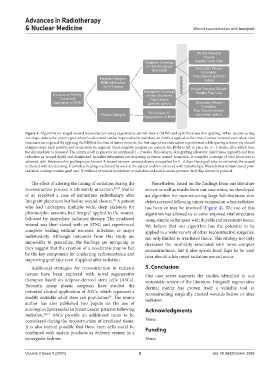
            Figure 4. Algorithm for staged wound reconstruction using regenerative dermal matrix (RDM) and split-thickness skin grafting. When reconstructing
            oncologic defects for cancer types where local control can be improved with radiation, an RDM is applied at the time of tumor removal even when vital
            structures are exposed. By applying the RDM at the time of tumor removal, the first stage of reconstruction is performed while sparing a donor site should
            margins come back positive and re-excision be required. Once negative margins are assured, the RDM is left in place for 3 – 4 weeks, after which time
            the silicone layer is removed. The matrix is left in place for an additional 1 – 2 weeks. This delay in skin grafting allows for rapid tissue ingrowth and thus
            reduction in wound depth and diminished wrinkles/deformities pre-disposing to future wound formation. If complete coverage of vital structures is
            achieved, split-thickness skin grafting is performed. A wound vacuum-assisted closure is reapplied for 5 – 6 days. Once graft take is confirmed, the wound
            is dressed with dry dressing. If complete healing is achieved by week 4, the patient is able to proceed with radiotherapy. Wounds that remain closed post-
            radiation undergo routine graft care. If evidence of wound breakdown or radiation-induced necrosis presents itself, flap closure is pursued.

              The effect of altering the timing of radiation during the   Nonetheless, based on the findings from our literature
            reconstructive process is ultimately uncertain. 85-87  Muller   review as well as results from our case series, we developed
            et al. reported a case of immediate radiotherapy after   an algorithm for reconstructing large full-thickness skin
            Integra® placement but before wound closure.  A patient   defects created following tumor extirpation when radiation
                                                 88
            who had undergone multiple wide, deep excisions for   has been or may be involved (Figure 4). The use of this
            pleomorphic sarcoma had Integra® applied to the wound,   algorithm has allowed us to cover exposed vital structures
            followed by immediate radiation therapy. The irradiated   using simple techniques with durable radioresistant tissue.
            wound was then closed with an STSG and experienced   We believe that our  algorithm has  the potential to be
            complete healing without necrosis, infection, or major   applied to a wide variety of other reconstructive surgeries,
            radiotoxicity. Although outcomes from this study are   not only limited to irradiated tissue. This strategy not only
            impossible to generalize, the findings are intriguing as   decreases the morbidity associated with more complex
            they suggest that the creation of a neodermis may in fact   reconstructions, but it also spares local flaps to be used
            be the key component for conferring radioresistance and   later should a late onset radiation wound occur.
            improving graft take even if applied after radiation.
              Additional strategies for reconstruction in radiated   5. Conclusion
            tissues have been explored with novel regenerative   Our case series supports the studies identified in our
            therapies based on adipose-derived stem cells (ASCs).   systematic review of the literature. Integra® regenerative
            Recently, many plastic surgeons have studied the   dermal matrix has proven itself a valuable tool in
            potential clinical application of ASCs, which represent a   reconstructing  surgically created wounds  before or  after
            readily available adult stem cell population . The senior   radiation.
                                               89
            author  has  also  published  two  papers  on  the  use  of
            autologous lipotransfer in breast cancer patients following   Acknowledgments
            radiation. 90,91   ASCs  provide  an  additional  route  to  be
            considered during the reconstruction of irradiated tissue.   None.
            It is also indeed possible that these stem cells could be   Funding
            combined with matrix products as delivery system in a
            synergistic fashion.                               None.


            Volume 2 Issue 2 (2024)                         8                              doi: 10.36922/arnm.3388

