


Page 77 - ARNM-2-2
P. 77
Advances in Radiotherapy
            & Nuclear Medicine                                                     Wound reconstruction with Intergra®


            A               B              C                D               E                F


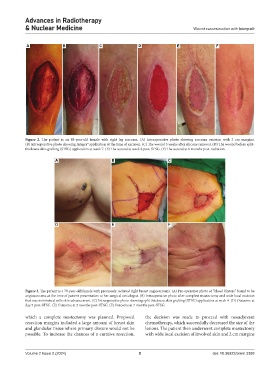
            Figure  2. The patient is an 88-year-old female with right leg sarcoma. (A) Intraoperative photo showing sarcoma excision with 2 cm margins.
            (B) Intraoperative photo showing Integra® application at the time of excision. (C) The wound 5 weeks after silicone removal. (D) The wound before split-
            thickness skin grafting (STSG) application at week 7. (E) The wound at week 8 post-STSG. (F) The wound at 6 months post-radiation.

                         A                       B                       C


                         D                       E                       F


            Figure 3. The patient is a 79-year-old female with previously radiated right breast angiosarcoma. (A) Pre-operative photo of “blood blisters” found to be
            angiosarcoma at the time of patient presentation to her surgical oncologist. (B) Intraoperative photo after complete mastectomy and wide local excision
            that was minimized with skin advancement. (C) Intraoperative photo showing split thickness skin grafting (STSG) application at week 4. (D) Outcome at
            day 5 post-STSG. (E) Outcome at 2 months post-STSG. (F) Outcome at 7 months post-STSG.

            which  a  complete  mastectomy  was  planned.  Proposed   the decision was made to proceed with neoadjuvant
            resection margins included a large amount of breast skin   chemotherapy, which successfully decreased the size of the
            and glandular tissue where primary closure would not be   lesions. The patient then underwent complete mastectomy
            possible. To increase the chances of a curative resection,   with wide local excision of involved skin and 2 cm margins


            Volume 2 Issue 2 (2024)                         5                              doi: 10.36922/arnm.3388

