


Page 15 - ARNM-3-1
P. 15
Advances in Radiotherapy
            & Nuclear Medicine                                                    Diagnostics gude of biliary tract cancer


            for  perihilar cancer, and  76%  and  74%  for extrahepatic   purely clinical pre-operative models and provided results
            cancer, respectively.  In a recent study, PET exhibited 90%   comparable to post-operative models.  To enhance the
                           94
                                                                                              99
            sensitivity and 78% specificity for diagnosing pCCA.    diagnostic performance  of PET/CT  imaging in  iCCA,
                                                         63
            Another study on the clinical role of 18-FDG PET-CT in   it can be combined with MRI, as demonstrated by Jiang
                                                                   100
            patients with suspected and potentially operable biliary   et  al.  Another emerging technology in CCA imaging
            tract cancer found a sensitivity of 84.0% and a specificity   is simultaneous PET and MRI (PET/MRI). Theoretically,
            of 79.3% for this imaging modality. In this study, PET-CT   PET/MRI may be advantageous in this context by
            showed no significant difference in detecting different   combining the functional information from FDG-PET
            morphological tumor types: Periampullary infiltrating,   with the high contrast resolution of MRI to assess ductal
            intraductal growing, or mass-forming. 95,96  Furthermore,   involvement,  although no  significant studies  have  yet
            data from a scientific study indicated that PET can reliably   evaluated PET/MRI for this purpose. This technique
            detect nodular bile duct cancer >1 cm in size.  However,   may  be  particularly  useful  in  differentiating  CCA  from
                                                 95
                                                                   101
            PET-CT has shown limited reliability in evaluating   HCC.  PET, particularly in combination with PET/
            regional lymph node metastases, with a sensitivity of 12%   CT or PET/MRI, is increasingly being used to assess the
            and specificity of 96%.  PET is a useful imaging test for   molecular characteristics  of malignant  tumors in  the
                              95
            diagnosing distant metastases, monitoring treatment   hepato-pancreato-biliary system (Table  1). In cases  of
            responses, and detecting recurrence. 93,96-98  It can identify   suspected or confirmed HCC or biliary tract tumors, PET
            metastatic lymph nodes, distant metastases, or clarify   is performed using 11C-labeled acetate. This imaging
            indeterminate lesions, especially in patients with primary   method is crucial for evaluating tumor progression and
            sclerosing cholangitis.  However, due to its low sensitivity   staging before making therapeutic decision-making.
                             96
            (<70%), PET should only be considered in selected cases.   Testing  with  11C-labeled acetate  is also recommended
            In fact, distant metastases are more accurately identified   to rule out potential metastases in distant organs, as PET
            by CT, while EUS remains the gold standard for lymph   demonstrates  higher  sensitivity,  accuracy,  and  specificity
            node evaluation.  Fiz et al. demonstrated that PET-based   in detecting metastases.
                         96
            radiomics for iCCA can predict pathological data and   The strong interaction between radioisotopes and tumor
            enable reliable pre-operative prognostic assessment. The   cells, such as increased glucose consumption and DNA
            combined clinical and radiomic models outperformed   synthesis, underscores PET’s important role. PEt allows for

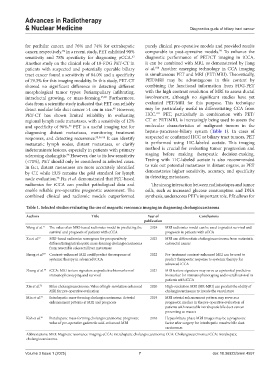
            Table 1. Selected studies evaluating the use of magnetic resonance imaging in diagnosing cholangiocarcinoma

            Authors                     Title                   Year of               Conclusions
                                                              publication
            Wang et al. 71  The value of an MRI-based radiomics model in predicting the   2024  MRI radiomics model can be used to predict survival and
                      survival and prognosis of patients with eCCA     prognosis in patients with eCCA
            Xu et al. 67  MRI-based radiomics nomogram for preoperatively   2023  MRI can differentiate cholangiocarcinoma from metastatic
                      differentiating intrahepatic mass-forming cholangiocarcinoma   colorectal cancer
                      from resectable colorectal liver metastases
            Sheng et al. 69  Contrast-enhanced MRI could predict the response of   2022  Pre-treatment contrast-enhanced MRI can be used to
                      systemic therapy in advanced iCCA                predict therapeutic response to systemic therapy for
                                                                       advanced iCCA
            Zhang et al. 68  iCCA: MRI texture signature as predictive biomarkers of   2021  MRI texture signature may serve as a potential predictive
                      immunophenotyping and survival                   biomarker for immunophenotyping and overall survival in
                                                                       patients with iCCA
            Xin et al. 72  Hilar cholangiocarcinoma: Value of high-resolution enhanced   2020  High-resolution MRI (HR-MRI) can predict the ability of
                      MRI for pre-operative evaluation                 cholangiocarcinoma to invade the vasculature
            Min et al. 73  Intrahepatic mass-forming cholangiocarcinoma: Arterial   2019  MRI arterial enhancement pattern may serve as a
                      enhancement patterns at MRI and prognosis        prognostic marker in the pre-operative evaluation of
                                                                       patients with resectable intrahepatic bile duct cancer
                                                                       presenting as masses
            Koh et al. 70  Intrahepatic mass-forming cholangiocarcinoma: prognostic   2016  Hepatobiliary phase MRI images may be a prognostic
                      value of pre-operative gadoxetic acid-enhanced MRI  factor after surgery for intrahepatic massive bile duct
                                                                       carcinomas
            Abbreviations: MRI: Magnetic resonance imaging; eCCA: Extrahepatic cholangiocarcinoma; CCA: Cholangiocarcinoma; iCCA: Intrahepatic
            cholangiocarcinoma.


            Volume 3 Issue 1 (2025)                         7                              doi: 10.36922/arnm.4557

