


Page 46 - ARNM-3-1
P. 46
Advances in Radiotherapy
            & Nuclear Medicine                                                 EZH2 inhibition in ARID1A-deficient TNBC


            stromal infiltration by proliferative CD8  T cells, FoxP3    durable anti-tumor response, ultimately leading to T-cell
                                                          +
                                             +
            Tregs, and immune cells expressing checkpoint regulators   exhaustion and checkpoint activation, suggesting that
            PD-1 and LAG-3.  Following 4  weeks of tazemetostat   altering the epigenetic landscape may sensitize some
                           110
            treatment and  subsequent radiotherapy to  the  primary   tumors to checkpoint inhibitors. 110
            tumor site, a complete response was observed at distant
            metastatic sites.  However, at the primary treatment   Radiotherapy can induce immunogenic cell death,
                         110
            site, which received a dose of 70 Gy in 35 fractions, only   characterized by the release of danger-associated molecular
            a partial response was noted. The authors speculated that   pattern antigens that trigger the uptake of antigens and
            radiotherapy at the sacrum likely depleted the TILs induced   activation of APCs, leading to the priming of cytotoxic
            by tazemetostat, rendering the sacral mass less responsive   lymphocytes and an adaptive immune response.  However,
                                                                                                    110
            to immunotherapy.  The patient was subsequently treated   the precise contribution of EZH2 inhibition, radiotherapy,
                           110
            with ICIs. This strategy of EZH2 inhibition fostered a   and PD-1/PD-L1 blockade on the immunologic and overall


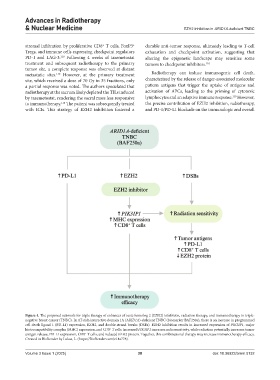
            Figure 4. The proposed rationale for triple therapy of enhancer of zeste homolog 2 (EZH2) inhibition, radiation therapy, and immunotherapy in triple-
            negative breast cancer (TNBC). In AT-rich interactive domain 1A (ARID1A)-deficient TNBC (biomarker BAF250a), there is an increase in programmed
            cell death ligand 1 (PD-L1) expression, EZH2, and double-strand breaks (DSBs). EZH2 inhibition results in increased expression of PIK3IP1, major
            histocompatibility complex (MHC) expression, and CD8  T cells. Increased PIK3IP1 increases radiosensitivity, while radiation potentially increases tumor
                                                +
            antigen release, PD-L1 expression, CD8  T cells, and reduced EZH2 protein. Together, this combinational therapy may increase immunotherapy efficacy.
                                     +
            Created in BioRender by Lukas, L. (https://BioRender.com/e14a778).
            Volume 3 Issue 1 (2025)                         38                             doi: 10.36922/arnm.5132

