


Page 125 - DP-2-3
P. 125
Design+                                                             ML for predicting Alzheimer’s progression


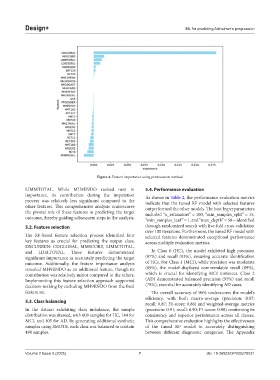
                                          Figure 4. Feature importance using permutation method


            LIMMTOTAL. While MH9ENDO ranked next in            5.4. Performance evaluation
            importance, its contribution during the imputation   As shown in Table 2, the performance evaluation metrics
            process was relatively less significant compared to the   indicate that the tuned RF model with selected features
            other features. This comprehensive analysis underscores   outperformed the other models. The best hyperparameters
            the pivotal role of these features in predicting the target   included “n_estimators” = 100, “min_samples_split” = 15,
            outcome, thereby guiding subsequent steps in the analysis.  “min_samples_leaf” = 1, and “max_depth” = 50—identified

            5.2. Feature selection                             through randomized search with five-fold cross-validation
                                                               over 100 iterations. Furthermore, the tuned RF model with
            The  RF-based  feature selection  process  identified  four   selected features demonstrated exceptional performance
            key features as crucial for predicting the output class,   across multiple evaluation metrics.
            DXCURREN: CDGLOBAL, MMSCORE, LIMMTOTAL,
            and  LDELTOTAL.    These  features  demonstrated     In Class  0 (HC), the model exhibited high precision
            significant importance in accurately predicting the target   (97%) and recall (93%), ensuring accurate identification
            outcome. Additionally, the feature importance analysis   of HCs. For Class 1 (MCI), while precision was moderate
            revealed MH9ENDO as an additional feature, though its   (69%), the model displayed commendable recall (89%),
            contribution was relatively minor compared to the others.   which is crucial for identifying MCI instances. Class  2
            Implementing this feature selection approach supported   (AD) demonstrated balanced precision (95%) and recall
            decision-making by excluding MH9ENDO from the final   (78%), essential for accurately identifying AD cases.
            feature set.                                         The overall accuracy of 90% underscores the model’s
                                                               efficiency, with both macro-average (precision: 0.87;
            5.3. Class balancing                               recall: 0.87; F1-score: 0.86) and weighted-average metrics
            In the dataset exhibiting class imbalance, the sample   (precision: 0.91; recall: 0.90; F1-score: 0.90) confirming its
            distribution was skewed, with 609 samples for HC, 144 for   consistency and superior performance across all classes.
            MCI, and 105 for AD. By generating additional synthetic   This comprehensive evaluation highlights the effectiveness
            samples using SMOTE, each class was balanced to contain   of the tuned RF model in accurately distinguishing
            490 samples.                                       between different diagnostic categories. The Appendix


            Volume 2 Issue 3 (2025)                         7                            doi: 10.36922/DP025270031

