


Page 50 - EER-2-2
P. 50
Explora: Environment
            and Resource                                                       Textile industry and environmental pollution


            agricultural areas, irrigation channels, and ultimately into   increase turbidity, reduce sunlight penetration, and may
            rivers and seas.  Industrial wastewater from textile and   carry  heavy  metals  and  toxic  substances.  TDS  includes
                        9,18
            dyeing processes can constantly change the turbidity, odor,   salts, minerals, and metals dissolved in water. High TDS
            noise level, temperature, pH, and other physical, chemical,   levels compromise water quality, making it unsuitable
            and biological characteristics.  These changes adversely   for drinking and agricultural purposes. The pH of textile
                                    18
            affect biodiversity, livestock, wildlife, fish populations, and   effluents often deviates from the neutral range, becoming
            community health. The dyes present in the wastewater   either highly acidic or alkaline. Such pH levels harm aquatic
            groundwater are unsuitable for human use, contributing   organisms and can corrode infrastructure. Elements such
            to the spread of waterborne illnesses, including dermatitis,   as chromium, lead, and copper are often found in dyes
            mucous membrane and nasal septal perforation, and   and pigments used in textile processing. They are toxic,
            severe respiratory tract irritation. Adulteration of these   bioaccumulative, and carcinogenic, posing serious risks to
            aquatic systems poses serious socioeconomic and public   human health and biodiversity.
            health threats. 18
                                                               3.2. Air pollution
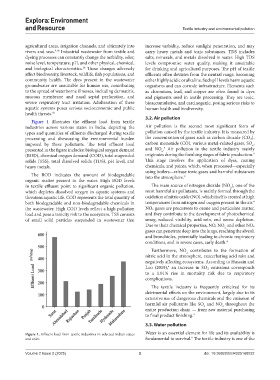
              Figure  1 illustrates the effluent load from textile
            industries across various states in India, depicting the   Air pollution is the second most significant form of
            types and quantities of effluents discharged during textile   pollution caused by the textile industry. It is measured by
            processing and showcasing the environmental burden   the concentration of gases such as carbon dioxide (CO₂),
            imposed by these pollutants. The total effluent load   carbon monoxide (CO), various metal-related gases, SO ,
                                                                                                            x
                                                                       4
            presented in the figure includes: biological oxygen demand   and NO .  Air pollution in the textile industry mainly
                                                                      x
                                                                                                             9
            (BOD), chemical oxygen demand (COD), total suspended   originates during the finishing stages of fabric production.
            solids (TSS), total dissolved solids (TDS), pH level, and   This  stage  involves  the  application  of  dyes,  coating
            heavy metals.                                      chemicals, and paints, which, when processed—especially
                                                               using boilers—release toxic gases and harmful substances
              The  BOD  indicates  the  amount of biodegradable   into the atmosphere. 9
            organic matter present in the water. High BOD levels
            in textile effluent point to significant organic pollution,   The main source of nitrogen dioxide (NO ), one of the
                                                                                                   2
            which depletes dissolved oxygen in aquatic systems and   most harmful air pollutants, is mainly formed throughthe

            threatens aquatic life. COD represents the total quantity of   oxidation of nitric oxide (NO), which itself is created at high
                                                                                                             4
            both biodegradable and non-biodegradable chemicals in   temperatures from nitrogen and oxygen present in the air.
            the wastewater. High COD levels reflect a high pollution   NOₓ gases are precursors to ozone and particulate matter,
            load and pose a toxicity risk to the ecosystem. TSS consists   and they contribute to the development of photochemical
            of small solid  particles suspended in wastewater that   smog, reduced visibility, acid rain, and ozone depletion.
                                                               Due to their chemical properties, NO, NO and other NOₓ
                                                                                                2,
                                                               gases can penetrate deep into the lungs, reachingthe alveoli

                                                               and bronchioles, potentially leading to chronic respiratory
                                                               conditions, and in severe cases, early death. 4
                                                                 Furthermore, NO  contributes to the formation of
                                                                                2
                                                               nitric acid in the atmosphere, exacerbating acid rain and
                                                               negatively affecting ecosystems. According to Hussain and
                                                               Luo (2019),  an increase in SO₂ emissions corresponds
                                                                         4
                                                               to a 1.01% rise in mortality risk due to respiratory
                                                               complications.
                                                                 The textile industry is frequently criticized for its
                                                               detrimental effects on the environment, largely due to its
                                                               extensive use of dangerous chemicals and the emission of
                                                               harmful air pollutants like SO  and NO  throughout the
                                                                                                x
                                                                                        2
                                                               entire production chain — from raw material purchasing
                                                               to final product finishing. 4
                                                               3.3. Water pollution
            Figure 1. Effluent load from textile industries in selected Indian states   Water is an essential element for life and its availability is
                                                                                  9
            and cities                                         fundamental to survival.  The textile industry is one of the

            Volume 2 Issue 2 (2025)                         3                           doi: 10.36922/EER025160032

