


Page 130 - EJMO-9-2
P. 130
Eurasian Journal of Medicine and
            Oncology
                                                                                  Anticancer effects of phytocomposites


            Table 1. Simplified Molecular Input Line Entry (SMILE) System form of phytocompounds tecomaquinone I, brevilin A,
            erybraedin A, evodiamine, and sumadain C
            Phytocompound                                        SMILE
            Tecomaquinone I  CC (C)=C[C@@H] 1Oc2c (c3c (c4ccccc24) OC (C)(C) C=C3) C2=C1C(=O) c1ccccc1C2=O
            Brevilin A    C/C=C(/C) C(=O) O[C@H] 1[C@@H] 2[C@H](C) C(=O) O[C@@H] 2C[C@@H](C)[C@@H] 2C=CC(=O)[C@@]12C
            Erybraedin A  CC (C)=CCc1c (O) ccc2c1O[C@H] 1c3ccc (O) c (CC=C (C) C) c3OC[C@@H] 21
            Evodiamine    CN1c2ccccc2C(=O) N2CCc3c([nH] c4ccccc34)[C@@H] 21
            Sumadain C    CC (C)[C@H] 1C=C[C@]2(C) Oc3c (C(=O)/C=C/c4ccccc4) c (O) cc (O) c3[C@H] 2C1


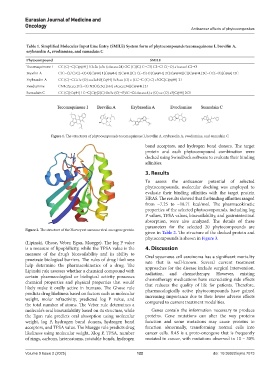
                       Figure 1. The structures of phytocompounds tecomaquinone I, brevilin A, erybraedin A, evodiamine, and sumadain C
                                                               bond  acceptors,  and  hydrogen  bond  donors.  The  target
                                                               protein and each phytocompound combination were
                                                               docked using SwissDock software to evaluate their binding
                                                               affinities.

                                                               3. Results
                                                               To assess the anticancer potential of selected
                                                               phytocompounds, molecular docking was employed to
                                                               evaluate their binding affinities with the target protein
                                                               HRAS. The results showed that the binding affinities ranged
                                                               from −7.25 to −18.71 kcal/mol. The pharmacokinetic
                                                               properties of the selected phytocompounds, including log
                                                               P values, TPSA values, bioavailability, and gastrointestinal
                                                               absorption, were also analyzed. The details of these
                                                               parameters for the selected 20 phytocompounds are
            Figure 2. The structure of the Harvey rat sarcoma viral oncogene protein
                                                               given in Table 2. The structure of the docked protein and
                                                               phytocompounds is shown in Figure 3.
            (Lipinski, Ghose, Veber, Egan, Muegge). The log P value
            is a measure of lipophilicity, while the TPSA value is the   4. Discussion
            measure of the drug’s bioavailability and its ability to   Oral squamous cell carcinoma has a significant mortality
            penetrate biological barriers. The rules of drug likeliness   rate that is well-known. Several current treatment
            help determine the pharmacokinetics of a drug. The   approaches for the disease include surgical intervention,
            Lipinski rule assesses whether a chemical compound with   radiation,  and  chemotherapy.  However,  existing
            certain pharmacological or biological activity possesses   chemotherapy medications have excruciating side effects
            chemical properties and physical properties that would   that reduces the quality of life for patients. Therefore,
            likely make it orally active in humans. The Ghose rule   pharmacologically active phytocompounds have gained
            predicts drug likeliness based on factors such as molecular   increasing importance due to their lower adverse effects
            weight, molar refractivity, predicted log P value, and   compared to current treatment modalities.
            the total number of atoms. The Veber rule determines a
            molecule’s oral bioavailability based on its structure, while   Genes contain the information necessary to produce
            the Egan rule predicts oral absorption using molecular   proteins. Gene mutations can alter the way proteins
            weight, log P, hydrogen bond donors, hydrogen bond   function and some mutations may cause proteins to
            acceptors, and TPSA value. The Muegge rule predicts drug   function abnormally, transforming normal cells into
            likeliness using molecular weight, Xlog P, TPSA, number   cancer cells.  RAS is a proto-oncogene that is frequently
            of rings, carbons, heteroatoms, rotatable bonds, hydrogen   mutated in cancer, with mutations observed in 10 – 30%


            Volume 9 Issue 2 (2025)                        122                              doi: 10.36922/ejmo.7073

