


Page 131 - EJMO-9-2
P. 131
Eurasian Journal of Medicine and
            Oncology
                                                                                  Anticancer effects of phytocomposites


            Table 2. Log P values, total polar surface area values, bioavailability, gastrointestinal absorption, and the binding affinities of the
            20 selected phytocompounds
            Molecule ID    Rule 1  Rule 2  Rule 3  Rule 4  Rule 5  Log P  TPSA  Bioavailability  GI  Binding affinity
            ZINC87313354   Y      Y      Y      Y       Y       1.86   70.59 A 2   0.55     High      −7.38
            ZINC58224231   Y      Y      Y      Y       Y       2.28   61.36 A 2   0.55     High      −7.25
            ZINC94088045   Y      Y      Y      Y       Y       2.59   85.11 A 2   0.55     High     −18.71
            ZINC85651314   Y      Y      Y      Y       Y       3.58   94.85 A 2   0.55     High      −7.26
            ZINC94046548   Y      Y      Y      Y       Y       2.22   75.35 A 2   0.55     High      −7.62
            ZINC73848468   Y      Y      Y      Y       Y       1.81   62.22 A 2   0.55     High      −7.65
            ZINC86810909   Y      Y      Y      Y       Y       2.52   77.57 A 2   0.55     High      −7.46
            ZINC75223456   Y      Y      Y      Y       Y       2.35   49.33 A 2   0.55     High      −7.76
            ZINC91437757   Y      Y      Y      Y       Y       2.21   62.22 A 2   0.55     High      −7.36
            ZINC94241870   Y      Y      Y      Y       Y       1.77  122.39 A 2   0.56     High     −15.75
            ZINC32808915   Y      Y      Y      Y       Y       2.67  108.56 A 2   0.55     High      −7.39
            ZINC94993303   Y      Y      Y      Y       Y       2.09   95.15 A 2   0.55     High      −7.16
            ZINC69511953   Y      Y      Y      Y       Y       2.89  104.26 A 2   0.55     High      −7.49
            ZINC65591349   Y      Y      Y      Y       Y       2.69   61.36 A 2   0.55     High      −8.07
            ZINC66160667   Y      Y      Y      Y       Y       3.02   99.69 A 2   0.55     High      −8.03
            ZINC58227918   Y      Y      Y      Y       Y       3.28   81.43 A 2   0.55     High      −7.36
            ZINC12698794   Y      Y      Y      Y       Y       3.82  120.37 A 2   0.55     High      −8.21
            ZINC58181828   Y      Y      Y      Y       Y       3.17   81.43 A 2   0.55     High      −7.7
            ZINC58195891   Y      Y      Y      Y       Y       2.37   61.36 A 2   0.55     High      −7.45
            ZINC66161033   Y      Y      Y      Y       Y       2.75   94.38 A 2   0.55     High      −8.09
            Abbreviations: GI: Gastrointestinal absorption; TPSA: Total polar surface area.

                                                               genes,  HRAS,  KRAS, and  NRAS, and is involved in the
                                                               regulation of cell division. These proteins play a key role in
                                                               determining the destiny of cells during cell cycle  which is
                                                                                                     37
                                                               a well-planned process that coordinates DNA replication,
                                                               cell development, and division. The cell cycle is crucial for
                                                               growth and sustenance of all living organisms, and any
                                                               disruptions in the cell cycle can eventually cause problems
                                                               in cell growth and differentiation.
                                                                 The HRAS protein functions as a molecular switch,
                                                               cycling between active guanosine triphosphate (GTP)-bound
                                                                                                            38
                                                               and inactive guanosine diphosphate (GDP)-bound states.
                                                               The switch mechanism is crucial for signal transduction,
                                                               promoting cell growth, differentiation, and proliferation
                                                               by activating  downstream  signaling proteins. This  switch
                                                               mechanism has been found in a wide range of GDP/GTP-
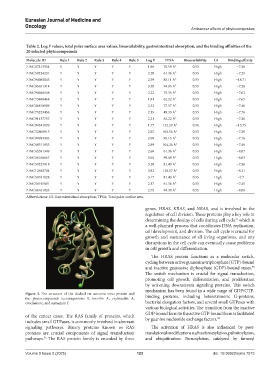
            Figure  3.  The structure of the  docked rat sarcoma virus protein and   binding  proteins, including heterotrimeric  G-proteins,
            the phytocompounds tecomaquinone I, brevilin A, erybraedin A,
            evodiamine, and sumadain C                         bacterial elongation factors, and several small GTPases with
                                                               various biological activities. The transition from the inactive
                                                               GDP-bound form to the active GTP-bound form is facilitated
            of the  cancer cases. The RAS  family of proteins,  which   by guanine nucleotide exchange factors. 39
            includes small GTPases, is commonly involved in aberrant
            signaling pathways. Binary proteins known as RAS     The activation of HRAS is also influenced by post-
            proteins are crucial components of signal transduction   translational modifications such as farnesylation, palmitoylation,
            pathways.  The RAS protein family is encoded by three   and ubiquitination. Farnesylation, catalyzed by farnesyl
                    36

            Volume 9 Issue 2 (2025)                        123                              doi: 10.36922/ejmo.7073

