


Page 182 - EJMO-9-2
P. 182
Eurasian Journal of
            Medicine and Oncology                                       PD-1/L1 inhibitors in advanced CC: Multicenter retro


                         A                                   B


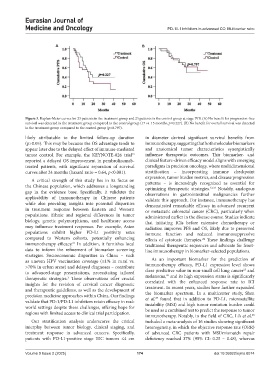
            Figure 3. Kaplan-Meier curves for 23 patients in the treatment group and 25 patients in the control group at stage IVB. (A) No benefit for progression-free
            survival was detected in the treatment group compared to the control group (17 vs. 15 months, p=0.227). (B) No benefit for overall survival was detected
            in the treatment group compared to the control group (p=0.797).

            likely attributable to the limited follow-up duration   in diameter derived significant survival benefits from
            (p>0.05). This may be because the OS advantage tends to   immunotherapy, suggesting that both molecular biomarkers
            appear later due to the delayed effect of immune-mediated   and anatomical tumor characteristics synergistically
                                                         13
            tumor control. For example, the KEYNOTE-826 trial    influence therapeutic outcomes. This biomarker-  and
            reported a delayed OS improvement in pembrolizumab-  clinical feature-driven efficacy model aligns with emerging
            treated patients, with significant separation of survival   paradigms in precision oncology, where multidimensional
            curves after 24 months (hazard ratio = 0.64, p<0.001).  stratification – incorporating immune checkpoint
                                                               expression, tumor burden metrics, and disease progression
              A critical strength of this study lies in its focus on   patterns – is increasingly recognized as essential for
            the Chinese population, which addresses a longstanding   optimizing  therapeutic  strategies. 22,23   Notably,  analogous
            gap in the evidence base. Specifically, it validates the   observations in gastrointestinal malignancies further
            applicability  of  immunotherapy  in  Chinese  patients   validate this approach. For instance, immunotherapy has
            while also providing insights into potential disparities   demonstrated remarkable efficacy in advanced recurrent
            in treatment response between Eastern and Western   or metastatic colorectal cancer (CRC), particularly when
            populations. Ethnic and regional differences in tumor   administered earlier in the disease course. Studies indicate
            biology,  genetic  polymorphisms,  and  healthcare  access   that initiating ICIs before extensive chemotherapy or
            may influence treatment responses. For example, Asian   radiation improves PFS and OS, likely due to preserved
            populations exhibit higher PD-L1 positivity rates   immune  function and reduced immunosuppressive
            compared to Western cohorts, potentially enhancing   effects of cytotoxic therapies.  These findings challenge
                                                                                       24
                                21
            immunotherapy efficacy.  In addition, it furnishes local   traditional therapeutic sequences and advocate for front-
            data to inform the refinement of biomarker screening   line immunotherapy in biomarker-selected populations.
            strategies. Socioeconomic disparities in China – such
            as uneven HPV vaccination coverage (≤1% in rural vs.   As an important biomarker for the prediction of
            >70% in urban areas) and delayed diagnoses – contribute   immunotherapy efficacy, PD-L1 expression level shows
                                                                                                         25
            to advanced-stage presentations, necessitating tailored   clear predictive value in non-small cell lung cancer  and
                                                                        26
            therapeutic strategies.  These observations offer crucial   melanoma,  and its high expression status is significantly
                              3
            insights  for  the  revision  of  cervical  cancer  diagnostic   correlated with the enhanced response rate to ICI
            and therapeutic guidelines, as well as the development of   treatment. In recent years, studies have further expanded
                                                               the biomarker spectrum. In a multicenter study, Shen
            precision medicine approaches within China. Our findings   et  al.  found that in addition to PD-L1, microsatellite
                                                                   27
            validate that PD-1/PD-L1 inhibitors retain efficacy in real-  instability (MSI) and high tumor mutation burden could
            world settings despite these challenges, offering hope for   be used as a combined test to predict the response to tumor
            regions with limited access to clinical trial participation.
                                                               immunotherapy. Notably, in the field of CRC, Li’s et al.
                                                                                                            28
              Our stratification analysis underscores the critical   included a meta-analysis of 16 studies showing significant
            interplay between tumor biology, clinical staging, and   heterogeneity, in which the objective response rate (ORR)
            treatment  response  in  advanced  cancers.  Specifically,   of advanced CRC patients with MSI/mismatch repair
            patients with PD-L1-positive stage IIIC tumors ≤4  cm   deficiency reached 37% (95% CI: 0.25 – 0.48), whereas


            Volume 9 Issue 2 (2025)                        174                              doi:10.36922/ejmo.8074

