


Page 19 - EJMO-9-3
P. 19
Eurasian Journal of
            Medicine and Oncology                              Progress in the research of pathology and therapy in liver fibrosis


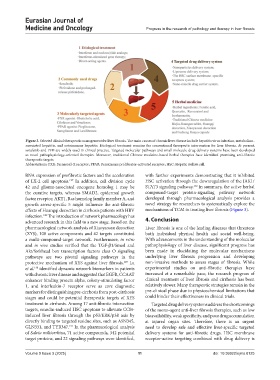
            Figure 3. Selected clinical therapeutic management for liver fibrosis. The main causes of chronic liver disease include hepatitis virus infection, metabolism-
            associated hepatitis, and autoimmune hepatitis. Etiological treatment remains the conventional therapeutic intervention for liver fibrosis. At present,
            sorafenib and PFD are widely used in clinical practice. Targeted molecular pathways and small-molecule drug delivery systems have been developed
            as  novel  pathophysiology-oriented  therapies.  Moreover,  traditional  Chinese medicine-based herbal  therapies  have  identified  promising  anti-fibrotic
            therapeutic targets.
            Abbreviations: FXR: Farnesoid-X receptor; PPAR: Peroxisome proliferator-activated receptor; HSC: Hepatic stellate cell.

            RNA expression of profibrotic factors and the acceleration   with further experiments demonstrating that it inhibited
            of LX-2 cell apoptosis.  In addition, cell division cycle   HSC activation through the downregulation of the JAK1/
                               127
                                                                                   132
            42  and  glioma-associated  oncogene  homolog  1  may  be   STAT3 signaling pathway.  In summary, the active herbal
            the  curative targets,  whereas SMAD2, epidermal growth   compound-target protein-signaling pathway network
            factor receptor, AKT1, Ras homolog family member A, and   developed through pharmacological analysis provides a
            growth arrest-specific 5 might influence the anti-fibrotic   novel strategy for researchers to systematically explore the
            effects of Huangqi decoction in cirrhosis patients with HBV   mechanisms of TCM in treating liver fibrosis (Figure 3).
                   128
            infection.  The introduction of network pharmacology has
            advanced research in this field to a new stage. Based on the   4. Conclusion
            pharmacological network analysis of Xiaoyaosan decoction   Liver fibrosis is one of the leading diseases that threatens
            (XYS), 108 active components and 42 targets constituted   both individual physical health and social well-being.
            a multi-compound-target network. Furthermore,  in vitro   With advancements in the understanding of the molecular
            and  in vivo studies verified that the TGF-β1/Smad and   pathophysiology of liver disease, significant progress has
            Akt/forkhead box transcription factors class  O signaling   been made in elucidating the molecular mechanisms
            pathways are two pivotal signaling pathways in the   underlying liver fibrosis progression and developing
            protective mechanism of XYS against liver fibrosis.  Lu   non-invasive methods to assess stages of fibrosis. While
                                                      129
            et al.  identified dynamic network biomarkers in patients   experimental studies on anti-fibrotic therapies have
                130
            with chronic liver disease and suggested that EGFR, CCAAT   increased at a remarkable pace, the research progress of
            enhancer binding protein alpha, colony-stimulating factor   clinical treatment of liver fibrosis and cirrhosis has been
            1, and interleukin-7 receptor serve as core diagnostic   relatively slower. Many therapeutic strategies remain in the
            markers for distinguishing pre-cirrhosis from post-cirrhosis   pre-clinical phase due to physicochemical limitations that
            stages and could be potential therapeutic targets of XYS   could hinder their effectiveness in clinical trials.
            treatment in cirrhosis. Among 17 anti-fibrotic intersection   Targeted drug delivery systems address the shortcomings
            targets, emodin-induced HSC apoptosis to alleviate CCl4-  of the mono-agent anti-liver fibrosis therapies, such as low
            induced liver fibrosis through the p53/ERK/p38 axis by   bioavailability, weak specificity, and poor drug accumulation
            directly binding to targeted residue sites, such as ASN345,   at injured organ sites. Therefore, there is an urgent
            GLN331, and TYR347.  In the pharmacological analysis   need to develop safe and effective liver-specific targeted
                              131
            of Salvia miltiorrhiza, 71 active compounds, 342 potential   delivery systems for anti-fibrotic drugs. HSC membrane
            target proteins, and 22 signaling pathways were identified,   receptor-active targeting combined with drug delivery is


            Volume 9 Issue 3 (2025)                         11                              doi: 10.36922/ejmo.8125

