


Page 291 - EJMO-9-3
P. 291
Eurasian Journal of
            Medicine and Oncology                                  Preperitoneal infiltration after laparoscopic cholecystectomy


            intra-abdominal cavity elongation, amount of blood   that originate from the abdominal wall.  A prolonged
                                                                                                 13
            left in the abdomen, and pelvic region dissection, may   hospital stay, myocardial ischemia, delirium, respiratory
            induce distinct types of pain.  Furthermore, patients who   complications,  and an  elevated  probability  of  chronic
                                   2
            underwent laparoscopic procedures, which are renowned   pain are among the numerous undesirable post-operative
            for their reduced pain, were found to experience excessive   consequences that may result from poorly controlled
            post-operative pain and receive inadequate pain alleviation   pain following abdominal surgery, in addition to patient
            in comparison to aggressive major operations.  Despite   suffering and distress. 14
                                                  9,11
            the procedure’s minimal invasive nature, the post-   Advantages of effective post-operative analgesia include
            operative pain that follows laparoscopic cholecystectomy
            is frequently difficult to manage, leading to delayed   reduced post-operative morbidity and stress response,
            hospital discharge and increased opioid use.  In addition,   increased patient satisfaction, and enhanced patient
                                               12
                                                                      14
            patients who undergo abdominal interventions experience   outcome.
            significant distress that is linked to somatic pain signals   In this investigation, 40  patients were scheduled
                                                               for laparoscopic cholecystectomy surgery and were
            Table 4. Comparison of post‑operative nausea and vomiting   categorized into two groups. The preperitoneal group
            between groups                                     (n = 20) underwent trocar infiltration of local anesthetic,
            Presence of     TAP block   Preperitoneal  Test  p‑value  while the TAP block group (n = 20) was given a TAP block
            post‑operative    group    group    value          under ultrasound guidance.
            nausea and vomiting  (n=20) (%)  (n=20) (%)          Our findings show no significant difference in sleep
            No               8 (40.0)  10 (50.0)  0.404  0.525  quality between the TAP block and preperitoneal groups.
            Yes              12 (60.0)  10 (50.0)              Moreover, regarding VAS and the first request of analgesia,
            Note: Chi-square test for number (%) or Fisher’s exact test, when   the results showed that the 8- and 12-h VAS scores had a
            appropriate.                                       higher median value in the preperitoneal group than the
            Abbreviation: TAP: Transversus abdominis plane.
                                                               TAP block group, with a statistically significant difference.
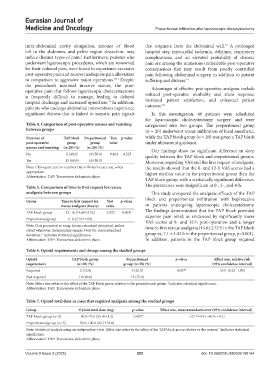
            Table 5. Comparison of time to first request for rescue   The parameters were insignificant at 0-, 2-, and 4-h.
            analgesia between groups                             This study compared the analgesic efficacy of the TAP
                                                               block  and  preperitoneal  infiltration  with  bupivacaine
            Group          Time to first request for   Test   p‑value
                           rescue analgesia (hours)  value     in patients undergoing laparoscopic cholecystectomy.
            TAP block group  12–18 (14.60±2.52)  5.027  0.001*  The findings demonstrated that the TAP block provided
            Preperitoneal group  6–8 (7.10±1.02)               superior pain relief, as evidenced by significantly lower
                                                               VAS scores at 8-  and 12-h post-operation and a longer
            Note: Data presented as range (mean±standard deviation), unless   time to first rescue analgesia (14.6±2.52 h in the TAP block
            stated otherwise. Independent sample t-test for mean±standard
            deviation.* indicates statistical significance.    group vs. 7.1 ± 1.02 h in the preperitoneal group, p<0.001).
            Abbreviation: TAP: Transversus abdominis plane.    In addition, patients in the TAP block group required

            Table 6. Opioid requirements and dosage among the studied groups
            Opioid              TAP block group        Preperitoneal        p‑value         Effect size, relative risk
            requirement           (n=20) (%)          group (n=20) (%)                     (95% confidence interval)
            Required               2 (10.0)              5 (25.0)           0.037*             0.51 (0.23–1.09)
            Not required           18 (90.0)             15 (75.0)
            Note: Effect size refers to the effect of the TAP block group relative to the preperitoneal group. *indicates statistical significance.
            Abbreviation: TAP: Transversus abdominis plane.

            Table 7. Opioid total dose in cases that required analgesia among the studied groups

            Group                  Opioid total dose (mg)  p‑value   Effect size, mean±standard error (95% confidence interval)
            TAP block group (n=2)  50.0–75.0 (55.0±11.2)  0.007*                 −27.7±9.0 (−46.9–−8.5)
            Preperitoneal group (n=5)  50.0–100.0 (82.7±18.8)
            Note: Statistical analysis using an independent t-test. Effect size refers to the effect of the TAP block group relative to the control. *indicates statistical
            significance.
            Abbreviation: TAP: Transversus abdominis plane.


            Volume 9 Issue 3 (2025)                        283                         doi: 10.36922/EJMO025180164

