


Page 30 - EJMO-9-3
P. 30
Eurasian Journal of
            Medicine and Oncology                                            Role of common CXC chemokines in NAFLD


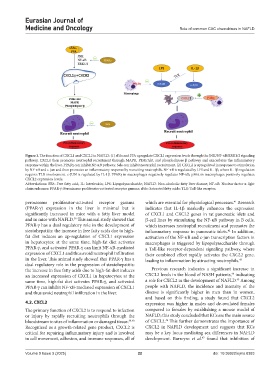
            Figure 1. The function of CXCL1 and CXCL2 in NAFLD: (1) sFAs and FFA upregulate CXCL1 expression levels through the JNK/NF-κB/ERK1/2 signaling
            pathway. CXCL1 then promotes neutrophil recruitment through MAPK, PI3K/Akt, and phospholipase β pathway and exacerbates the inflammatory
            response within the liver. PPARγ can inhibit NF-κB pathway; Sele can inhibit neutrophil recruitment. (2) CXCL2 is upregulated in response to stimulation
            by NF-κB and c-jun and then promotes an inflammatory response by recruiting neutrophils. NF-κB is regulated by LPS and IL-1β, where IL-1β regulation
            requires TLR involvement. c-JUN is regulated by IL-1β. PPARγ in macrophages negatively regulates NF-κB; p38α in macrophages positively regulates
            CXCL2 expression levels.
            Abbreviations: FFA: Free fatty acid; IL: Interleukin; LPS: Lipopolysaccharide; NAFLD: Non-alcoholic fatty liver disease; NF-κB: Nuclear factor κ light
            chain enhancer; PPAR-γ: Peroxisome proliferator-activated receptor gamma; sFAs: Saturated fatty acids; TLR: Toll-like receptor.


                                                                                                    41
            peroxisome  proliferator-activated  receptor  gamma  which are essential for physiological processes.  Research
            (PPAR-γ) expression in the liver is minimal but is   indicates that IL-1β markedly enhances the expression
            significantly increased in mice with a fatty liver model   of CXCL1 and CXCL2 genes in rat pancreatic islets and
                                38
            and in mice with NAFLD.  This animal study showed that   β-cell lines by stimulating the NF-κB pathway in B cells,
            PPAR-γ has a dual regulatory role in the development of   which increases neutrophil recruitment and promotes the
            steatohepatitis: the increase in free fatty acids due to high-  inflammatory response in pancreatic islets.  In addition,
                                                                                                  42
            fat  diet  induces  an  up-regulation  of  CXCL1  expression   activation of the NF-κB and c-jun transcription factors in
            in hepatocytes; at the same time, high-fat diet activates   macrophages is triggered by lipopolysaccharide through
            PPAR-γ, and activated PPAR-γ can limit NF-κB-mediated   a Toll-like receptor-dependent signaling pathway, where
            expression of CXCL1 and thus avoid neutrophil infiltration   their combined effect rapidly activates the  CXCL2 gene,
            in the liver. This animal study showed that PPAR-γ has a   leading to inflammation by attracting neutrophils. 43
            dual regulatory role in the progression of steatohepatitis:
            the increase in free fatty acids due to high-fat diet induces   Previous research indicates a significant increase in
                                                                                                    44
            an increased expression of CXCL1 in hepatocytes; at the   CXCL2 levels in the blood of NASH patients,  indicating
                                                                                                      45
            same time, high-fat diet activates PPAR-γ, and activated   a role for CXCL2 in the development of NAFLD.  Among
            PPAR-γ can inhibit NF-κB-mediated expression of CXCL1   people with NAFLD, the incidence and intensity of the
            and thus avoid neutrophil infiltration in the liver.  disease is significantly higher in men than in women,
                                                               and  based  on  this  finding,  a  study  found  that  CXCL2
            4.2. CXCL2                                         expression was higher in males and de-ovulated females
            The primary function of CXCL2 is to respond to infection   compared to  females  by  establishing  a  mouse  model  of
            or injury by rapidly recruiting neutrophils through the   NAFLD; this study concluded that KCs are the main source
                                                                       46
            bloodstream to sites of inflammation or damaged tissue. 39,40    of CXCL2.  This further demonstrates the importance of
            Recognized as a growth-related gene product, CXCL2 is   CXCL2 in NAFLD development and suggests that KCs
            critical for repairing inflammatory injury and is involved   may be a key locus mediating sex differences in NAFLD
            in cell movement, adhesion, and immune responses, all of   development. Barreyro  et al.  found that inhibition of
                                                                                       47

            Volume 9 Issue 3 (2025)                         22                              doi: 10.36922/ejmo.8383

