


Page 31 - EJMO-9-3
P. 31
Eurasian Journal of
            Medicine and Oncology                                            Role of common CXC chemokines in NAFLD


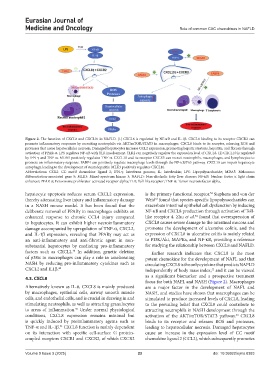
            Figure 2. The function of CXCL8 and CXCL10 in NAFLD. (1) CXCL8 is regulated by NF-κB and IL-1β. CXCL8 binding to its receptor CXCR2 can
            promote inflammatory responses by recruiting neutrophils via AKT/mTOR/STAT3 in macrophages. CXCL8 binds to its receptor, releasing ROS and
            proteases that cause hepatocellular necrosis. Damaged hepatocytes increase CCL2 expression, promoting hepatic steatosis, hepatitis, and fibrosis through
            activation of PPAR-α. LPS regulates NF-κB with TLR involvement. TLR2 can negatively regulate the expression level of CXCL8. (2) CXCL10 is regulated
            by IFN-γ and TNF-α. MDA5 positively regulates TNF-α. CXCL10 and its receptor CXCR3 can recruit neutrophils, macrophages, and lymphocytes to
            promote an inflammatory response. FABP4 can positively regulate macrophage levels through the NF-κB/P65 pathway. CXCL10 can impair hepatocyte
            autophagy, leading to the development of steatohepatitis. MLK3 positively regulates CXCL10.
            Abbreviations: CCL2: CC motif chemokine ligand 2; IFN-γ: Interferon gamma; IL: Interleukin; LPS: Lipopolysaccharide; MDA5: Melanoma
            differentiation-associated gene 5; MLK3: Mixed-spectrum kinase 3; NAFLD: Non-alcoholic fatty liver disease; NF-κB: Nuclear factor  κ light chain
            enhancer; PPAR-α: Peroxisome proliferator-activated receptor alpha; TLR: Toll-like receptor; TNF-α: Tumor necrosis factor alpha.

                                                                                          52
            hepatocyte apoptosis reduces serum CXCL2 expression,   is the primary functional receptor.  Stephens and von der
            thereby attenuating liver injury and inflammatory damage   Weid  found that species-specific lipopolysaccharides can
                                                                   53
            in a NASH mouse model. It has been found that the   exacerbate intestinal epithelial cell dysfunction by inducing
            deliberate removal of PPARγ in macrophages exhibits an   NF-κB and CXCL8 production through activation of Toll-
                                                                                    54
            enhanced response to chronic CCL4 injury compared   like receptor 4. Zhu et al.  found that overexpression of
            to hepatocytes. It can exhibit higher necroinflammatory   CXCL8 causes severe damage to the intestinal mucosa and
            damage accompanied by upregulation of TNF-α, CXCL2,   promotes the development of ulcerative colitis, and the
            and IL-1β expression, revealing that PPARγ may act as   expression of CXCL8 in ulcerative colitis is mainly related
            an anti-inflammatory and anti-fibrotic agent in non-  to PI3K/Akt, MAPKs, and NF-κB, providing a reference
            substantial hepatocytes by mediating pro-inflammatory   for studying the relationship between CXCL8 and NAFLD.
            factors such as CXCL2.  In addition, genetic deletion   Earlier research indicates that CXCL8 is the most
                                48
            of p38α in macrophages can play a role in ameliorating   potent chemokine for the development of NAFL and that
            NASH by reducing pro-inflammatory cytokines such as   circulating CXCL8 is the only cytokine that predicts NAFLD
            CXCL2 and IL1β. 49                                 independently of body mass index,  and it can be viewed
                                                                                           55
            4.3. CXCL8                                         as a significant biomarker and a prospective treatment
                                                               focus for both NAFL and NASH (Figure 2). Macrophages
            Alternatively known as IL-8, CXCL8 is mainly produced   are a  major factor in the  development  of NAFL and
            by macrophages, epithelial  cells,  airway  smooth  muscle   NASH, and studies have shown that macrophages can be
            cells, and endothelial cells, and is crucial in drawing in and   stimulated to produce increased levels of CXCL8, leading
            stimulating neutrophils, as well as attracting granulocytes   to the prevailing belief that CXCL8 could contribute to
            to areas of inflammation.  Under normal physiological   attracting neutrophils in NASH development through the
                                 50
            conditions, CXCL8 expression remains minimal but   activation  of  the  AKT/mTOR/STAT3  pathway.   CXCL8
                                                                                                     56
            is quickly induced by proinflammatory agents such as   binds to its receptor and releases ROS and proteases,
            TNF-α and IL-1β.  CXCL8 function is mainly dependent   leading to hepatocellular necrosis. Damaged hepatocytes
                          51
            on its interaction with specific cell-surface G protein-  cause  an increase in the  expression level of CC motif
            coupled receptors CXCR1 and CXCR2, of which CXCR2   chemokine ligand 2 (CCL2), which subsequently promotes

            Volume 9 Issue 3 (2025)                         23                              doi: 10.36922/ejmo.8383

