


Page 75 - EJMO-9-3
P. 75
Eurasian Journal of
            Medicine and Oncology                                              Molecular shift in FLT3 during AML course


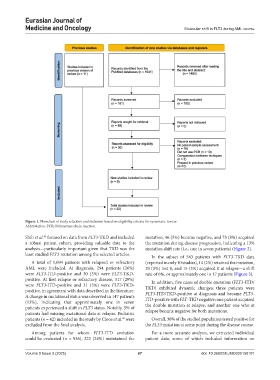
            Figure 1. Flowchart of study selection and inclusion based on eligibility criteria for systematic review
            Abbreviation: PCR: Polymerase chain reaction.

                    45
            Shih et al.  focused on data from FLT3-TKD and included   mutation, 46 (5%) became negative, and 73 (8%) acquired
            a  robust patient  cohort,  providing  valuable  data  to  the   the mutation during disease progression, indicating a 13%
            analysis—particularly important given that TKD was the   mutation shift rate (i.e., one in seven patients) (Figure 2).
            least studied FLT3 mutation among the selected articles.  In the subset of 543  patients with  FLT3-TKD data
              A total of 1,094  patients with relapsed or refractory   (reported in only 10 studies), 14 (2%) retained the mutation,
            AML  were  included.  At  diagnosis,  294  patients  (26%)   20 (3%) lost it, and 15 (3%) acquired it at relapse—a shift
            were  FLT3-ITD-positive and 30  (3%) were  FLT3-TKD-  rate of 6%, or approximately one in 17 patients (Figure 3).
            positive. At first relapse or refractory disease, 317 (29%)   In addition, five cases of double mutation (FLT3-ITD/
            were  FLT3-ITD-positive and 31  (3%) were  FLT3-TKD-  TKD) exhibited dynamic changes; three patients were
            positive, in agreement with data described in the literature.   FLT3-ITD/TKD-positive at diagnosis and became FLT3-
            A change in mutational status was observed in 147 patients
            (13%), indicating that approximately one in seven   ITD-positive with FLT-TKD negative; one patient acquired
            patients experienced a shift in FLT3 status. Notably, 5% of   the double mutation at relapse, and another one who at
            patients had missing mutational data at relapse. Pediatric   relapse became negative for both mutations.
                                                     30
            patients (n = 42) included in the study by Cloos et al.  were   Overall, 36% of the studied population tested positive for
            excluded from the final analysis.                  the FLT3 mutation at some point during the disease course.
              Among patients for whom  FLT3-ITD evolution        For a more accurate analysis, we extracted individual
            could be evaluated (n = 936), 222 (24%) maintained the   patient data, some of which included information on


            Volume 9 Issue 3 (2025)                         67                         doi: 10.36922/EJMO025150101

