


Page 77 - EJMO-9-3
P. 77
Eurasian Journal of
            Medicine and Oncology                                              Molecular shift in FLT3 during AML course


              All studies were cohort designs and evaluated using the   These findings have therapeutic implications and can
            Newcastle-Ottawa Quality Assessment Scale (Table 2).  impact patient survival. In some cases, identifying a newly
                                                               acquired mutation could provide eligibility for the only
            4. Discussion                                      potentially curative option in relapsed or refractory AML

            The present study is the first systematic review and meta-  (i.e., bone marrow transplantation).
            analysis investigating  FLT3 mutational shifts in AML,   This discrepancy may be associated with inherent
            incorporating data from over 1,000 patients. The prevalence   limitations of the detection method itself. It is well known
            of FLT3 mutations observed aligned with previous reported   that molecular technologies have improved over the years.
            rates in the literature. Notably, our analysis revealed that   Currently, the most recommended PCR method for FLT3
            approximately one in seven patients exhibited a change   analysis is fragment analysis. In our evaluation, some
            in FLT3 mutation status between diagnosis and relapse or   older studies used gel-based PCR as the detection method,
            refractory disease. Such a frequency is not negligible and   which has lower sensitivity. It is also important to consider
            reinforces the recommendation for molecular reassessment   the possibility of false negatives. PCR is a method that
            at  multiple  time  points  during  the  disease  course.  The   has difficulty detecting very short fragments, identifying
            increasing  use  of mutation-guided therapies in  AML   mutations in previously undescribed regions, and provides
            underscores the need for accurate and dynamic mutational   only limited information, such as size, number, and allelic
            profiling. Identifying the emergence or loss of actionable   burden. It does not provide additional details about the
            mutations can prevent the administration of potentially   sequence or its specific location, nor can it distinguish
            toxic therapies with limited benefit in mutation-negative   between homozygous and heterozygous mutations.
            patients, and conversely, guide the appropriate use of   Nevertheless, PCR is a more accessible method compared
            targeted agents in those who acquire relevant mutations.   to NGS and yields results more rapidly. Therefore, the
                                                               sensitivity of the technique may influence the findings.
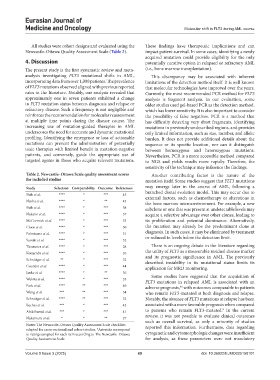
            Table 2. Newcastle–Ottawa Scale quality assessment scores   Another contributing factor is the nature of the
            for included studies                               mutation itself. Some studies suggest that FLT3 mutations
            Study       Selection Comparability Outcome References  may emerge later  in the course of AML,  following  a
            Shih et al.   ****      *        ***     45        branched clonal evolution model. This may occur due to
                                                               external factors, such as chemotherapy or alterations in
            Nazha et al.  ****      *        **      43        the bone marrow microenvironment. For example, a new
            Shih et al.   ****      *        ***     38        subclone or one that was present at undetectable levels may
            Nakano et al.  ****     *        ***     37        acquire a selective advantage over other clones, leading to
            McCormick et al.  ****  *        ***     33        its  proliferation  and  potential  dominance.  Alternatively,
            Cloos et al.  ****      *        ***     30        the mutation may already be the predominant clone at
            Palmisano et al.  ****  *        ***     31        diagnosis. In such cases, it may be eliminated by treatment
            Suzuki et al.  ****     *        ***     32        or reduced to levels below the detection limit.
            Tiesmeier et al.  ****  *        ***     28          There is an ongoing debate in the literature regarding
            Kottaridis et al.  ****  *       ***     26        the utility of FLT3 as a measurable residual disease marker
            Schnittger et al.  **   *        ***     32        and its prognostic significance in AML. The previously
                                                               described instability in its mutational status limits its
            Gourdin et al.  ****    *        ***     44        application for MRD monitoring.
            Janke et al.  ****      *        **      36          Some studies have suggested that the acquisition of
            Wakita et al.  ****     *        ***     35
                                                               FLT3 mutations in relapsed AML is associated with an
            Park et al.   ****      **       ***     40        adverse prognosis,  with outcomes comparable to patients
                                                                              46
            Wang et al.   ***       **       ***     34        who remain FLT3-mutated at both diagnosis and relapse.
            Schnittger et al.  ****  **      ***     32        Notably, the absence of FLT3 mutations at relapse has been
            Bachas et al.  ***      *        ***     42        associated with a more favorable prognosis when compared
                                                                                                9
            Abdelhamid et al.  ***  *        ***     41        to patients who remain FLT3-mutated.  In the current
            Nakamura et al.  *      *        **      27        review, it was not possible to evaluate clinical outcomes
                                                               such as overall survival, as only a minority of studies
            Notes: The Newcastle–Ottawa Quality Assessment Scale checklists   reported  this  information.  Furthermore,  data  regarding
            adapted for cross-sectional and cohort studies. *Asterisks correspond
            to ratings assigned for each item according to The Newcastle–Ottawa   cytogenetic and cytomorphologic changes were insufficient
            Quality Assessment Scale.                          for analysis, as these parameters were not mandatory


            Volume 9 Issue 3 (2025)                         69                         doi: 10.36922/EJMO025150101

