


Page 151 - GHES-2-1
P. 151
Global Health Econ Sustain                                   Utilizing REDCap in a cardiac rehabilitation service


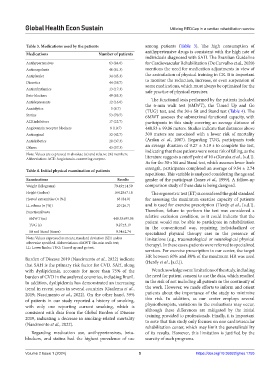
            Table 3. Medications used by the patients          among patients (Table 3). The high consumption of
            Medications                    Number of patients  antihypertensive drugs is consistent with the high rate of
                                                               individuals diagnosed with SAH. The Brazilian Guideline
            Antihypertensives                  63 (84.0)       for Cardiovascular Rehabilitation (De Carvalho et al., 2020)
            Anticoagulants                     46 (61.3)       mentions the need for medication adjustments in view of
            Antiplatelet                       34 (45.3)       the assimilation of physical training in CR. It is important
            Diuretics                          44 (58.7)       to monitor the reduction, increase, or even suspension of
                                                               some medications, which must always be optimized for the
            Antiarrhythmics                    13 (17.3)       safe practice of physical exercises.
            Beta-blockers                      49 (65.3)
                                                                 The functional tests performed by the patients included
            Antidepressants                    12 (16.0)       the 6-min walk test (6MWT), the Timed Up and Go
            Anxiolytics                         5 (6.7)        (TUG) test, and the 30-s Sit and Stand test (Table 4). The
            Statins                            53 (70.7)       6MWT assesses the submaximal functional capacity, with
            ACE inhibitors                     17 (22.7)       participants in this study covering an average distance of
            Angiotensin receptor blockers       8 (10.7)       448.53 ± 99.06 meters. Studies indicate that distances above
            Antianginal                        32 (42.7)       300 meters are associated with a lower risk of mortality
            Antidiabetics                      28 (37.3)       (Arslan  et al., 2007). Regarding  TUG, participants took
            Others                             43 (57.3)       an average duration of 9.27 ± 3.19 s to complete the test,
                                                               indicating that these patients were not at risk of falling, as the
            Note: Values are expressed in absolute (n) and relative (%) numbers.   literature suggests a cutoff point of 10 s (Karuka et al., [s.d.]).
            Abbreviation: ACE: Angiotensin-converting enzyme.
                                                               As for the 30-s Sit and Stand test, which assesses lower limb
            Table 4. Initial physical examination of patients  strength, participants completed an average of 9.54 ± 2.74
                                                               repetitions. This variable is analyzed considering the age and
            Examinations                           Results     gender of the participant (Jones et al., 1999). A follow-up
            Weight (kilograms)                    79.49±14.59  comparison study of these data is being designed.
            Height (inches)                       164.28±7.18    The ergometric test (ET) is considered the gold standard
            Heated extremities (n [%])             63 (84.0)   for assessing the maximum exercise capacity of patients
            LL edema (n [%])                       20 (26.7)   and is used for exercise prescription (Herdy et al., [s.d.]).
            Functional tests                                   Therefore, failure to perform the test was considered a
             6MWT (m)                            448.53±99.06  relative exclusion condition, as it could indicate that the
                                                               patient would not be able to participate in rehabilitation
             TUG (s)                              9.27±3.19    in the conventional way, requiring individualized or
             Sit and Stand (times)                9.54±2.74    specialized physical therapy care in the presence of
            Note: Values expressed as mean±standard deviation (SD) unless   limitations (e.g., traumatological or neurological physical
            otherwise specified. Abbreviations: 6MWT: Six-min walk test;   therapy). In these cases, patients were referred to specialized
            LL: Lower limbs; TUG: Timed up and go test.
                                                               services. For exercise prescription in our center, the target
                                                               HR between 60% and 80% of the maximum HR was used
            Burden of Disease 2019 (Nascimento et al., 2022) indicate   (Herdy et al., [s.d.]).
            that SAH is the primary risk factor for CVD. SAH, along
            with dyslipidemia, accounts for more than 75% of the   We acknowledge some limitations of the study, including
            burden of CVD in the analyzed countries, including Brazil.   the need for patient consent to use the data, which resulted
            In addition, dyslipidemia has demonstrated an increasing   in the risk of not including all patients in the continuity of
            trend in recent years in several countries (Gaalema et al.,   the work. However, we made efforts to inform and orient
            2019; Nascimento et al., 2022). On the other hand, 39%   patients about the importance of the study to minimize
            of patients in our study reported a history of smoking,   this risk. In addition, as our center employs several
            with only one reporting current smoking, which is   physiotherapists, variations in the evaluations may occur,
            consistent with data from the Global Burden of Disease   although these differences are mitigated by the initial
            2019, indicating a decrease in smoking-related mortality   training provided to professionals. Finally, it is important
                                                               to note that this study only focuses on one cardiovascular
            (Nascimento et al., 2022).
                                                               rehabilitation center, which may limit the generalizability
              Regarding medication use, antihypertensives, beta-  of its results. However, this limitation is justified by the
            blockers,  and  statins  had the  highest prevalence  of  use   scarcity of such programs.


            Volume 2 Issue 1 (2024)                         5                        https://doi.org/10.36922/ghes.1755

