


Page 54 - GHES-2-1
P. 54
Global Health Econ Sustain                                          Quantum Data Lake for epidemic analysis


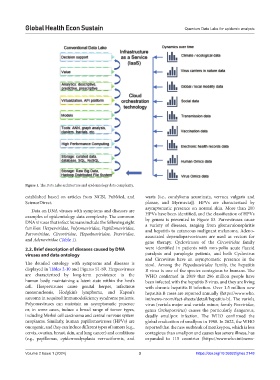
            Figure 1. The Data Lake architecture and epidemiology data complexity.


            established  based  on  articles  from  NCBI,  PubMed,  and   warts [i.e., condyloma acuminata, verruca vulgaris and
            ScienceDirect.                                     planae,  and Myrmecia]).  HPVs  are  characterized by
              Data on DNA viruses with symptoms and diseases are   asymptomatic presence on normal skin. More than 200
            examples of epidemiology data complexity. The common   HPVs have been identified, and the classification of HPVs
            DNA viruses that infect humans include the following eight   by genera is presented in  Figure S3. Parvoviruses cause
                                                               a variety of diseases, ranging from glomerulonephritis
            families: Herpesviridae, Polyomaviridae, Papillomaviridae,   and hepatitis to cutaneous malignant melanoma. Adeno-
            Parvoviridae,  Circoviridae,  Hepadnaviridae,  Poxviridae,   associated dependoparvoviruses are used as vectors for
            and Adenoviridae (Table 1).                        gene therapy. Cycloviruses of the  Circoviridae family
            2.2. Brief description of diseases caused by DNA   were identified in patients with non-polio acute flaccid
            viruses and data ontology                          paralysis and paraplegia patients, and both Cyclovirus
                                                               and Circovirus have an asymptomatic presence in the
            The detailed ontology with symptoms and diseases is   stool. Among the  Hepadnaviridae family, the hepatitis
            displayed in Tables 2-10 and Figures S1-S9. Herpesviruses   B virus is one of the species contagious to humans. The
            are characterized by long-term persistence in the   WHO confirmed in 2019 that 296 million people have
            human body, maintaining a latent state within the host’s   been infected with the hepatitis B virus, and they are living
            cell. Herpesviruses cause genital herpes, infectious   with chronic hepatitis B infection. Over 1.5 million new
            mononucleosis, Hodgkin’s  lymphoma, and  Kaposi’s   hepatitis B cases are reported annually (https://www.who.
            sarcoma in acquired immunodeficiency syndrome patients.   int/news-room/fact-sheets/detail/hepatitis-b). The variola
            Polyomaviruses can maintain an asymptomatic presence   virus (variola major and variola minor, family Poxviridae,
            or, in some cases, induce a broad range of tumor types,   genus  Orthopoxvirus) causes the particularly dangerous,
            including Merkel cell carcinoma and central nervous system   deadly smallpox infection. The WHO confirmed the
            neoplasms. Similarly, human papillomaviruses (HPVs) are   global eradication of smallpox in 1980. In 2022, the WHO
            oncogenic, and they can induce different types of tumors (e.g.,   reported that the new outbreak of monkeypox, which is less
            cervix, ovarian, breast, skin, and lung cancer) and conditions   contagious than smallpox and causes less severe illness, has
            (e.g.,  papillomas, epidermodysplasia verruciformis,  and   expanded to 115 countries (https://www.who.int/news-


            Volume 2 Issue 1 (2024)                         3                        https://doi.org/10.36922/ghes.2148

