


Page 55 - GHES-2-2
P. 55
Global Health Econ Sustain                                    International scientific cooperation in public health


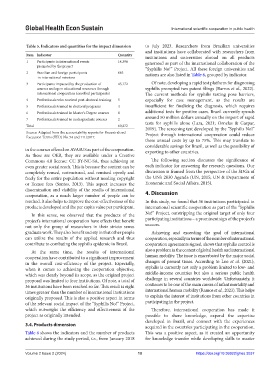
            Table 5. Indicators and quantities for the impact dimension  to July 2023. Researchers from Brazilian universities
                                                               and institutions have collaborated with researchers from
            Item Indicator                         Quantity    institutions and universities abroad on all products
            1    Participants in international events    14,396  generated as part of the international collaboration of the
                 promoted by the project                       “Syphilis No!” Project. All these foreign universities and
            2    Brazilian and foreign participants   685      nations are also listed in Table 6, grouped by indicator.
                  in international missions
            3    Participants impacted by the production of   45,172  Of note, developing a rapid test platform for diagnosing
                 courses and open educational resources through   syphilis prompted two patent filings (Barros et al., 2022).
                 international cooperation (enrolled participants)  The current methods for syphilis testing pose barriers,
            4    Professionals who received post-doctoral training  5  especially for case management, as the results are
            5    Professionals trained in doctoral programs  4  insufficient for  finalizing  the  diagnosis,  which  requires
            6    Professionals trained in Master's Degree courses  8  additional tests for positive cases. Brazil currently spends
            7    Professionals trained in undergraduate courses  2  around 50 million dollars annually on the import of rapid
            Total                                  60,272      tests for syphilis alone (Lara, 2021; Ornelas & Gaspar,
                                                               2019). The screening test developed by the “Syphilis No!”
            Source: Adapted from the accountability reports for Decentralized   Project through international cooperation could reduce
            Execution Terms (TED) No. 54 and 111/2017.
                                                               these annual costs by up to 75%. This may translate to
                                                               considerable savings for Brazil, as well as the possibility of
            in the courses offered on AVASUS as part of the cooperation.   exporting to other countries.
            As these are OER, they are available under a Creative
            Commons 4.0 license: CC BY-NC-SA, thus achieving an   The following section discusses the significance of
            even greater social reach. This is because the content can be   each indicator for answering the research questions. Our
            completely reused, restructured, and remixed openly and   discussion is framed from the perspective of the SDGs of
            freely for the entire population without needing copyright   the UN’s 2030 Agenda (UN, 2015; UN & Department of
            or license fees (Santos, 2013). This aspect increases the   Economic and Social Affairs, 2015).
            dissemination and visibility of the results of international   4. Discussion
            cooperation, as a much larger number of people can be
            reached. It also helps to improve the cost-effectiveness of the   In this study, we found that 36 institutions participated in
            products developed and the per capita value per participant.  international scientific cooperation as part of the “Syphilis
              In this sense, we observed that the products of the   No!” Project, outstripping the original target of only four
            project’s international cooperation have effects that benefit   participating institutions – a prominent sign of the project’s
            not only the group of researchers in their stricto sensu   success.
            graduate work. They also benefit society in that other people   Achieving and exceeding the goal of international
            can  utilize  the  results  of  the  applied  research  and  thus   cooperation, especially in terms of the number of international
            contribute to combating the syphilis epidemic in Brazil.  cooperation agreements signed, shows that syphilis control is
              At the same time, the results of international   also a problem in the context of global health and international
            cooperation have contributed to a significant improvement   human mobility. The issue is exacerbated by the major social
            in the overall cost-efficiency of the project. Especially,   changes of present times. According to Luo  et  al. (2021),
            when it comes to achieving the cooperation objective,   syphilis is currently not only a problem limited to low- and
            which was clearly beyond its scope, as the original project   middle-income countries but also a serious public health
            proposal was limited to four institutions. Of note, a total of   challenge in several countries worldwide. Unfortunately, it
            36 institutions have been reached so far. This result is eight   continues to be one of the main causes of infant mortality and
            times greater than the number of international institutions   international human mobility (Ramos et al., 2023). This helps
            originally proposed. This is also a positive aspect in terms   to explain the interest of institutions from other countries in
            of the relevant social impact of the “Syphilis No!” Project,   participating in the project.
            which outweighs the efficiency and effectiveness of the   Therefore, international cooperation has made it
            project as originally intended.                    possible to share knowledge, expand the expertise
                                                               developed in Brazil, and connect with the experiences
            3.4. Products dimension                            acquired in the countries participating in the cooperation.

            Table 6 shows the indicators and the number of products   This was a positive aspect, as it created an opportunity
            achieved during the study period, i.e., from January 2018   for knowledge transfer while developing skills to master


            Volume 2 Issue 2 (2024)                         10                       https://doi.org/10.36922/ghes.3037

